
Deep Brain Stimulation
Steadier days, on your terms
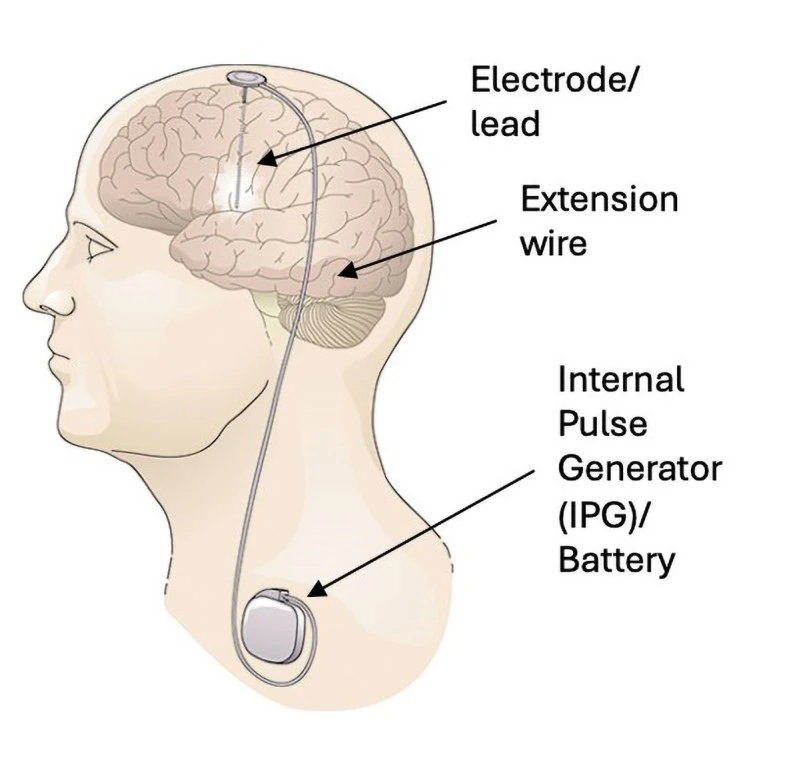
DBS places a thin electrode into the movement circuits of the brain and uses controlled electrical pulses to quiet tremor, ease stiffness and smooth out a day that used to swing between "on" and "off." It destroys no tissue, and every setting can be adjusted, redirected or switched off.
How it works
A pacemaker for movement circuits
In Parkinson's disease, essential tremor and dystonia, the circuits that coordinate movement become overactive, irregular or poorly synchronized. DBS removes nothing. It delivers carefully controlled pulses that help the network settle into a steadier rhythm.
Because the effect comes from stimulation rather than a permanent lesion, the therapy stays adjustable for as long as you need it. Settings can be increased, reduced or redirected as symptoms change over the years, and most side effects can be programmed away.
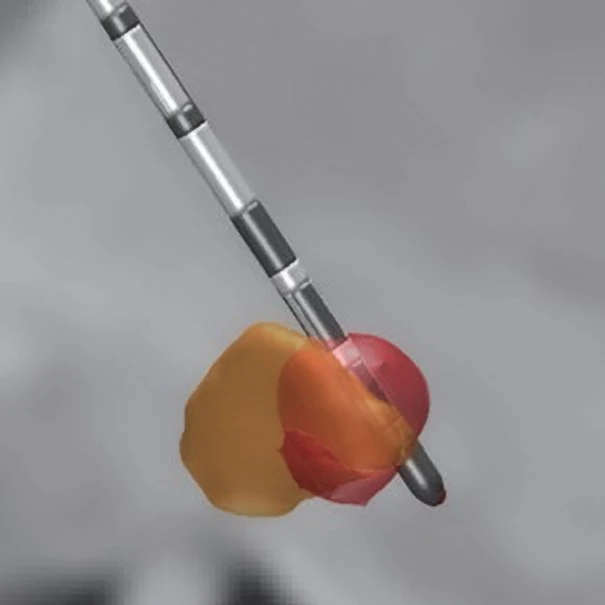
Modern systems go further. Segmented directional leads steer stimulation toward the tissue that responds and away from the tissue that causes side effects, and the newest devices can sense brain signals — the basis for adaptive DBS, authorized by the FDA for certain systems in 2025.
What DBS treats
Conditions we treat with DBS
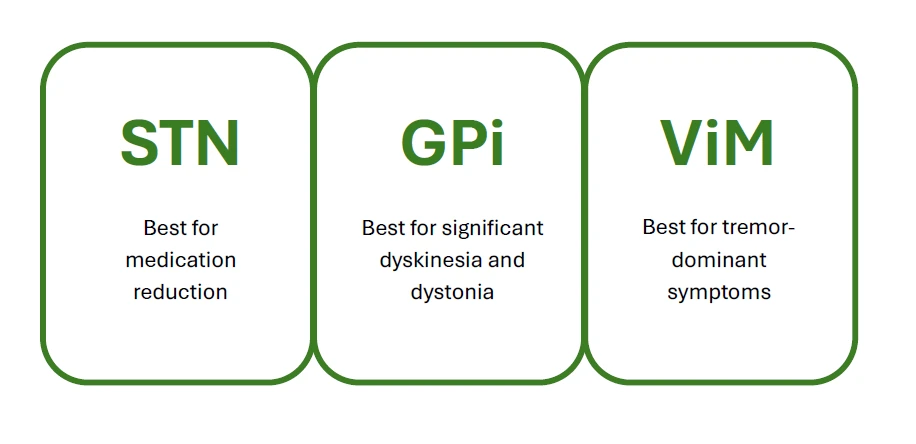
DBS is established therapy for three movement disorders and is used selectively in several others. Different targets relieve different symptoms, which is why choosing the target matters as much as placing the lead.
Standard of care in advanced disease
Parkinson's Disease
For motor fluctuations, tremor, rigidity, bradykinesia and medication-induced dyskinesia. Stimulating the STN or GPi can extend good "on" time and reduce medication burden.
Often substantial benefit
Essential Tremor
DBS is particularly effective for tremor, including tremor that medication never controlled. It is the usual choice when both hands, the head or the voice are affected.
Benefit builds gradually
Dystonia
Pallidal DBS is established therapy for medically refractory dystonia. Improvement unfolds over months rather than days, and posture often keeps improving for a year or more.
What to expect
Surgery is one day. The therapy is a partnership.
Evaluation establishes whether DBS will help and which target to use. Surgery places the lead. Programming, over the following months, is where the benefit is realized.
-
1
Weeks to months before
Evaluation and candidacy
A movement disorders neurologist confirms the diagnosis and reviews which symptoms are causing the most difficulty. Most patients with Parkinson's disease undergo a levodopa challenge, high-resolution imaging and formal neuropsychological testing. Every case is then discussed by the full team. Who is a candidate →
-
2
Surgery day
Lead placement, awake or asleep
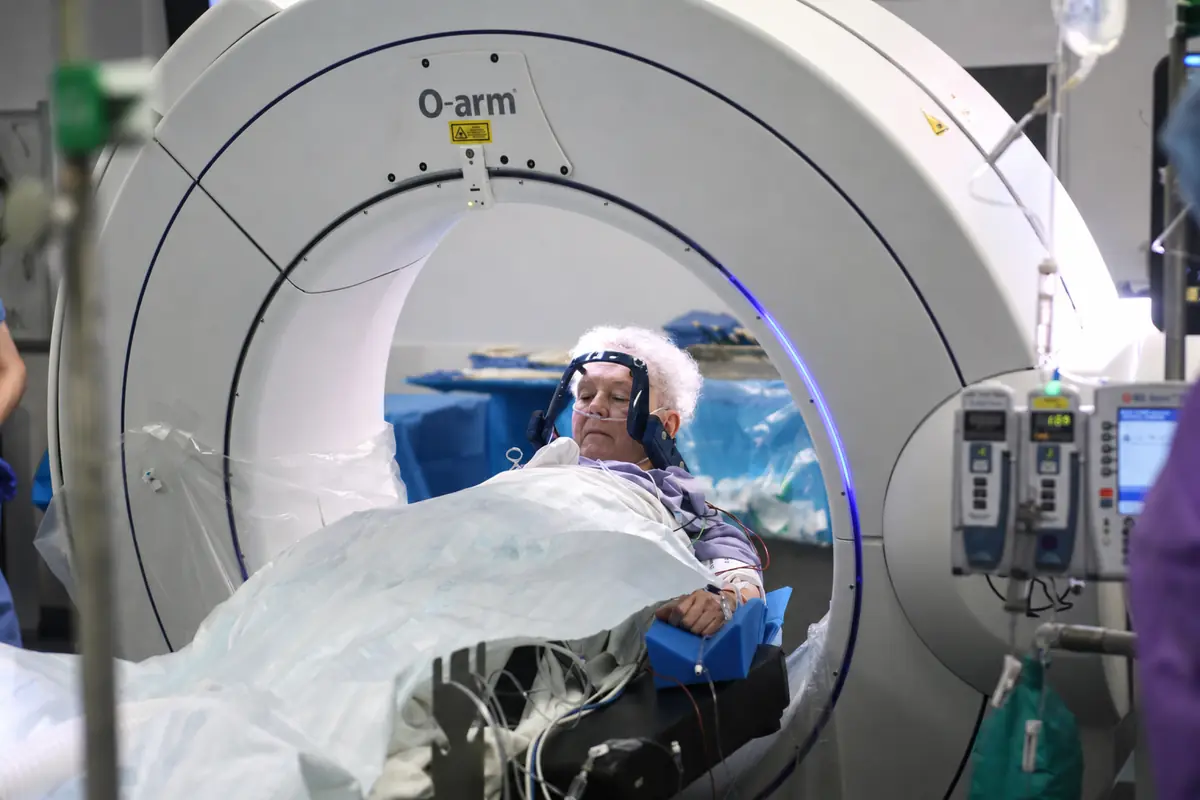
Both approaches are performed at RUSH and both produce comparable motor outcomes. Awake surgery confirms the target physiologically with microelectrode recording and live testing; asleep surgery confirms it with advanced imaging and intraoperative CT. Awake vs asleep DBS →
-
3
About four weeks later
First activation
The system is deliberately left off while swelling settles. At the first programming visit the neurologist maps each contact, identifies the settings that help and begins adjusting medication alongside stimulation.
-
4
Three to six months
Fine-tuning, then routine
Programming is stepwise rather than a single event. Once settings settle, visits become infrequent. Recovery and programming → · The full care journey →
Not sure whether DBS is right for you?
That is what an evaluation is for. Our coordinators can explain what an appointment involves, what records to send, and whether a video visit is a reasonable place to start.