For many patients, coming to RUSH for DBS surgery involves traveling from outside the immediate area. This is something we are very accustomed to—patients routinely come from across the Midwest and from around the country for evaluation and treatment. While traveling for brain surgery can feel overwhelming at first, the logistics are generally straightforward once you understand the layout and plan ahead. The goal of this section is to help make that process feel predictable, manageable, and even a bit familiar before you arrive.
Getting to RUSH
DBS surgery is performed at RUSH University Medical Center on Harrison Street in Chicago, located within the Illinois Medical District just west of downtown. Chicago is served by two major airports—O’Hare International Airport and Midway Airport—and either is a reasonable option. There is no clear advantage of one over the other for most patients, and travel time to the hospital is typically in the range of 20 to 40 minutes, depending on traffic.
And that last part—traffic—is worth mentioning. Chicago traffic has a reputation for a reason. If you happen to arrive during peak rush hour, especially coming from the airports into the city, the drive can take longer than expected. If your schedule allows, it is helpful to plan around those times. Using Uber or Lyft is often the easiest option, as it removes the need to navigate unfamiliar streets or parking. Public transportation via the “L” train system is available and reliable, but on a day when you may already be feeling some anxiety about surgery, most patients find rideshare or car service to be simpler and more comfortable.
Arriving at the Hospital
The main hospital building—known as the Tower Building—is difficult to miss. From the outside, it has a distinctive, modern design that many people describe as resembling a butterfly. This is where your surgery will take place.
When you arrive, you will enter through the main entrance and take the elevator to the 4th floor, which serves as the primary patient check-in and lobby area. Clear signage will guide you to the surgical check-in desks. From there, staff will direct you to the appropriate elevators to the 7th floor, where the neurosurgery operating rooms are located.
On the 7th floor, you will be greeted by the DBS team and brought to the preoperative area. This is where you change into a gown, meet the nursing and anesthesia teams, and have an IV placed. A family member can stay with you during this time. Once you are taken to the operating room, your family will be guided to the surgery waiting area on the same floor, where they will receive text message updates throughout the procedure.
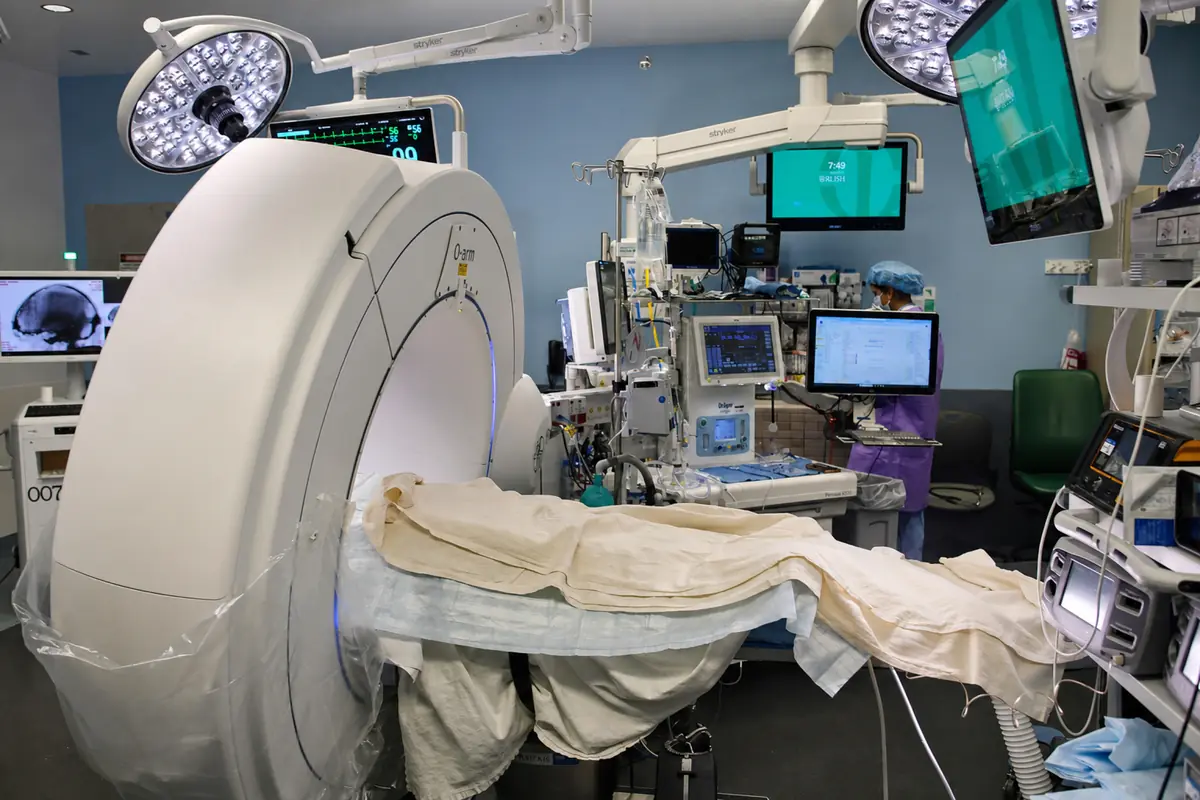
One important point that patients often appreciate: the DBS team is small, specialized, and consistent. You are not encountering a rotating group of unfamiliar staff. You are being cared for by a team that works together routinely and is experienced specifically in DBS surgery and patient care.
Parking and Arrival Logistics
If you are driving, the main patient parking garage is located directly across Harrison Street, just south of the hospital. This is the most convenient self-parking option. Typical parking costs are in line with major urban hospitals, generally in the range of $15–30 per day, though discounted rates or validation may be available for patients and families.
Valet parking is also available directly in front of the Tower Building and can be especially helpful on the day of surgery. For patients with mobility challenges, discounted valet options may be available.
We recommend arriving at least 90 minutes before your scheduled surgery time. This allows enough time for parking, check-in, and getting settled without feeling rushed.
Where to Stay
There are several hotel options near RUSH, depending on your preference for proximity, cost, and overall experience.
Walking Distance (Most Convenient):
The most commonly used option is the Courtyard by Marriott Chicago at Medical District / UIC, located at the corner of Ashland and Harrison. It is within walking distance and frequently used by RUSH patients, with medical rates often available. Another excellent option is the Hyatt House Chicago Medical / University District, located just across the expressway in the beautifully restored historic Cook County Hospital building. It combines modern accommodations with a unique architectural setting and is also within walking distance.
Short Ride (5–10 minutes):
The nearby West Loop neighborhood offers a wide range of additional hotel options, often at varying price points. These require a short Uber or Lyft ride but provide more access to restaurants and a more vibrant neighborhood feel.
Premium Options:
For those looking for a higher-end stay, hotels in downtown Chicago or River North offer more luxury accommodations, though they are typically a 10–15 minute ride from the hospital.
The Neighborhood and Restaurants
RUSH is located in the Illinois Medical District, which includes several major hospitals such as RUSH, University of Illinois Hospital, and Stroger Hospital. For first-time visitors, the area can feel large and somewhat overwhelming, but once you know your destination and route, it becomes very manageable.
Just a few blocks away is Taylor Street in Little Italy, a long-standing Chicago neighborhood known for its restaurants and local charm. This is one of the closest and most accessible areas for a quick meal or a relaxed outing. Well-known spots include Pompei, Rosebud on Taylor and Tuscany on Taylor, along with smaller neighborhood favorites. One hidden gem worth mentioning is Conte di Savoia, a classic Italian deli known for its excellent sandwiches—something of an insider recommendation.
A short ride to the east brings you to the West Loop, once Chicago’s meatpacking district and now one of the city’s most active and popular dining neighborhoods. It is filled with restaurants, cafes, and shops, and offers a lively but approachable atmosphere. A bit further north is River North, another area with a wide range of dining and shopping options.
Like any major city, it is always wise to be aware of your surroundings, particularly at night. That said, patients and families routinely navigate this area without difficulty, especially when plans are made in advance.
For Family Members
On the day of surgery, family members play an important role and are well accommodated at RUSH. After accompanying you to the preoperative area, they will be directed to the waiting room on the 7th floor, where they can remain during the procedure. Updates are provided through text messaging, which helps keep communication clear and reduces uncertainty.
Within the hospital, there are several convenient options for food and coffee. A Panera Bread is located on the 4th floor main level, and there is also a Starbucks on campus. These provide easy access for meals or breaks without needing to leave the hospital.
Chicago as a Destination
For patients traveling from out of town, Chicago offers much more than just a hospital visit. If your schedule allows, even a short stay can provide a meaningful change of pace.
In the warmer months, the lakefront is one of the city’s defining features, with walking paths, open space, and views of the skyline. Chicago is also well known for its architecture, and the architectural boat tour along the river is often recommended as one of the best ways to experience the city.
The city’s museum campus, including the Field Museum and Shedd Aquarium, offers additional options for families. And of course, Chicago’s food scene ranges from Michelin-starred restaurants to local staples like deep-dish pizza and neighborhood institutions such as The Wiener’s Circle.
There is no expectation to turn your visit into a vacation. But for many patients and families, knowing that these options exist—and that the city is accessible—adds a sense of ease to the experience.
Overall, traveling to RUSH for DBS is something many patients do successfully every week. With a bit of planning, the logistics become straightforward, allowing you to focus on what matters most: your care and your outcome.