
Technology and Innovation
Neuromodulation has changed tremendously over the last two decades. Treatments like Deep Brain Stimulation (DBS) and MRI - guided Focused Ultrasound are no longer based simply on “placing something in the brain” or targeting the same exact spot for every patient. Modern treatment has become far more personalized, precise, and technology - driven.
Today, advanced imaging, smarter DBS systems, brain sensing technology, robotics, and remote programming tools allow treatment to be tailo red much more closely to the individual patient sitting in front of us. Many of these technologies are designed to answer practical questions:
-
Can we target the brain more accurately?
-
Can we reduce side effects?
-
Can we make programming easier and more precise?
-
Can we reduce travel burden for patients?
-
Can we better understand how the brain responds to therapy over time?
Below are some of the technologies that are helping shape the next generation of neuromodulation care.
Advanced Brain Imaging and Brain Mapping
One of the biggest changes in modern neuromodulation is how we visualize the brain itself.
Historically, DBS surgery relied heavily on brain atlases and standard coordinates. Those methods worked extremely well and still remain important today. But newer imaging techniques now allow us to see th brain in much greater detail and, increasingly, tailor treatment to each patient’s own anatomy and brain circuitry.
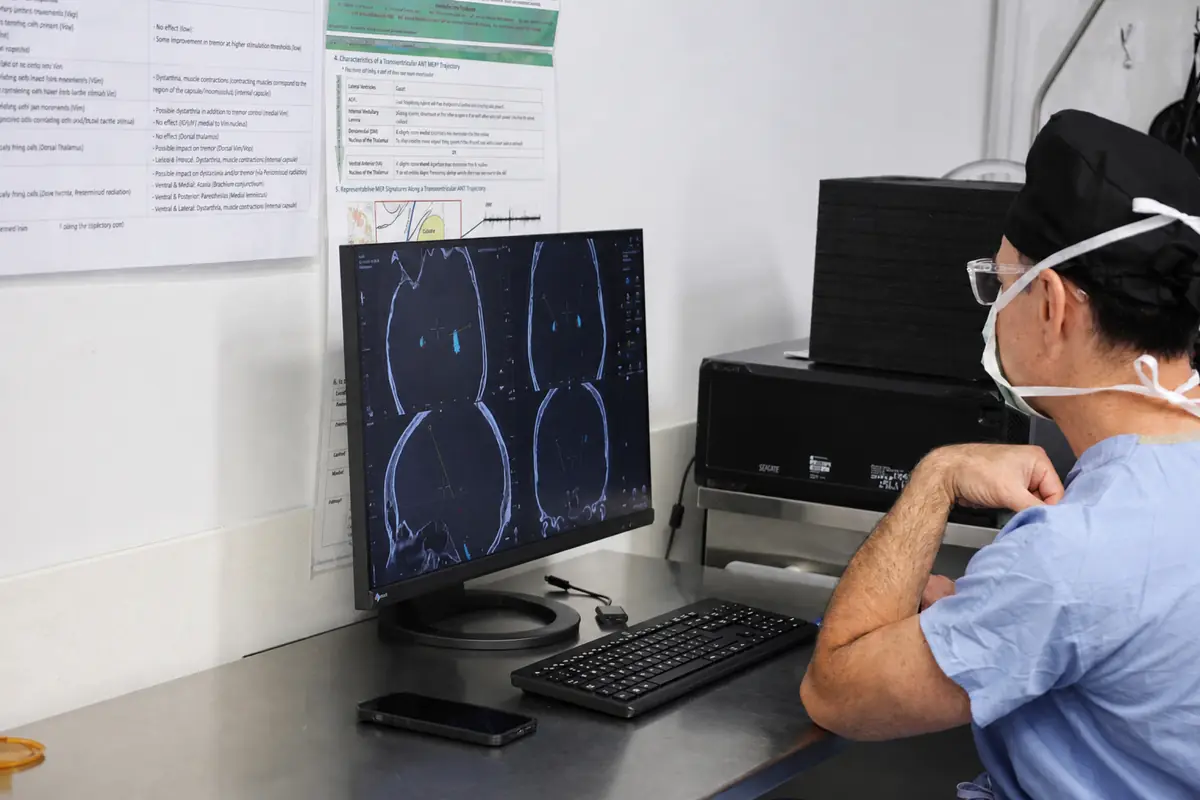
One example is something called tractography. This is a specialized MRI technique that helps visualize the “wiring” of the brain—the communication highways that connect different regions together. Instead of thinking about movement disorders as a problem in a single tiny spot, we now increasingly understand them as disorders involving larger brain networks.
This matters because the areas responsible for improving tremor or stiffness may sit very close to pathways involved in speech, balance, sensation, or coordination. Advanced imaging helps us better understand where those pathways are located and how to target treatment more thoughtfully.
Another growing area is probabilistic brain mapping, which uses large amounts of imaging and clinical data to help predict which areas of the brain are most likely to improve symptoms and which areas may be more associated with side effects. In simpler terms, modern neuromodulation is becoming less “one - size - fits -all” and more individualized for each patient.
Directional DBS Leads: Steering the Stimulation
Older DBS systems delivered electricity evenly in all directions around the electrode. Newer DBS systems use what are called directional or segmented leads, which allow us to shape and steer stimulation much more precisely.
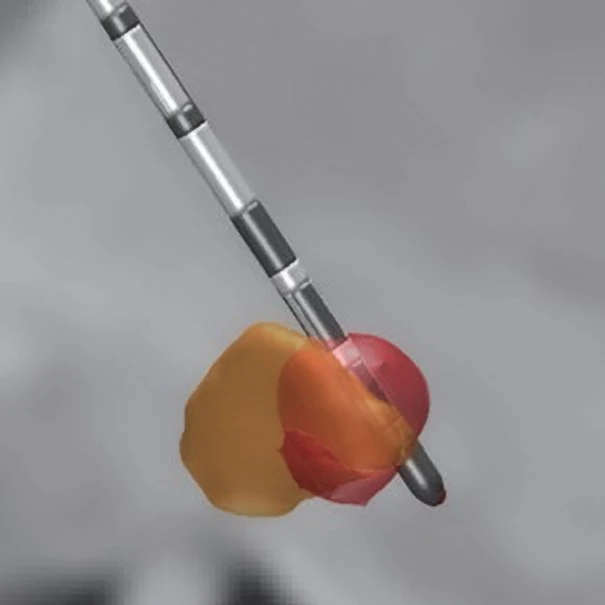
A simple way to think about it is the difference between:
-
a bare light bulb that shines everywhere,
-
and a flashlight beam that can be directed exactly where you want it to go.
This becomes important because the structures we are trying to treat are often extremely small and surrounded by nearby pathways that can produce side effects if stimulated unintentionally.
Directional DBS technology allows neurologists to fine-tune stimulation with much greater precision, often helping maximize symptom benefit while minimizing problems like speech changes, muscle pulling, tingling, or balance issues.
For patients, this often translates into more flexibility and more programming options over time.
Modern DBS Programming
DBS programming has become one of the most sophisticated parts of neuromodulation care.
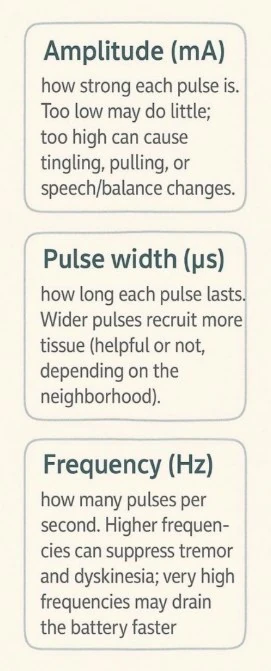
After DBS surgery, the neurologist adjusts the stimulation settings over time to optimize symptom control. Modern DBS systems now contain enormous numbers of possible programming combinations. In many ways, programming has evolved into a blend of neuroscience, engineering, and clinical experience.
Some newer systems now combine programming with advanced imaging. For example, certain platforms allow neurologists to visualize where the DBS lead sits relative to the patient's own brain anatomy and nearby pathways. Rather than relying only on symptoms during programming, these systems help provide a more visual roadmap for understanding where stimulation is going.
This does not replace the importance of clinical expertise or patient feedback. But it gives the programming team another layer of information that can help refine therapy in more complex cases.
DBS Systems That Can "Listen" to the Brain
One of the most exciting newer developments in DBS is the emergence of brain sensing technology.
Some modern DBS systems can now record electrical signals from the brain while stimulation is occurring. In other words, the system is not only stimulating the brain—it is also gathering information about how the brain is behaving.
Certain patterns of brain activity are associated with symptoms like tremor, rigidity, slowness, or dyskinesia. By studying these signals, neurologists can better understand how symptoms fluctuate throughout the day and how stimulation affects those patterns.
This technology is helping pave the way toward the next generation of "smart DBS" systems, sometimes called adaptive DBS or closed-loop DBS. The long-term goal is to create systems that may one day automatically adjust stimulation based on what the brain is doing in real time, somewhat similar to how a modern thermostat automatically adjusts room temperature.
The field is still evolving rapidly, but these developments represent one of the most important shifts in neuromodulation technology in years.
Remote DBS Programming
One of the major challenges in DBS care has traditionally been the need for repeated in-person programming visits, especially during the first months after surgery.
For patients who live far away—or for patients with mobility difficulties—this can become exhausting and time-consuming.
Some newer DBS systems now allow forms of remote programming, where adjustments can be performed through secure telemedicine systems under carefully controlled conditions. This means certain patients may be able to have some programming adjustments performed without physically traveling back to the center each time.
For patients living out of state or far from Chicago, this can significantly reduce travel burden while still allowing close follow-up with the same programming specialists who know their case.
Remote programming does not replace the importance of in-person neurologic evaluation, but it creates more flexibility and accessibility for long-term care.
Robotic-Assisted DBS Surgery
Modern DBS surgery increasingly uses robotic guidance systems to help improve precision and consistency.
The word "robotics" sometimes makes people imagine that a robot is performing surgery independently, which is not the case. The surgeon remains fully in control throughout the procedure. The robotic system functions more like an extremely precise positioning and alignment tool.
These systems help surgeons align trajectories with very high accuracy using advanced imaging and computerized planning. This can improve efficiency, precision, and reproducibility during surgery.
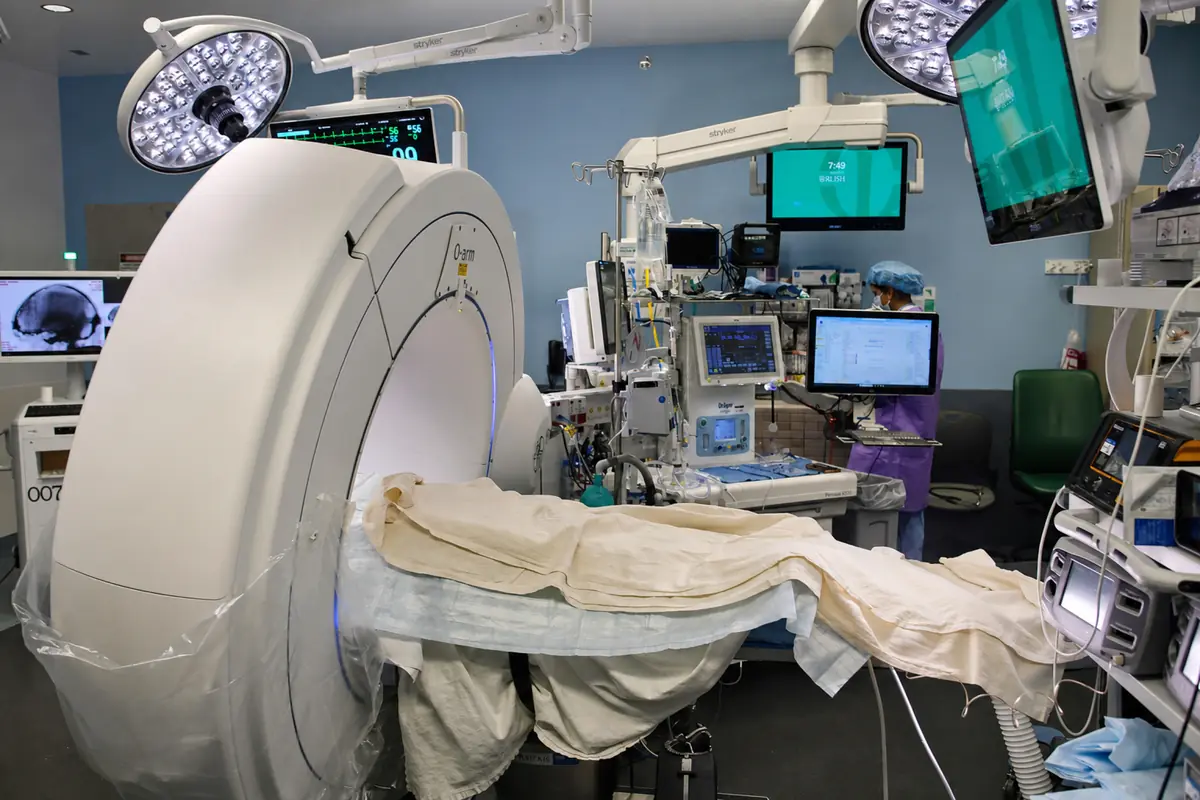
Robotic systems are particularly useful in modern asleep DBS workflows where imaging accuracy plays a central role.
Focused Ultrasound Technology
MRI-guided Focused Ultrasound itself is one of the most remarkable technological advances in modern neurosurgery.
More than one thousand ultrasound beams pass safely through the skull and meet at a precise point deep within the brain. Individually, each beam is harmless. But where they converge, enough heat is generated to treat a tiny target involved in tremor or other symptoms.
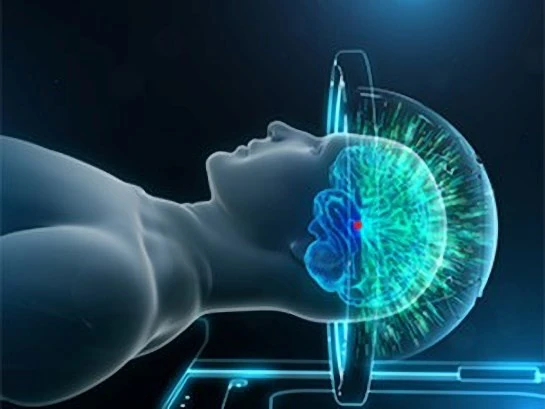
At the same time, MRI guidance allows the treatment team to monitor the process in real time. The MRI can actually measure temperature changes during treatment, allowing the team to gradually and carefully adjust the therapy while the patient remains awake and interactive.
This combination of imaging, engineering, and neurosurgery allows treatment to occur without any incision or implanted hardware.
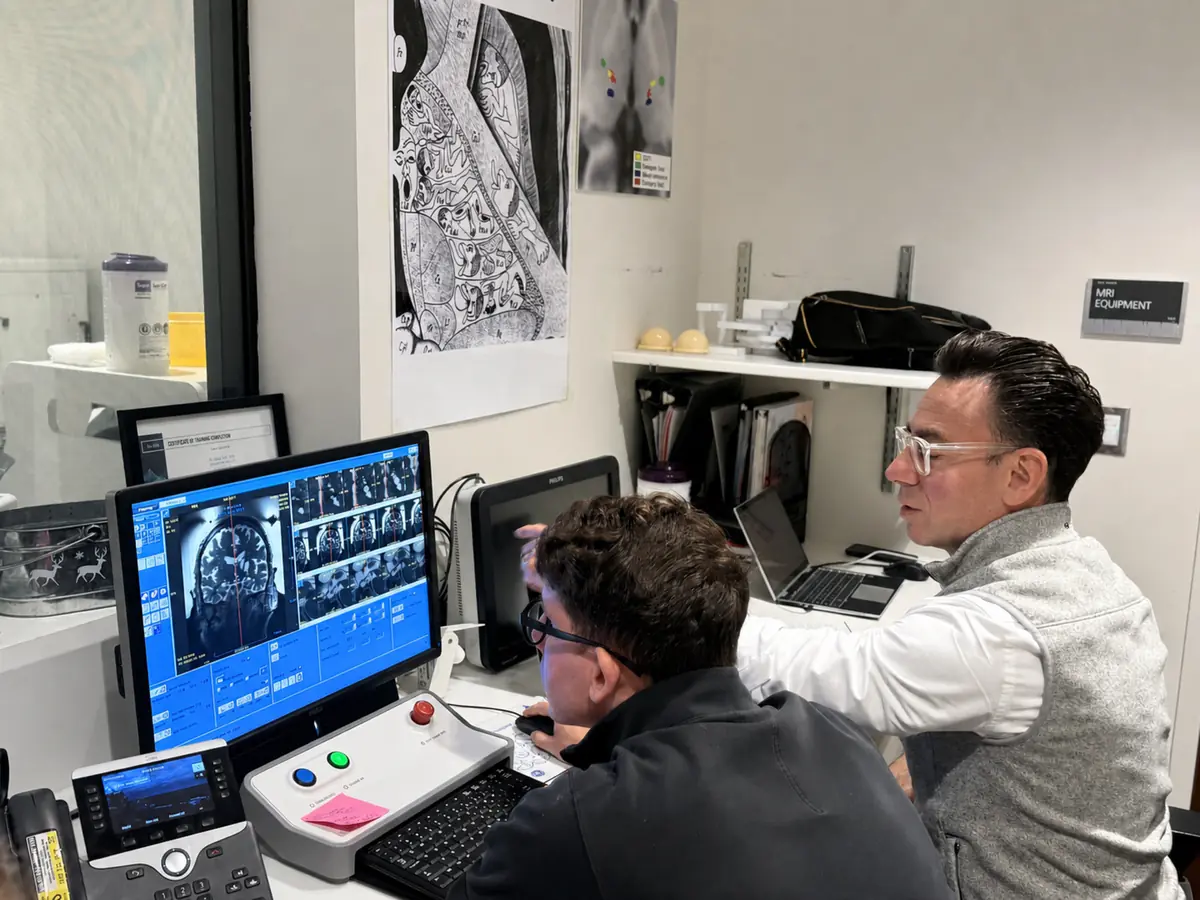
Focused ultrasound technology is also continuing to evolve rapidly, with newer treatment targets, improved imaging strategies, and expanding applications in movement disorders and beyond.
Looking Ahead
Neuromodulation is moving steadily toward more personalized and responsive treatment. Future technologies will likely include:
-
smarter adaptive stimulation systems,
-
AI-assisted programming tools,
-
wearable symptom tracking,
-
increasingly precise brain mapping,
-
and more individualized therapies based on each patient's unique brain circuitry.
At the same time, technology alone is never the goal. New tools are only useful if they meaningfully improve patient care, safety, comfort, and long-term outcomes.
The broader direction of the field is becoming increasingly clear: understanding the brain with greater precision so that treatment can become more individualized, less invasive, and more responsive to the needs of each patient over time.