Neurosurgery
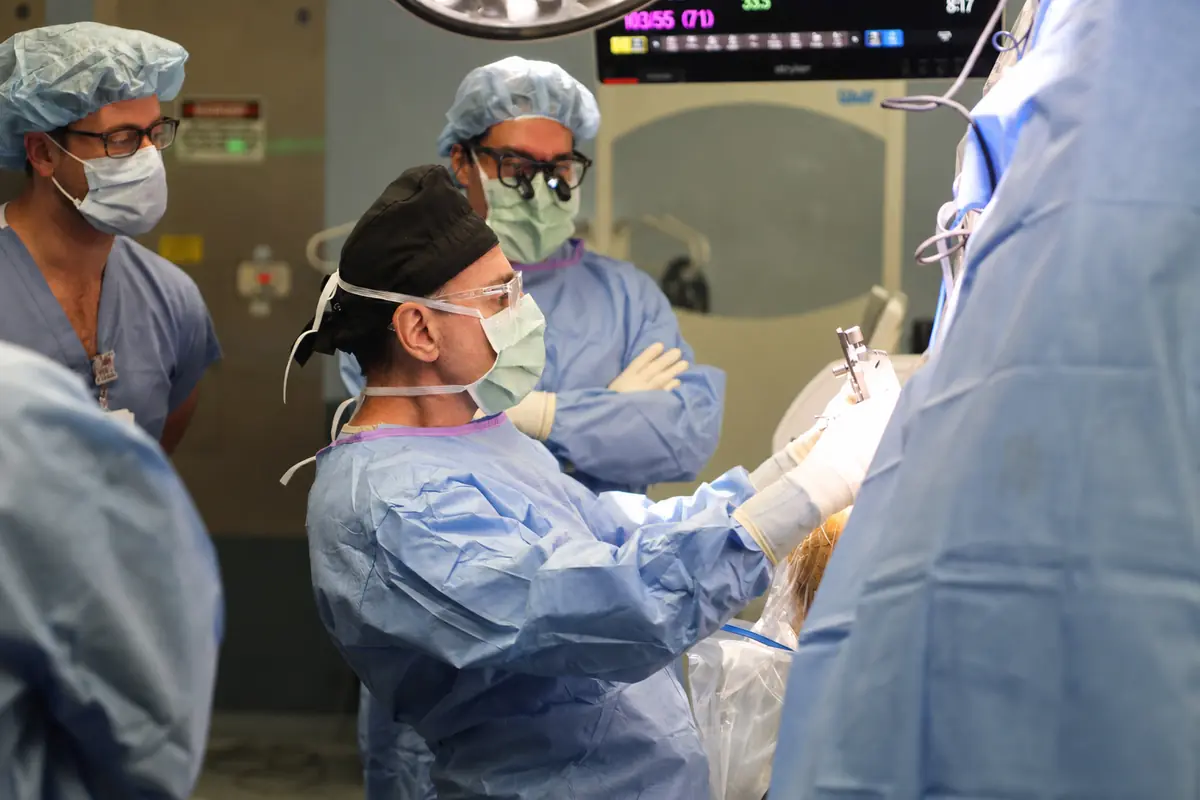
The neurosurgical component of the RUSH movement disorders and neuromodulation program is built around a philosophy that combines technical precision, multidisciplinary collaboration, and long-term patient relationships. Functional neurosurgery is one of the most specialized areas within neurosurgery, requiring not only mastery of surgical technique, but also a deep understanding of brain circuitry, neurologic disease, imaging, neurophysiology, and longitudinal patient care. At RUSH, neurosurgeons are integrated directly into the larger movement disorders and neuromodulation team rather than functioning separately from it. Patients interact directly with their surgeons early in the evaluation process, and those relationships often continue for many years after treatment.
The neurosurgical team at RUSH performs a broad range of advanced procedures including Deep Brain Stimulation (DBS), MRI-guided Focused Ultrasound (MRgFUS), epilepsy neuromodulation, stereo EEG (SEEG), laser ablation, brain mapping procedures, and other advanced functional neurosurgical treatments. The program combines extensive clinical experience with academic leadership and ongoing involvement in the evolution of the field itself.
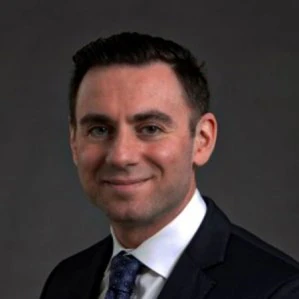
Sepehr Sani, MD
Professor of Neurosurgery
Director, Stereotactic and Functional Neurosurgery
Dr. Sepehr Sani is a functional neurosurgeon specializing in movement disorders, neuromodulation, Deep Brain Stimulation, and MRI-guided Focused Ultrasound. Over nearly two decades of practice, he has treated thousands of patients with complex tremor disorders, Parkinson’s disease, dystonia, epilepsy, and other neurologic conditions requiring advanced surgical intervention.
Dr. Sani’s career has been centered almost entirely around the field of functional neurosurgery and neuromodulation, driven by a longstanding passion for understanding and treating disorders of brain circuitry. He completed his neurosurgical training at RUSH University Medical Center before pursuing advanced fellowship training in functional and stereotactic neurosurgery at the University of California, San Francisco (UCSF), one of the world’s most recognized centers for movement disorders surgery and neuromodulation. After completing fellowship training, he returned to RUSH, where he has remained and helped build and expand the movement disorders and neuromodulation program over the course of his career.
Today, Dr. Sani directs one of the busiest DBS and focused ultrasound programs in the Midwest and has extensive experience with awake and asleep DBS techniques, advanced targeting strategies, robotic-assisted neurosurgery, bilateral focused ultrasound treatment, and modern neuromodulation technologies including segmented directional leads and brain sensing systems. His clinical philosophy emphasizes individualized treatment planning, careful patient selection, multidisciplinary collaboration, and long-term continuity of care.
A defining feature of Dr. Sani’s approach is the degree of continuity between surgical care and long-term patient management. Unlike systems in which the surgeon functions primarily as a procedural consultant, patients at RUSH often meet Dr. Sani early in the evaluation process and continue interacting with him and the neuromodulation team throughout treatment, programming, recovery, and long-term follow-up. This continuity allows for highly personalized decision-making and close integration between surgery, neurology, imaging, neuropsychology, and patient-centered care.
In addition to his clinical work, Dr. Sani has an extensive academic and educational background. He has authored more than 100 peer-reviewed scientific publications, numerous book chapters, and multiple patient education and academic books focused on movement disorders, Deep Brain Stimulation, focused ultrasound, epilepsy surgery, and neuromodulation. He regularly lectures nationally and internationally on advanced neuromodulation therapies, functional neurosurgery, surgical targeting, movement disorders, epilepsy surgery, and emerging neurotechnologies.
At the same time, despite the academic and technological aspects of the field, Dr. Sani’s primary professional passion remains direct patient care. He views the long-term relationships developed with patients and families as one of the most rewarding aspects of medicine. Outside of medicine, his greatest joy is his wife and two beautiful children, who remain the center of his life and help ground the perspective and compassion he brings to patient care.
Helpful Links
- Dr. Sani Publications — PubMed
- Dr. Sani Research Interests and Ongoing Projects — RUSH University faculty profile
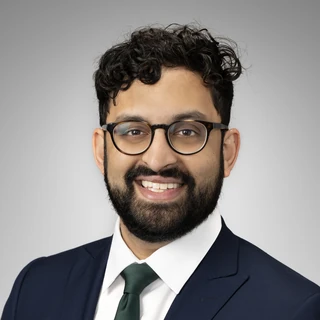
Arka Mallela, MD
Assistant Professor of Neurosurgery
Functional and Epilepsy Surgery
Dr. Arka Mallela is a neurosurgeon specializing in epilepsy surgery, brain mapping, functional neurosurgery, and neuromodulation. He joined the Rush neurosurgery faculty after completing extensive training at some of the country’s leading neurosurgical institutions, bringing additional depth and expertise to the neuromodulation and epilepsy surgery programs.
Dr. Mallela earned both his undergraduate and medical degrees from the Perelman School of Medicine at the University of Pennsylvania and completed his neurosurgical residency at the University of Pittsburgh Medical Center, one of the nation’s premier centers for functional neurosurgery and epilepsy surgery training. He subsequently completed advanced fellowships in both epilepsy and functional neurosurgery as well as neuro-oncological neurosurgery.
At Rush, Dr. Mallela leads the epilepsy surgery and brain mapping programs and works closely with specialists in neurology, neurophysiology, neuropsychology, and neurosurgery to evaluate and treat patients with medically refractory epilepsy and other complex neurologic conditions. His expertise includes stereo EEG (SEEG), laser ablation, responsive neurostimulation, thalamic neuromodulation, and advanced brain mapping techniques designed to preserve language, cognition, memory, and motor function during surgery.
In addition to epilepsy surgery, Dr. Mallela’s background in functional neurosurgery and neuromodulation contributes directly to the broader multidisciplinary neuromodulation program at Rush. His work reflects the increasingly interconnected nature of modern functional neurosurgery, where technologies developed for movement disorders, epilepsy, cognition, and brain mapping often overlap and inform one another.
Dr. Mallela also directs the Rush Center for Brain Mapping, which combines brain recording, imaging, and behavioral testing to understand how cognition, language, and memory emerge from human brain networks, and how the brain generates both normal and abnormal function. His research has received support from the National Institutes of Health and other national organizations.
Helpful Links
- Dr. Mallela Publications — PubMed
- Dr. Mallela Research Interests and Ongoing Projects — RUSH University faculty profile
{separator-line}
Together, the neurosurgical team at RUSH reflects both the breadth and depth of a modern academic neuromodulation center. While each surgeon brings distinct expertise and subspecialty focus, the program itself functions collaboratively, with movement disorders surgery, epilepsy surgery, brain mapping, focused ultrasound, and neuromodulation integrated into a coordinated multidisciplinary framework.
For patients, this means access not only to advanced surgical technologies, but also to surgeons who routinely collaborate across specialties, participate in interdisciplinary treatment planning, and remain involved long after the procedure itself is complete. The result is a neurosurgical program that combines high-volume experience, academic sophistication, technical precision, and long-term continuity of care within a highly coordinated and patient-centered environment.