Determining who is a good candidate for Deep Brain Stimulation is one of the most important parts of the entire treatment process. DBS is not a one-size-fits-all therapy. It works best when the diagnosis is correct, the symptoms being treated are known to respond to stimulation, the patient’s overall health and cognition support surgery, and the expectations are realistic. This is why experienced, high-volume centers matter. Patient selection relies not only on guidelines and imaging, but also on judgment developed through years of evaluating complex movement disorders and caring for patients before, during, and long after surgery. The literature consistently emphasizes that successful DBS depends on careful multidisciplinary evaluation, including movement disorders neurology, neurosurgery, neuropsychology, and, when appropriate, psychiatry. At RUSH, this is exactly how DBS candidacy is approached: each patient is evaluated as an individual, and the final recommendation reflects the consensus of an experienced interdisciplinary DBS team.
Parkinson’s Disease
For many patients with Parkinson’s disease, the question of DBS begins when the day becomes too unpredictable. From a patient’s perspective, this often happens when you are taking Parkinson’s medications three or more times per day, but still having too many ups and downs: medication wearing off before the next dose, tremor breaking through, stiffness or slowness returning, dyskinesias appearing when medication is working, or side effects limiting how much medication you can take. DBS is not usually considered because of one difficult day. It is considered when these patterns become frequent enough that they begin to interfere with independence, confidence, and quality of life.
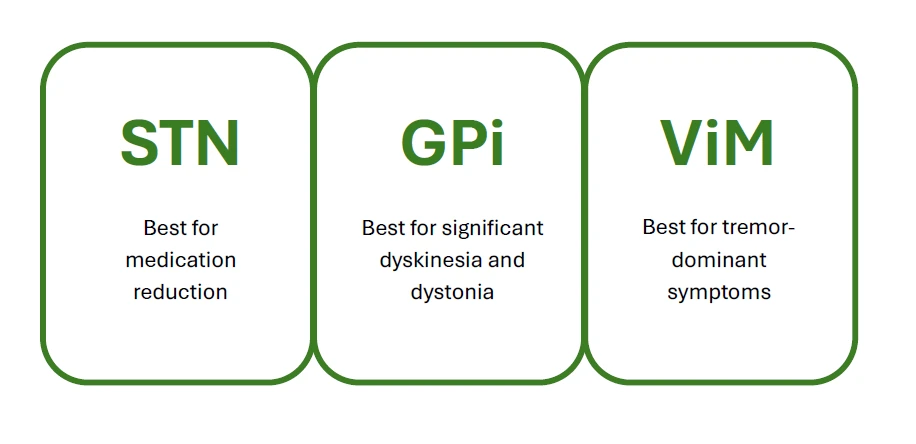
The best candidates for DBS in Parkinson’s disease generally have symptoms that are responsive to levodopa but no longer adequately controlled throughout the day, or they have medication-refractory tremor. The goal is to improve motor symptoms such as tremor, rigidity, bradykinesia, dyskinesia, and motor fluctuations, and in some patients to reduce medication burden. However, DBS does not treat every feature of Parkinson’s disease equally. Problems such as severe balance impairment, frequent falls, advanced cognitive decline, dementia, hallucinations, or speech and swallowing difficulties may not improve with DBS and may increase risk. Identifying those issues before surgery is central to responsible patient selection.
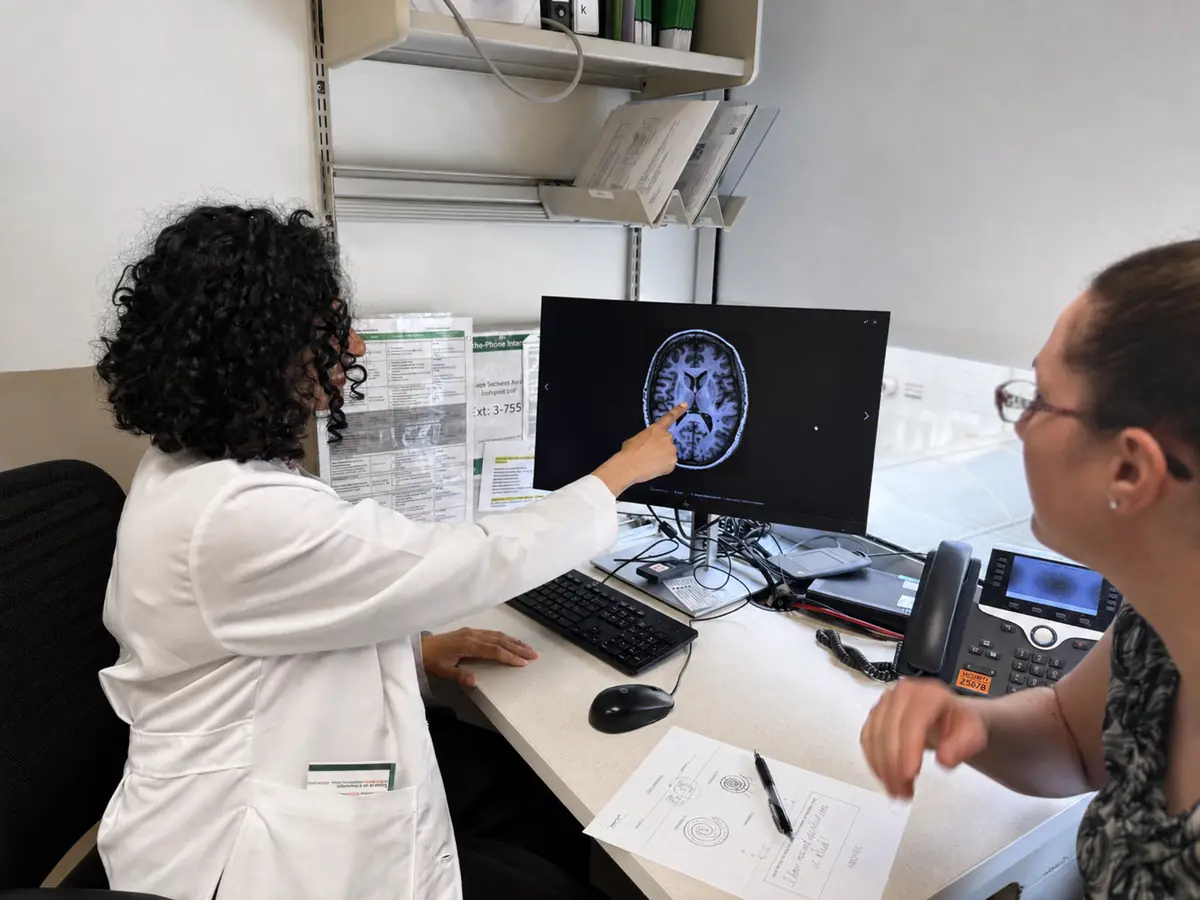
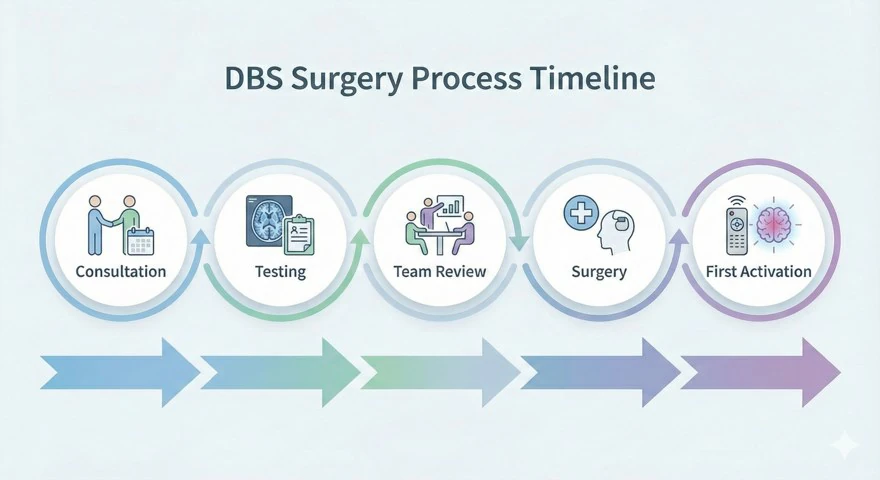
At RUSH, evaluation begins with a movement disorders neurologist who confirms the diagnosis, reviews the medication response, looks for red flags, and helps clarify which symptoms are most likely to improve. For Parkinson’s disease specifically, patients undergo formal ON/OFF testing. In this evaluation, Parkinson’s medications are held overnight so the team can examine the patient in the “OFF” state, when symptoms are at their worst. The patient then takes levodopa in clinic, and the examination is repeated once the medication has taken effect. The difference between the OFF and ON examinations helps predict which symptoms are likely to respond to DBS and which symptoms are less likely to change.
Patients also undergo formal neuropsychological testing with experts who understand Parkinson’s disease and DBS. This is not a pass-fail test. It is a careful assessment of memory, attention, processing speed, mood, and coping skills. The goal is to identify cognitive or emotional factors that may influence surgical risk, target choice, recovery, and long-term outcome. A high-resolution MRI of the brain is then obtained to confirm that the anatomy is favorable and to support precise surgical planning. After this evaluation is complete, each case is reviewed at an interdisciplinary conference with movement disorders neurologists, neurosurgeons, neuropsychologists, nurses, advanced practice providers, and coordinators. The purpose is to reach a shared, expert consensus about candidacy, target selection, surgical approach, expected benefit, and individualized risk.
Essential Tremor
For essential tremor, DBS candidacy is based on the diagnosis, severity of tremor, medication history, functional impairment, and patient goals. DBS is generally considered when tremor interferes with meaningful daily activities despite appropriate medication trials. This may include difficulty eating, drinking, writing, using utensils, shaving, applying makeup, typing, working, or participating socially without embarrassment or frustration. The goal is not cosmetic improvement. The goal is restoring function and independence.
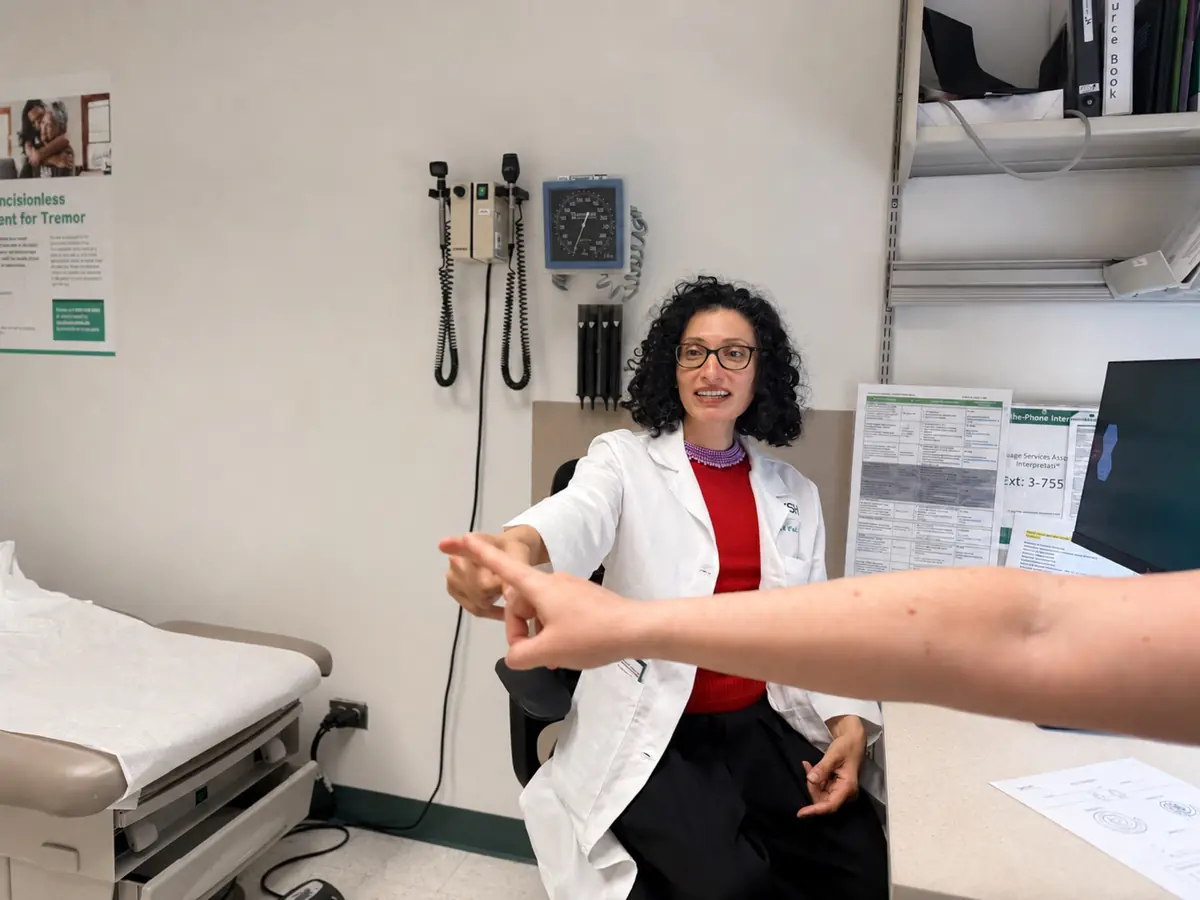
Before DBS is recommended, it is essential to confirm that the tremor truly fits a phenotype known to respond to DBS. This is more nuanced than it may sound. Not every tremor is essential tremor, and not every tremor syndrome responds equally well to stimulation. Tremor may be related to Parkinson’s disease, dystonia, medication effects, cerebellar disease, neuropathy, functional neurologic disorders, or mixed syndromes. This is why evaluation by an experienced movement disorders neurologist is critical. The neurologist confirms the diagnosis, documents the tremor pattern, reviews previous medication trials, and determines whether DBS is likely to improve the symptoms that matter most.
The structured evaluation for DBS in essential tremor typically includes consultation with a movement disorders neurologist, consultation with a neurosurgeon, high-resolution MRI of the brain, and, in selected patients, neuropsychological evaluation. Neuropsychological testing may be especially important when there are concerns about memory, thinking, mood, age-related vulnerability, or the possibility of bilateral stimulation. These steps are not simply administrative hurdles. They are designed to make sure the diagnosis is correct, the tremor phenotype is appropriate, and the patient understands the tradeoffs between DBS, focused ultrasound, medications, and observation.
DBS is often especially valuable when tremor affects both hands, involves the head or voice, occurs in a younger patient who may need long-term adjustability, or when the ability to fine-tune treatment over time is important. Unlike focused ultrasound, DBS does not create a permanent lesion and can be adjusted as tremor changes. DBS is often preferred when both hands are affected or when long-term adjustability is a major priority. Long-term studies support DBS as a durable therapy for essential tremor, although tremor can evolve over time and stimulation settings may need adjustment.
At a highly experienced center, the decision is not simply “DBS or no DBS.” It is whether the patient’s tremor syndrome, anatomy, functional goals, risk profile, and expectations align with the strengths of DBS. This is an area where accumulated experience matters substantially.
Dystonia
Dystonia can be one of the most challenging movement disorders to treat. Some forms respond well to botulinum toxin injections, medications, therapy, or sensory tricks. Others are severe, painful, disfiguring, medication-refractory, and deeply disabling. Dystonia may be focal, segmental, multifocal, generalized, genetic, idiopathic, tardive, or secondary to another neurologic condition. Because these different forms behave differently, DBS candidacy must be highly individualized.
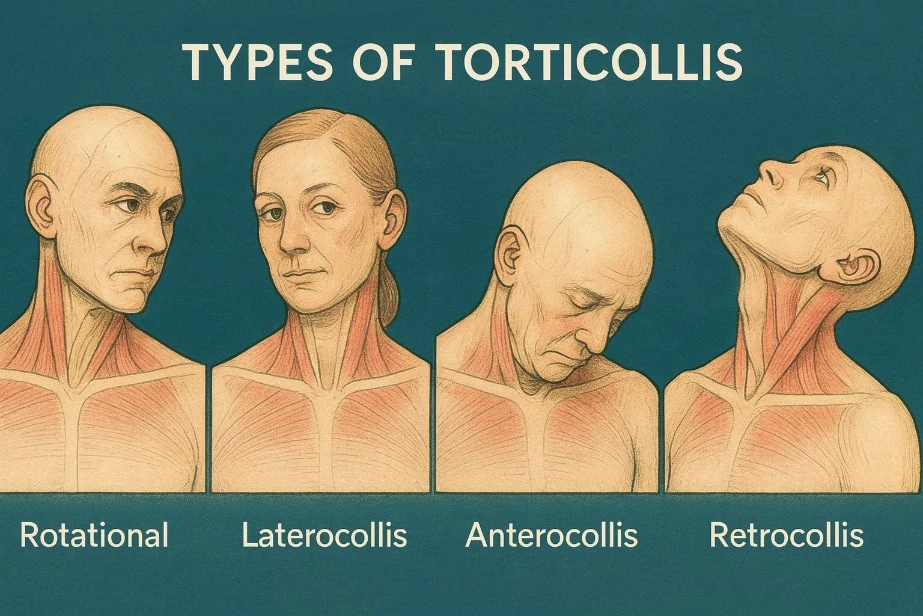
DBS is most often considered when dystonia remains disabling despite appropriate nonsurgical treatment. This may include generalized dystonia, segmental dystonia, severe cervical dystonia that no longer responds adequately to botulinum toxin, dystonia requiring doses that cause unacceptable side effects, or complex dystonia patterns involving too many muscles to treat effectively with injections alone. The usual target is the globus pallidus internus, or GPi. DBS for dystonia is most commonly offered for primary generalized dystonia and cervical dystonia refractory to botulinum toxin, and that benefit often builds slowly over weeks to months, sometimes continuing for 6–12 months or longer.
The literature supports GPi DBS as an important therapy for medically refractory dystonia, with stronger and more predictable responses often seen in primary dystonia compared with many secondary dystonias. Predictors of outcome include dystonia type, disease duration, body distribution, fixed orthopedic deformities, MRI findings, genetic cause, lead placement accuracy, programming, and the experience of the DBS team. This is why patient selection for dystonia depends heavily on expert clinical judgment.
At RUSH, dystonia candidacy is evaluated case by case by movement disorders neurologists and neurosurgeons with specific experience in DBS. The goal is to determine whether the dystonia pattern is one that has a reasonable likelihood of meaningful improvement, whether pain and disability are severe enough to justify surgery, whether fixed skeletal changes may limit improvement, and whether other neurologic features—such as spasticity, ataxia, or structural brain injury—may reduce the expected benefit. The discussion is careful and realistic. DBS can be transformative for some patients with dystonia, but it must be offered thoughtfully, with an understanding that improvement may be gradual and variable.
Psychiatric and Behavioral Conditions
DBS for psychiatric and behavioral conditions remains investigational. Conditions such as treatment-resistant depression, obsessive-compulsive disorder, addiction, and severe eating disorders are areas of active research, but they are not approached in the same way as standard DBS for Parkinson’s disease, essential tremor, or dystonia. Patients interested in these areas should refer to the Research and Innovation section for current clinical trials and ongoing studies.
RUSH participates in advanced neuromodulation research, including studies such as Abbott’s TRANSCEND trial, which is evaluating DBS of the subcallosal cingulate network for treatment-resistant depression. Abbott describes TRANSCEND as a prospective, multicenter clinical trial for patients with depression who have not found relief after multiple antidepressant treatments; the device use in that study is investigational. These research pathways require separate screening, study-specific criteria, and careful discussion of risks, benefits, and alternatives.