
Patient Care
What the process actually looks like
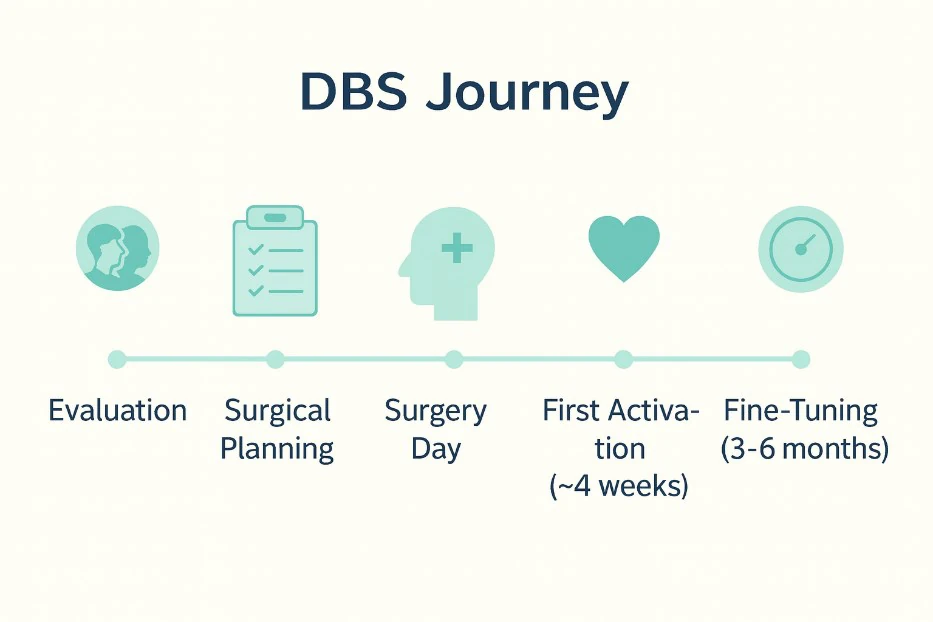
Much of the anxiety patients describe comes from not knowing what happens next. This page sets out the whole path — the shared beginning, the two routes that follow, and what happens once treatment is behind you.
Stage one — the same for everyone
Getting to a clear answer
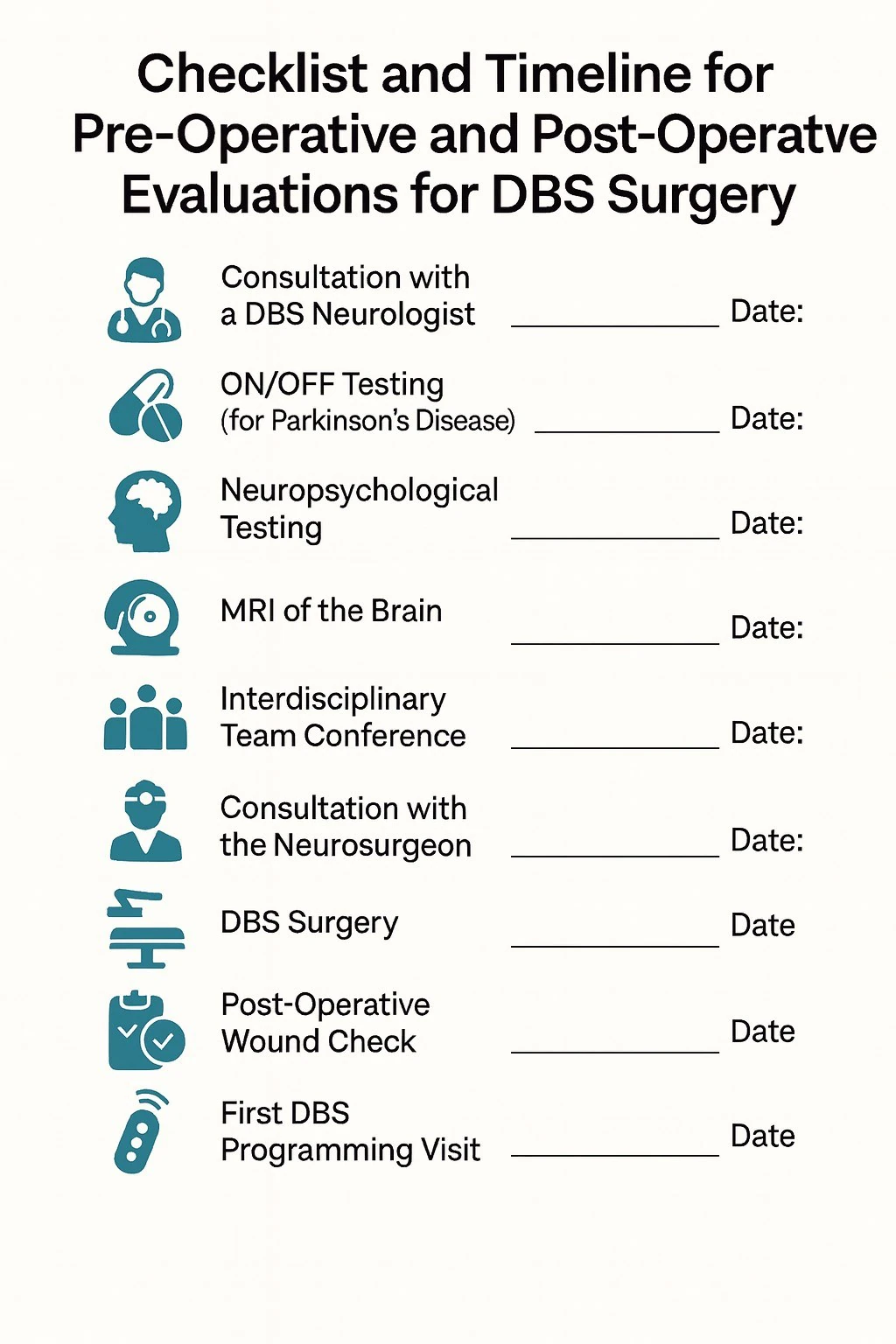
Nothing is decided at the first appointment. This stage establishes the diagnosis, identifies which symptom is limiting you most, and determines whether an advanced therapy would genuinely help.
-
1
Day one
Get in touch
No referral is required. Call the coordinators, submit the consultation form, or ask your neurologist to refer you. You will be told what records to send and whether your first visit can be done by video. Request an evaluation →
-
2
First visit, often by video
Consultation with a movement disorders neurologist
The diagnosis is confirmed or revisited, medications are reviewed in detail, and you are asked what the condition has taken away that you would most like back — buttoning a shirt, holding a cup, signing your name. What to expect →
-
3
Over the following weeks
Testing
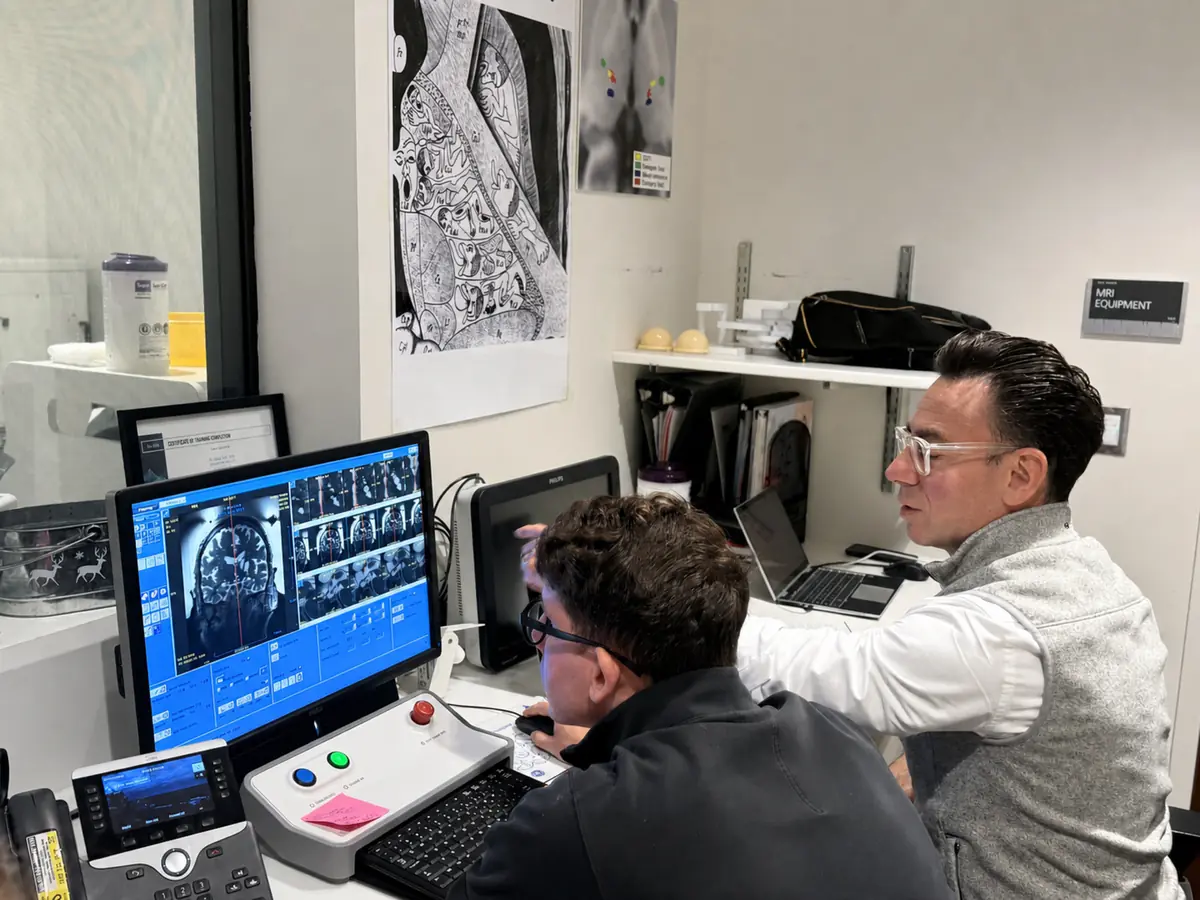
What is required depends on the pathway. For DBS candidates with Parkinson's disease this usually includes a levodopa challenge, high-resolution MRI and formal neuropsychological testing. For focused ultrasound it includes a CT of the skull, used to calculate the skull density ratio.
-
4
Team review
A recommendation you can act on
Candidacy is decided by the group rather than by one clinician. You should leave knowing which symptoms are likely to improve, which are not, and what the honest risks are.
Stage two — two different routes
From decision to treatment
If the answer is DBS
Surgery, then programming
Weeks before: imaging, laboratory tests and medication adjustments, particularly blood thinners. Your surgeon builds a trajectory plan from your own anatomy.
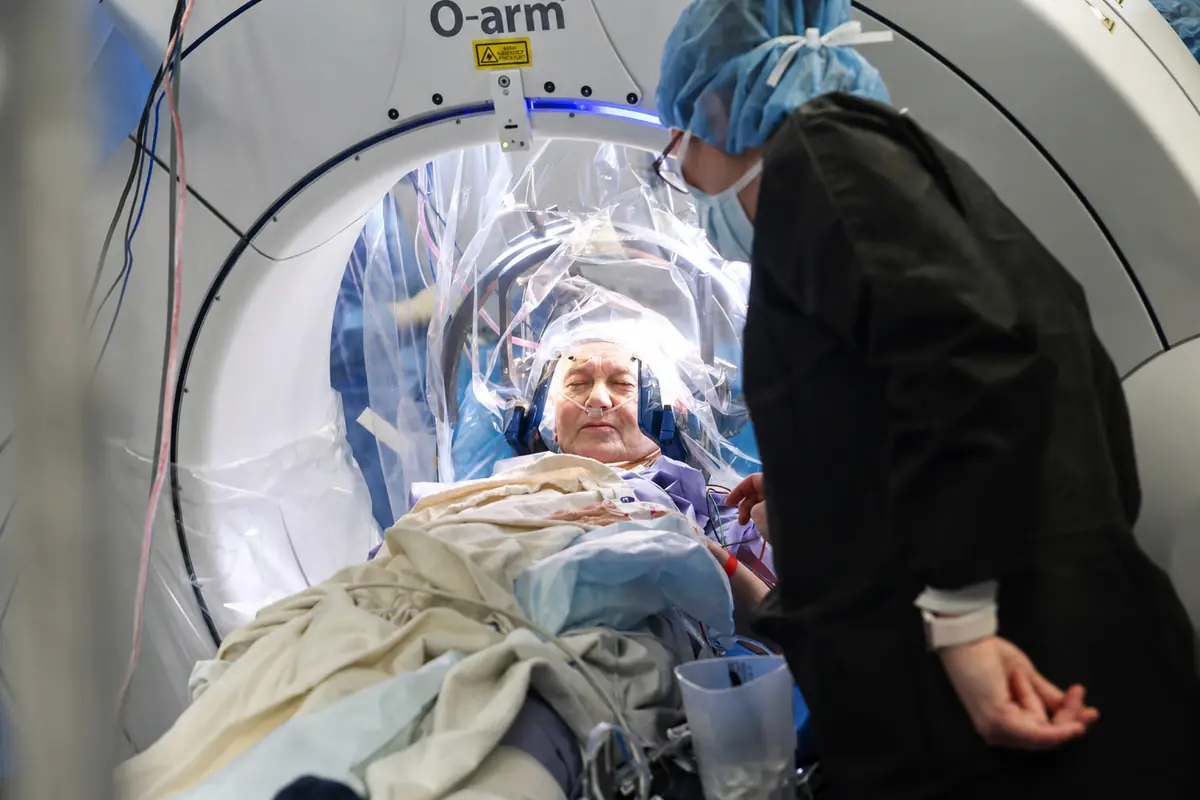
Surgery day: usually one night in hospital. Awake or asleep; bilateral asleep implantation typically takes two to three hours.
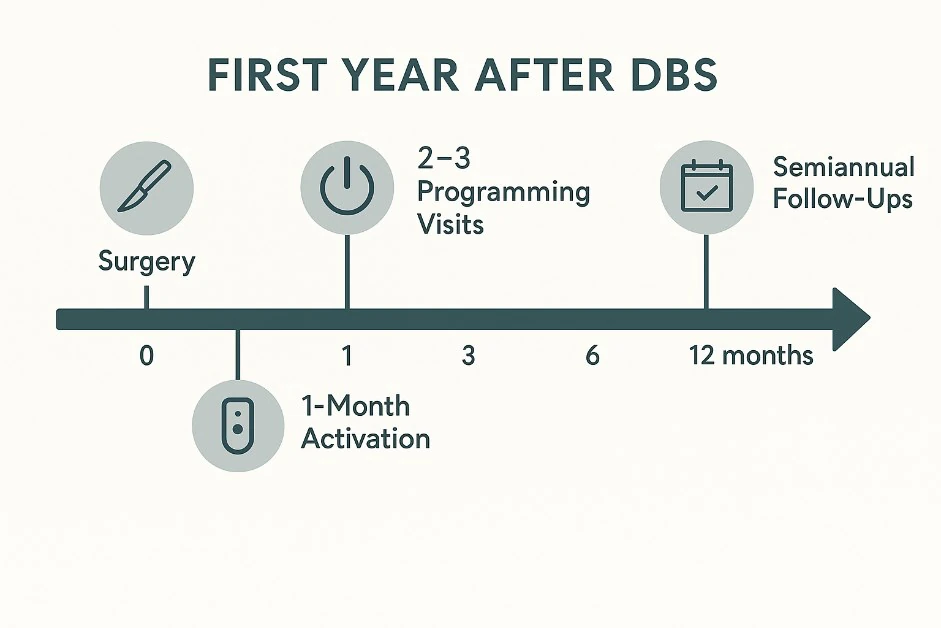
About four weeks later: the system is switched on for the first time, deliberately left off until then so swelling can settle.
Three to six months: stepwise programming with medication adjusted alongside stimulation. This is where the benefit is built.
If the answer is focused ultrasound
One session, awake
Before the day: skull CT, MRI and a medication review. Preparation is lighter than for surgery because there is no incision and no implant.
Treatment day: the head is shaved, a frame is placed under local anesthetic, and treatment proceeds in graded steps inside the MRI scanner while you stay awake and are tested between sonications.
Same day: most patients go home, and many notice the change in tremor before they leave.
First weeks: mild imbalance, tingling or fatigue are common and usually settle. Much of the follow-up can happen closer to home.
Stage three
The first year, and after
The most common misunderstanding about DBS is that surgery is the treatment. Surgery creates the opportunity; programming realizes it. Outcomes depend heavily on the quality and persistence of that follow-up, which is why the team that evaluated you stays involved.
Focused ultrasound follows a different rhythm. There is no device to manage, so follow-up is lighter. Tremor improvement is usually durable, though in a small number of patients some tremor returns over the years.
In both cases the underlying condition continues. Neither therapy stops Parkinson's disease from progressing. What they remove is a large part of the daily disability caused by the symptoms they treat.
Recovery and expectations →
Life with DBS →
Life after focused ultrasound →
Traveling from out of town?
Patients come to RUSH from across the region, the country and abroad. The first visit can usually be done by video, imaging can often be obtained locally and uploaded, and the coordinators can group appointments around the days you need to be here. Plan your visit →
Ready to take the first step?
You do not need to know which treatment you want. Working that out is what the evaluation is for.