Patients and families often have similar questions when considering DBS. The answers below reflect the most common concerns and are based on extensive clinical experience and long-term care of patients undergoing this therapy.
No. DBS does not cure Parkinson’s disease, essential tremor, or dystonia, and it does not stop disease progression. Its purpose is to improve specific symptoms by regulating abnormal brain activity. Many patients experience meaningful improvement in daily function, but ongoing care is still required.
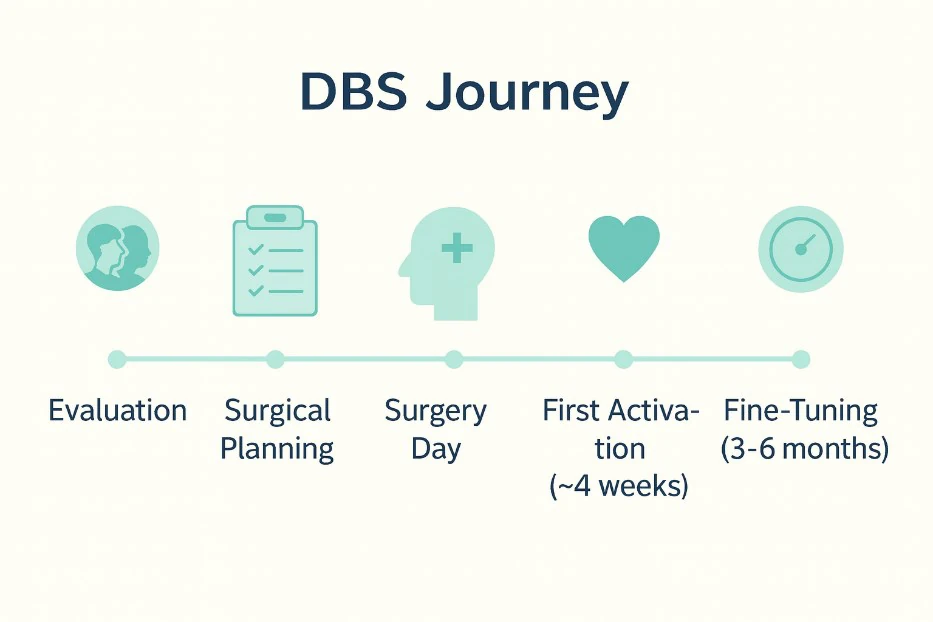
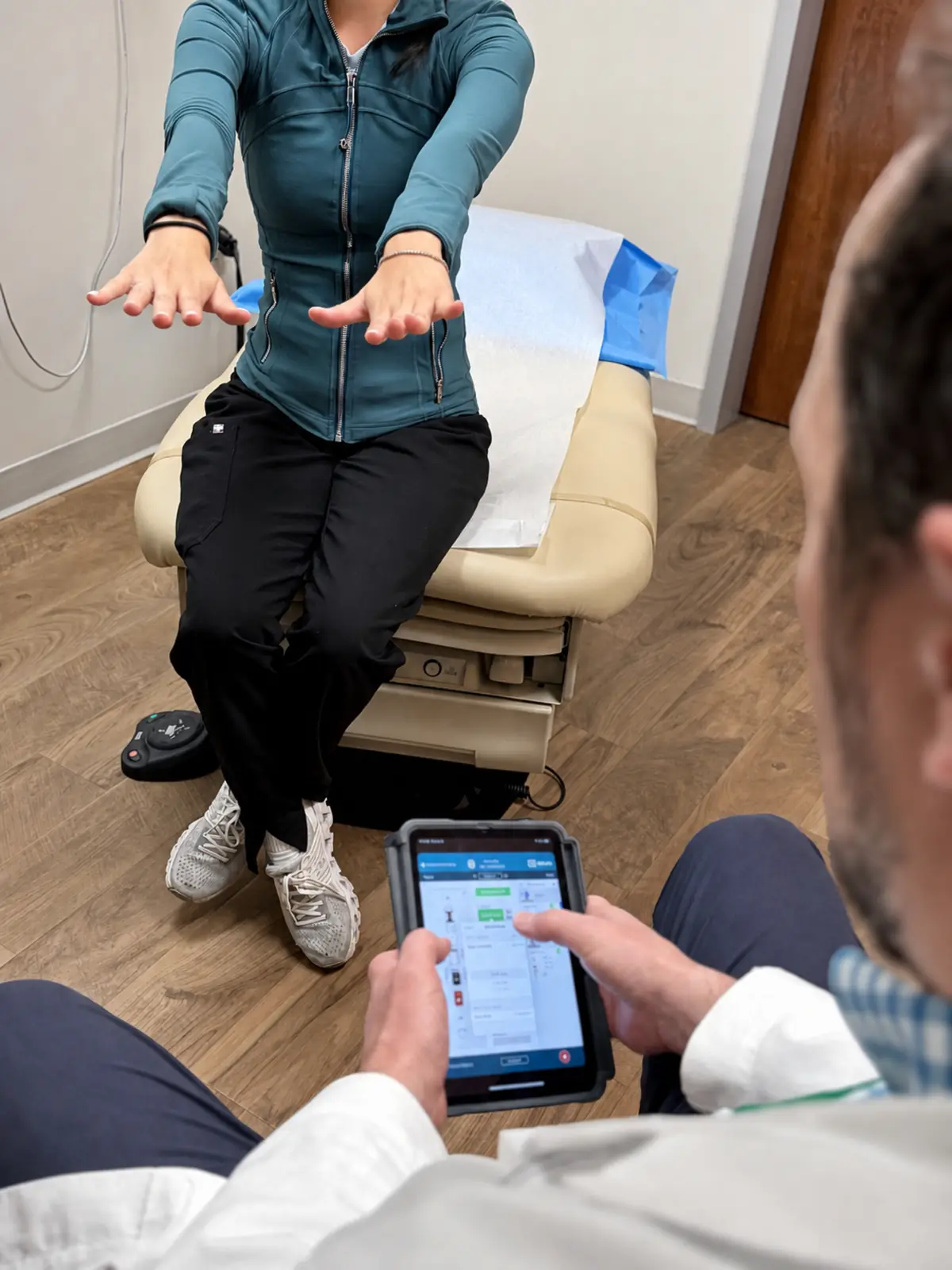
Improvement does not typically occur immediately after surgery because the system is not turned on right away. At RUSH, programming usually begins about four weeks after surgery. From that point, improvement develops gradually as settings are adjusted over several visits.
In most cases, yes—but often at lower or more manageable doses. DBS works together with medication rather than completely replacing it. The exact plan is individualized based on your condition and response to stimulation.
Most patients are surprised by how manageable the procedure is. The incisions are small, and discomfort after surgery is usually mild. Pain is typically controlled with non-opioid medications such as acetaminophen and anti-inflammatory medications.
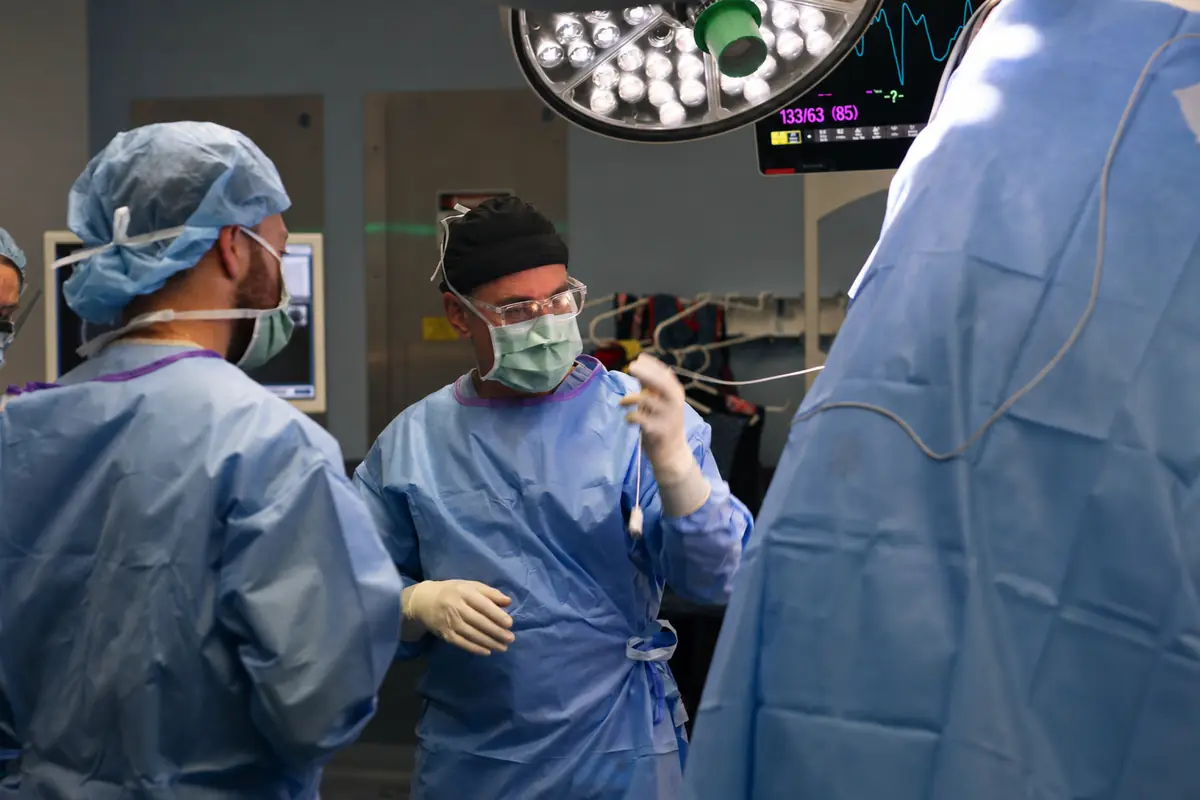
DBS can be performed either awake or asleep. Both approaches are well-established and effective. The decision depends on your specific condition, anatomy, and preferences, and is discussed in detail during your evaluation.
DBS is generally safe, but risks include bleeding, infection, hardware-related issues, and stimulation-related side effects. At experienced centers, serious complications are uncommon. Many side effects related to stimulation can be adjusted through programming.
Most patients stay in the hospital overnight and go home the next day. Recovery is typically straightforward, with some fatigue in the first few days. Normal daily activities can usually be resumed relatively quickly, with gradual return to full activity.
Programming is the process of adjusting the DBS device to achieve the best symptom control. It is done over multiple visits because each patient responds differently, and fine-tuning is necessary to balance benefit and side effects. This is a critical part of the overall treatment.
Most of the system is internal. The battery is placed under the skin in the chest, similar to a pacemaker, and the wires run beneath the skin. There may be small scars, but they are typically not prominent.
Battery life depends on the type of system and how it is used. Rechargeable systems can last many years with regular charging, while non-rechargeable systems typically require replacement every few years. Battery replacement is a relatively simple outpatient procedure.
Yes. You can travel and go through airport security, though you should carry your device identification card. Security systems are generally safe, but you may be screened differently.
Many modern DBS systems are MRI-compatible under specific conditions. It is important to inform all healthcare providers that you have a DBS device so proper precautions can be taken.
If the device is turned off, symptoms typically return to their baseline state. This is one of the advantages of DBS—it is adjustable and reversible.
Yes. DBS is designed to be adjustable. As your symptoms change, the device can be reprogrammed to maintain optimal benefit.
The best way to determine this is through a comprehensive evaluation with a specialized team. DBS is recommended when symptoms are not adequately controlled with medication and are known to respond to stimulation.
DBS can provide sustained symptom improvement for many years. While the underlying condition may progress, the ability to adjust stimulation over time allows continued management of symptoms.