
Tourette syndrome is a neurodevelopmental condition of the nervous system that causes repeated, involuntary movements and sounds known as tics. These tics may be simple, such as eye blinking, facial movements, shoulder shrugging, throat clearing, sniffing, or grunting, or they may be more complex, involving coordinated movements or vocalizations. Tourette syndrome typically begins in childhood, most often between ages 5 and 10, and symptoms can change over time in type, frequency, and severity.
Understanding Tourette syndrome
The history of Tourette syndrome reflects how medicine has gradually come to understand disorders that sit at the intersection of movement, behavior, and emotion. The condition is named after Georges Gilles de la Tourette, the French neurologist who described a group of patients with motor and vocal tics in the late 19th century. Since then, Tourette syndrome has been viewed through both neurological and psychiatric lenses. Medically, it sits in a space between the two: it is a movement disorder because tics are abnormal, involuntary motor and vocal phenomena, but it is also deeply connected to psychiatric and behavioral symptoms, including anxiety, obsessive-compulsive symptoms, attention difficulties, impulsivity, and emotional dysregulation.
The underlying cause of Tourette syndrome is not fully understood. Current thinking points to altered activity within brain circuits that connect the cortex, basal ganglia, thalamus, and limbic networks—systems involved in movement control, habit formation, attention, emotional regulation, and behavioral inhibition. This helps explain why Tourette syndrome cannot be understood purely as a “movement problem” or purely as a “psychiatric problem.” For many patients, the tics are only one part of the condition. Co-occurring symptoms such as ADHD, anxiety, OCD, mood symptoms, and social stress may cause as much impairment—or sometimes more—than the tics themselves.
When treatment is needed
Many people with Tourette syndrome have mild symptoms and do not require medical treatment. Tics may be noticeable but manageable, and with education, support, and accommodations, many children and adults function well at home, school, work, and socially. Importantly, Tourette syndrome often improves with time. In most cases, tics decrease during adolescence and early adulthood, and in some patients they may disappear almost entirely. This natural history is one of the reasons physicians are cautious about invasive treatment, especially in younger patients.
For some patients, however, Tourette syndrome can be severe and life-altering. Tics may be painful, socially disruptive, physically injurious, or so frequent that they interfere with learning, working, driving, sleeping, speaking, or interacting with others. Some patients experience violent neck, trunk, or limb movements; others may have vocal tics that are deeply embarrassing or misunderstood by the public. The burden can be compounded by stigma, bullying, isolation, anxiety, and depression. In these cases, treatment is not simply about reducing a tic score—it is about restoring safety, function, dignity, and the ability to participate in life.
First-line treatment
The first-line approach to Tourette syndrome is usually education, behavioral treatment, and medication when needed. Comprehensive Behavioral Intervention for Tics, known as CBIT, is an evidence-based behavioral therapy that can help many patients recognize tic urges and use competing responses to reduce tic impact. Medications may also be used when tics cause pain, injury, emotional distress, or interference with school, work, or social life. Treatment plans often also address co-occurring ADHD, anxiety, OCD, or mood symptoms, because improving these conditions can substantially improve quality of life.
When DBS is considered
A small subset of patients remains severely affected despite appropriate behavioral therapy, medication, psychiatric care, and supportive interventions. For these highly selected cases, neuromodulation may be considered. Deep brain stimulation, or DBS, is the main neuromodulation approach studied for severe, treatment-refractory Tourette syndrome. DBS uses implanted electrodes to deliver controlled electrical stimulation to specific brain circuits involved in tic generation and behavioral regulation. It is not a first-line treatment and is not appropriate for mild or moderate Tourette syndrome. Rather, it is reserved for the rare patient whose symptoms are disabling, persistent, dangerous, and refractory to comprehensive treatment.
How DBS for Tourette developed
The modern history of DBS for Tourette syndrome began with highly selected case reports and small series targeting thalamic and basal ganglia circuits. Over time, several targets have been explored, including the centromedian-parafascicular thalamic region, the globus pallidus internus, and limbic targets such as the anterior limb of the internal capsule and nucleus accumbens. A 2006 expert consensus paper from the Tourette Syndrome Association emphasized careful patient selection and standardized assessment, reflecting early recognition that DBS for Tourette syndrome required particular caution because the condition often begins in childhood and may improve spontaneously.
What the evidence shows
The evidence base has grown, but it remains more limited than for DBS in Parkinson’s disease or essential tremor. A 2016 systematic review and meta-analysis pooling 156 reported cases found significant improvement in tic severity after DBS, with an overall Yale Global Tic Severity Scale improvement of approximately 53%. A larger 2021 systematic review and meta-analysis including 65 studies and 376 patients reported that 69% of patients had greater than 50% reduction in Yale Global Tic Severity Scale scores, while also noting that different targets may influence tic and obsessive-compulsive symptoms differently.
More recent multisite and imaging-based work has tried to refine targeting and better understand which patients are most likely to benefit. One international multisite study collected data from 123 patients and found that tics and obsessive-compulsive behaviors improved over time after DBS, while emphasizing that clinical responses vary and may depend on the precise region of stimulation. Emerging work is also exploring responsive or adaptive DBS approaches, in which stimulation may be adjusted based on brain signals rather than delivered continuously, but this remains investigational.
Timing and age
Because Tourette syndrome commonly affects children and adolescents, timing is especially important. In many patients, tics peak in childhood or early adolescence and improve later. For that reason, DBS is generally considered only after a long and careful course of evaluation, when symptoms are severe, persistent, disabling, and clearly refractory to standard treatments. The decision must involve specialists with expertise in movement disorders, psychiatry, psychology, neurosurgery, and long-term neuromodulation care. The goal is not simply to intervene because symptoms are present, but to identify the rare situation in which the severity and persistence of symptoms justify the risks and responsibilities of an implanted device.
Our approach at RUSH
At RUSH, our approach to Tourette syndrome is grounded in careful evaluation, multidisciplinary judgment, and respect for the complexity of the condition. We recognize that severe Tourette syndrome can sit at the boundary between neurology and psychiatry, and that patients may suffer from both visible tics and less visible emotional, behavioral, and social consequences. Our team’s role is to help determine whether advanced neuromodulation is appropriate, to discuss realistic expectations, and to support patients and families through a thoughtful, individualized decision-making process.
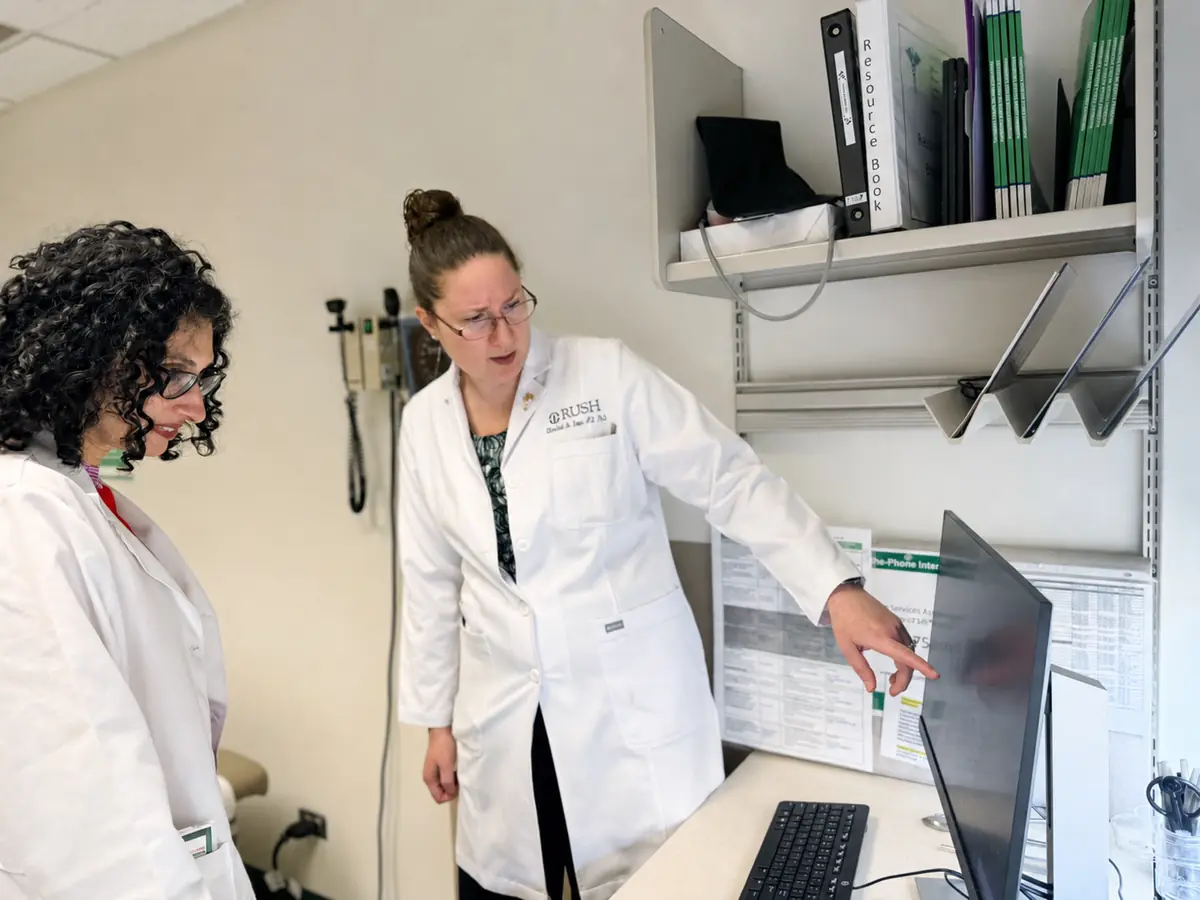
Our center is committed to advancing responsible neuromodulation for complex neurological and psychiatric conditions. For patients with severe, refractory Tourette syndrome, DBS may offer a path toward reduced tic burden and improved daily function, but it must be considered with care, caution, and a full understanding of the patient’s age, symptoms, natural history, prior treatments, and goals.