
Obsessive-compulsive disorder, or OCD, is a complex psychiatric condition that exists on a spectrum. Many people experience occasional repetitive thoughts, worries, preferences for order, or checking behaviors in daily life. In mild forms, these traits may even be helpful, allowing a person to be careful, organized, or detail-oriented. OCD becomes a medical disorder when intrusive thoughts and repetitive behaviors begin to consume time, cause distress, and interfere with the ability to function.
When OCD becomes disabling
For patients with more severe OCD, the condition can be profoundly disabling. Obsessions may appear as unwanted, intrusive thoughts, fears, images, or urges that feel impossible to dismiss. Compulsions are behaviors or mental rituals performed to reduce anxiety or prevent a feared outcome, even when the person recognizes that the behavior may not be rational. Over time, the cycle of obsession and compulsion can become paralyzing, affecting school, work, relationships, sleep, independence, and quality of life.
OCD can affect adolescents and adults, men and women, and people from every background. It is not a character flaw or a lack of willpower. It is a brain-based condition involving networks that regulate anxiety, threat detection, habit formation, decision-making, and emotional control. In severe cases, patients may spend hours each day trapped in rituals or intrusive thoughts, leaving little room for normal life. The distress can be devastating, and many patients and families describe the condition as narrowing the world around them.
Established treatment
For many people, OCD can be treated effectively with evidence-based therapy, particularly exposure and response prevention, and with medications such as selective serotonin reuptake inhibitors. These treatments remain the foundation of care and help many patients achieve meaningful improvement. However, a minority of patients remain severely symptomatic despite appropriate medication trials and specialized psychotherapy. Reviews estimate that about 10% of patients may remain treatment-refractory, even after standard pharmacologic and behavioral treatment.
When neuromodulation is considered
For these patients, neuromodulation may be considered. The goal is not to “erase” personality or remove normal caution, but to reduce the pathologic brain circuit activity that keeps patients locked in repetitive, distressing, and disabling patterns. Deep brain stimulation, or DBS, is the most established implanted neuromodulation approach for severe, treatment-resistant OCD. DBS uses thin implanted electrodes to deliver controlled electrical stimulation to specific brain circuits involved in obsessive thoughts, compulsive behaviors, and anxiety regulation.
How DBS for OCD developed
The history of DBS for OCD grew out of earlier neurosurgical approaches for severe psychiatric illness, including lesion-based procedures such as anterior capsulotomy. DBS offered a different concept: modulation rather than permanent destruction of tissue. Early studies focused on regions within the cortico-striato-thalamo-cortical circuits, including the anterior limb of the internal capsule, ventral capsule/ventral striatum, nucleus accumbens, subthalamic nucleus, and related structures. A major worldwide experience published by Greenberg and colleagues found clinically significant symptom reduction and functional improvement in about two-thirds of patients treated with ventral capsule/ventral striatum DBS, with adverse effects generally described as transient and manageable.
In 2009, the FDA granted a Humanitarian Device Exemption for Medtronic Reclaim DBS Therapy for OCD. The approved indication is bilateral stimulation of the anterior limb of the internal capsule as an adjunct to medications and as an alternative to anterior capsulotomy for chronic, severe, treatment-resistant OCD in adult patients who have failed at least three SSRIs. This is important for patients to understand: DBS for OCD is not a first-line treatment, and it is not appropriate for mild or moderate OCD. It is reserved for carefully selected adults with severe, chronic, disabling illness after standard treatments have not provided adequate relief.
What the evidence shows
The evidence base has continued to evolve. A systematic review of DBS targets for OCD found that the striatal region—including the anterior limb of the internal capsule, ventral capsule/ventral striatum, and nucleus accumbens—is the most commonly targeted area, but also emphasized the need for better target nomenclature, individualized therapy, and more precise reporting of active contact locations. More recently, studies have continued to refine which brain networks and stimulation sites may be most effective, with ongoing work aimed at personalizing therapy rather than treating all OCD patients as if they have the same biology.
Professional guidance
Professional recommendations also reflect both promise and caution. The Congress of Neurological Surgeons and American Society for Stereotactic and Functional Neurosurgery guideline update concluded that bilateral subthalamic nucleus DBS is recommended over best medical management for medically refractory OCD, and that bilateral nucleus accumbens or bed nucleus of the stria terminalis DBS may be used in selected patients, while also noting insufficient evidence to define one universally best target. NICE guidance in the United Kingdom is more cautious, recommending DBS for chronic, severe, treatment-resistant OCD only in the context of research, with patient selection by a multidisciplinary team experienced in OCD and DBS.
Our approach at RUSH
At RUSH, our approach to OCD is grounded in this balance: compassion for the severity of suffering, respect for established psychiatric treatment, and careful use of advanced neuromodulation only when appropriate. Patients with severe OCD require evaluation by a multidisciplinary team that understands psychiatry, psychology, neurosurgery, neurology, and long-term DBS management. The decision to consider DBS must include a careful review of diagnosis, prior treatments, current symptoms, psychiatric stability, goals, risks, and realistic expectations.
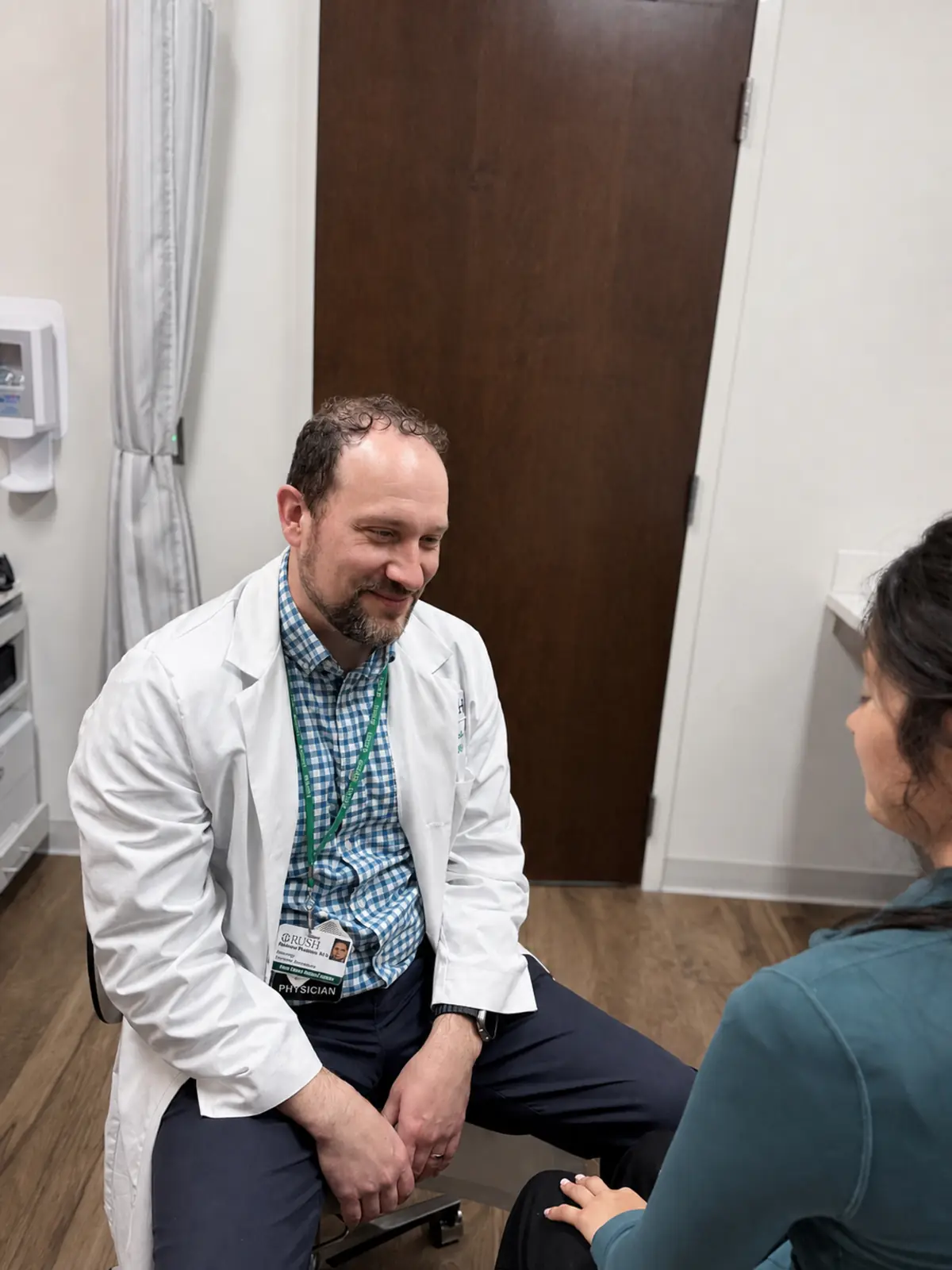
Our center is deeply committed to advancing responsible neuromodulation for refractory psychiatric disorders. For patients and families living with severe OCD, the burden can be exhausting and isolating. Our goal is to help identify whether advanced therapies may offer a path toward reduced symptoms, improved function, and a wider, more livable life.