
Research and Publications
The Rush Movement Disorders and Functional Neurosurgery programs are committed to advancing the understanding and treatment of neurologic disease through clinical research, translational science, neuromodulation innovation, and multidisciplinary collaboration. Our work spans Parkinson disease, essential tremor, dystonia, Tourette syndrome, Huntington disease, neuropsychiatric disorders, and emerging applications of brain-directed therapies across neurological and behavioral conditions.
Research efforts integrate neurology, neurosurgery, neuropsychology, neuroradiology, biomedical engineering, and data science to move discoveries from laboratory and imaging platforms into patient care. Across this continuum, our teams conduct observational studies, clinical trials, outcomes research, device development, imaging innovation, and first-in-human investigations designed to improve safety, expand access, and develop new treatment paradigms.
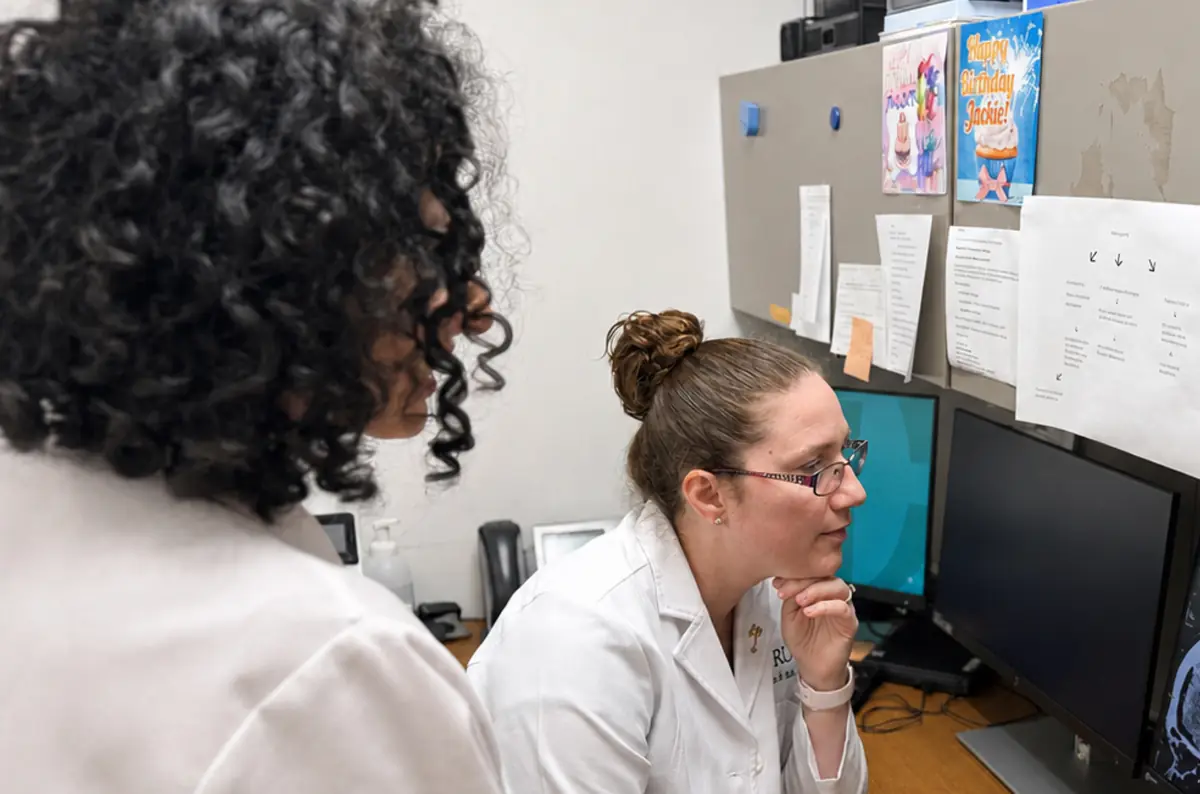
A major focus of our program is the evolution of interventional neuroscience and precision neuromodulation. Current areas of investigation include advanced deep brain stimulation technologies, MRI-guided focused ultrasound, patient-specific neuroimaging and connectomics, artificial intelligence–assisted targeting, intraoperative physiologic testing, wireless cortical prostheses, and novel approaches for treatment-resistant neurologic and psychiatric disease.
Our goal is not only to improve existing therapies, but to redefine how they are delivered—transforming interventions that were historically considered operations into increasingly precise, image-guided, patient-specific procedures while preserving safety, efficacy, and long-term outcomes.
Patients may have opportunities to participate in observational studies, registries, device development programs, investigator-initiated protocols, and clinical trials evaluating both established and emerging therapies. Research participation is integrated within our multidisciplinary care model and occurs across both neurological and neurosurgical treatment pathways.
Questions about current research studies, eligibility, referrals, or opportunities to collaborate are welcome. To learn more about ongoing clinical trials and research initiatives or to discuss whether participation may be appropriate, please contact our research team coordinators Sandra Ramos or Jackie Medina at 312.942.9241/312.563.2032, or neurofus@rush.edu.
Image-Guided Deep Brain Stimulation
Modern DBS no longer relies exclusively on atlas-based localization. At Rush, research efforts examine how patient-specific anatomy, direct target visualization, structural imaging, and intraoperative confirmation can improve targeting precision and expand treatment accessibility.
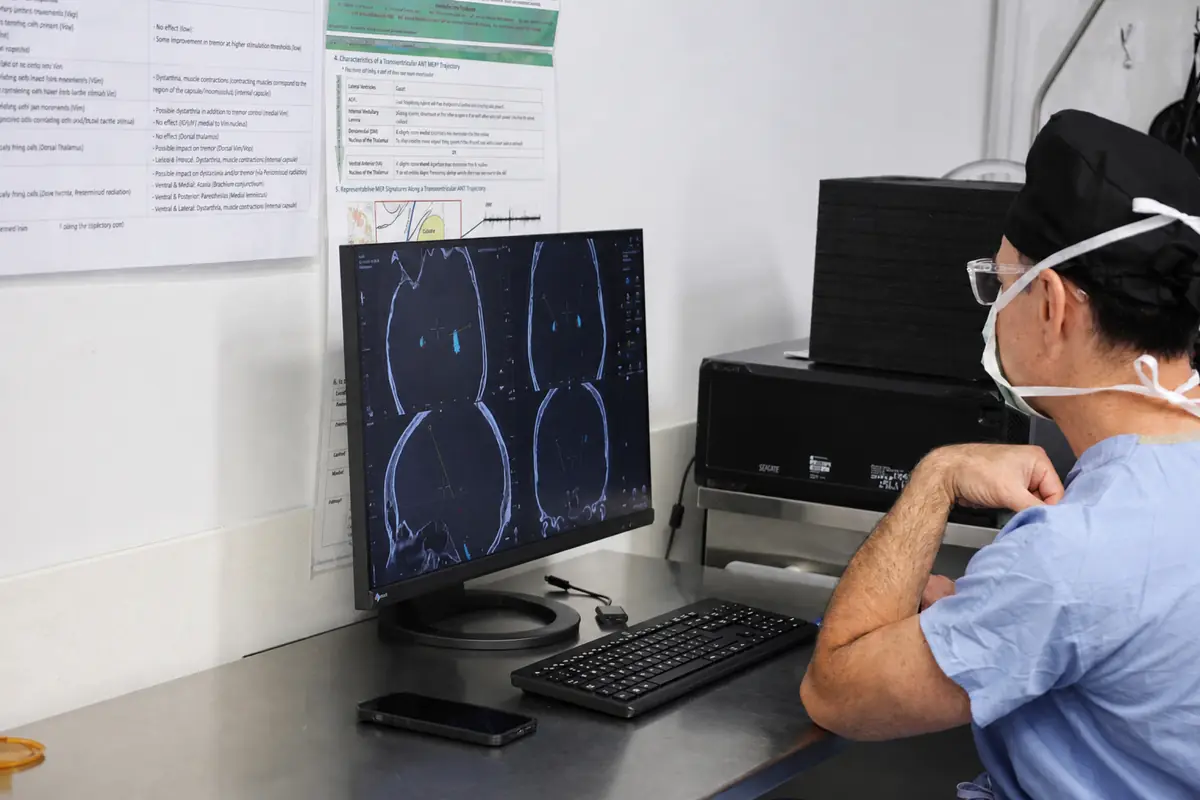
Our current work evaluates methods that combine image guided planning of brain targets with advanced anatomical models and how they pair with intraoperative testing to confirm and optimize DBS lead implantation with general anesthesia (asleep DBS). No two patients are alike. Our goal is to create patient specific workflows that optimize not only the surgical procedure, but the clinical outcomes using these advanced technologies.
The goal of this research is to apply the methodology to DBS treatments of not only Parkinson’s disease, Essential Tremor, and dystonia, but also neuropsychiatric disorders such as depression, obsessive compulsive disorder, and others.
Related Publications
Reference: Kochanski, R. B., & Sani, S. (2018). Awake versus Asleep Deep Brain Stimulation Surgery: Technical Considerations and Critical Review of the Literature. Brain Sciences, 8(1), 17. MDPI.
- Overview: This highly cited literature review comprehensively evaluates the global shift toward "asleep" DBS performed under general anesthesia. The paper examines the technical use of intraoperative computed tomography (iCT) and magnetic resonance imaging (iMRI) to achieve high targeting accuracy within the subthalamic nucleus (STN) and globus pallidus internus (GPi). It outlines how bypassing traditional microelectrode recording (MER) maintains similar clinical efficacy while significantly lowering procedure times, patient stress, and certain entry complications.
Reference: Patel, S., Karl, J. A., Verhagen Metman, L., & Sani, S. (2024). Comparative Patient Outcomes following Awake vs Asleep Subthalamic Nucleus Deep Brain Stimulation for Parkinson's Disease. Neurology, 102(11). Neurology Journal.
- Overview: This clinical cohort study assesses retrospective data comparing patient-reported quality of life, functional outcomes, and objective motor metrics in individuals undergoing STN-DBS. The data confirms no significant statistical variance between awake and asleep techniques regarding long-term therapeutic mobility, pain control, or mood. However, patients in the asleep cohort reported a significantly better overall surgical experience with fewer bothersome perioperative side effects. [1, 2]
Reference: Sakakura K, Pearce J, Pertsch N, Karri V, Pu Q, Mehta F, Patel N, & Sani, S. (2026). Intraoperative Motor Stimulation During Asleep Subthalamic Nucleus Deep Brain Stimulation Predicts Postoperative Motor Side Effects. Operative Neurosurgery, 31, 319-327. PubMed.
- Overview: Because asleep DBS typically omits microelectrode recording (MER) and awake intraoperative macrostimulation testing, this research identifies key clinical predictors to avoid postoperative motor side effects. The study concludes that using an intraoperative pulse width of 120 µs below a 4 mA activation threshold correlates significantly with lower postoperative clinical side effect thresholds. By combining these parameters with tractography, the authors map out spatial margins near the corticobulbar and frontal eye field tracts to maximize lead accuracy.
Reference: Zhang DY, Pearce JJ, Petrosyan E, Borghei A, Byrne RW, & Sani, S. (2024). Minimizing pneumocephalus during deep brain stimulation surgery. Clinical Neurology and Neurosurgery, 238, 108174. ScienceDirect.
- Overview: This study analyzes a cohort of 172 brain leads placed across 89 patients undergoing either awake or asleep DBS. It focuses on evaluating a specialized technique utilizing a dedicated dural management tool to minimize intracranial air (pneumocephalus) during lead placement. Restricting brain sag from pneumocephalus is highlighted as a critical milestone for improving real-time geometric accuracy, particularly in asleep direct-image-guided workflows.
Staged Bilateral MR-Guided Focused Ultrasound Thalamotomy for Essential Tremor
Essential tremor commonly affects both hands, but the first generation of MR-guided focused ultrasound treatment was primarily performed on one side of the brain to improve tremor in the dominant or more severely affected hand. With FDA approval of staged bilateral treatment, selected patients may now undergo treatment on both sides, usually separated by several months, to address tremor affecting both upper extremities.
Rush has developed one of the largest single-center experiences with staged bilateral MR-guided focused ultrasound thalamotomy for essential tremor. Our recent outcomes study examined tremor control, patient-reported adverse effects, and satisfaction after second-side treatment. This work is clinically important because bilateral treatment may improve function in patients with tremor affecting both hands, but it also requires careful study of speech, gait, sensory symptoms, swallowing, taste, and balance.
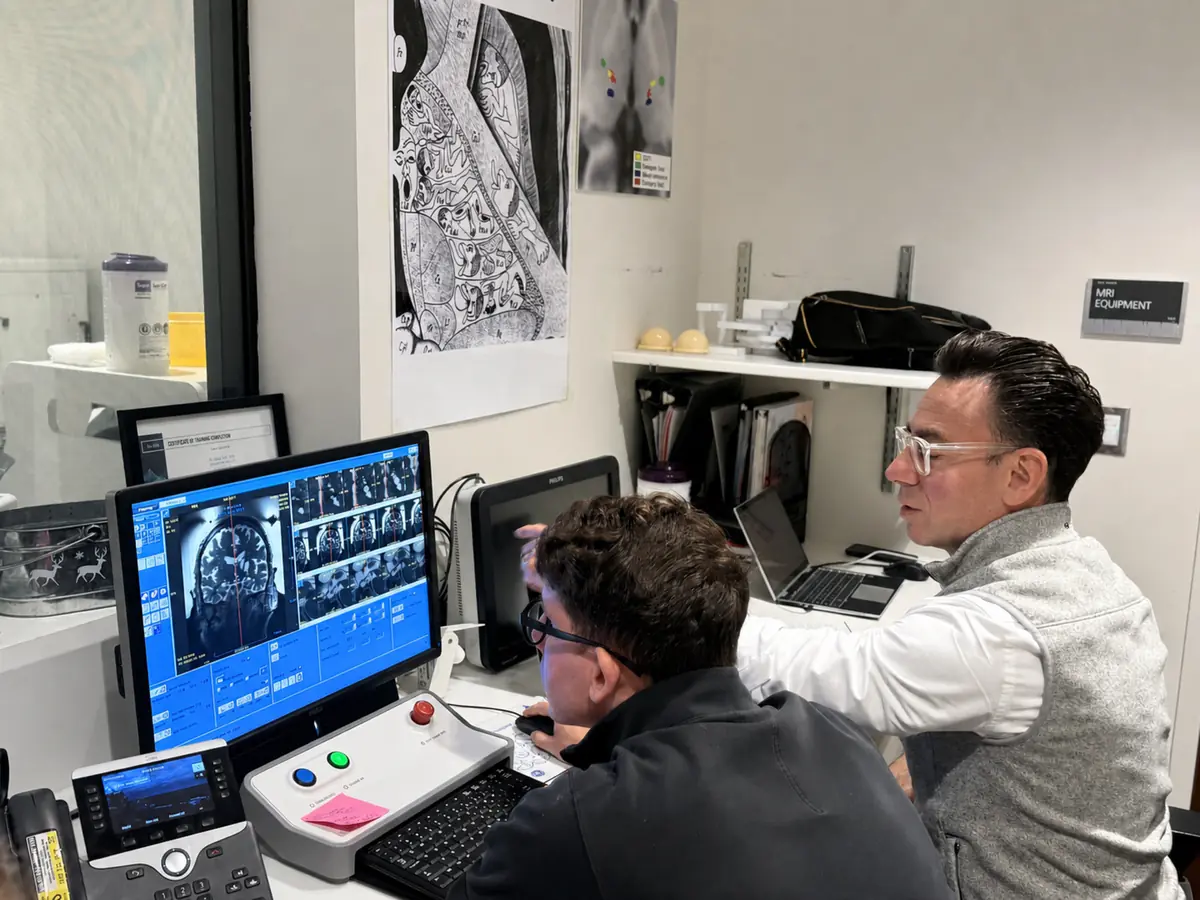
The Rush study demonstrated meaningful bilateral tremor control after staged bilateral treatment, while also emphasizing that patient-reported adverse effects may be more frequent than previously described in earlier controlled trial settings. This research helps refine patient counseling, second-side selection, timing between procedures, and long-term expectations after bilateral incisionless therapy.
Project link:
https://pubmed.ncbi.nlm.nih.gov/41159306/
Selected publication:
Pertsch NJ, Sakakura K, Mueller JM, Kim D, Ahn YJ, Chiu LT, Varela JR, Gattu H, Patel S, Pearce JJ, Swan CB, Patel N, Sani S. Tremor Control and Patient Reported Outcomes after Bilateral Focused Ultrasound Thalamotomy for Essential Tremor. Movement Disorders Clinical Practice. 2025 Oct 29. doi: 10.1002/mdc3.70412. PMID: 41159306. PubMed
MR-Guided Focused Ultrasound Pallidothalamic Tractotomy for Parkinson Disease
Parkinson disease is a bilateral and progressive disorder that can cause tremor, rigidity, bradykinesia, dyskinesia, and medication-related motor fluctuations. While deep brain stimulation remains a powerful adjustable therapy for many patients, MR-guided focused ultrasound provides an incisionless alternative for selected patients who are not ideal DBS candidates or who prefer a non-implantable intervention.
Rush participated in the multicenter clinical research program evaluating MR-guided focused ultrasound pallidothalamic tractotomy, or PTT, for motor complications of Parkinson disease. PTT targets a pathway connecting pallidal output to thalamic motor circuitry and is designed to improve cardinal motor symptoms and motor complications without implanted hardware.
The multicenter staged bilateral PTT trial has been important in expanding focused ultrasound beyond tremor-only indications. The FDA has now cleared staged bilateral focused ultrasound pallidothalamic tractotomy for selected patients with advanced Parkinson disease, allowing treatment of the second side at least six months after the first side in appropriate patients.
This project reflects a broader research effort at Rush to evaluate how incisionless lesioning can be used responsibly in Parkinson disease, how it compares with DBS, which symptoms are most likely to improve, and which patients are best suited for irreversible circuit-based treatment.
Clinical trial link:
https://clinicaltrials.gov/study/NCT04728295
FDA approval information:
https://www.fusfoundation.org/posts/fda-approves-bilateral-focused-ultrasound-treatment-for-parkinsons-disease/
Selected publications and abstracts:
Sarva H, Kaplitt M, Dalvi A, et al. Staged, bilateral MR-guided focused ultrasound of the pallidothalamic tract in Parkinson’s disease: a phase III study. Parkinsonism & Related Disorders. 2025;134:107788. doi: 10.1016/j.parkreldis.2025.107788.
Dalvi A, Eisenberg HM, Wu P, et al. Safety and efficacy of staged, bilateral magnetic resonance-guided focused ultrasound pallidothalamic tractotomy for motor complications of Parkinson’s disease: a prospective, multicentre, single-arm trial. Lancet Neurology. 2026;25(7):654-663. PubMed
Dalvi A, Zucker L, Chang WC, Wu PH, Kaplitt M, Sarva H, Eisenberg HM, Fishman P, Buch V, Matarazzo M, del Alamo M, Sani S, Pourfar M, Mogilner A. Safety and effectiveness of staged bilateral MR-guided focused ultrasound pallidothalamic tractotomy for motor complications of Parkinson’s disease: study protocol. Movement Disorders. 2024;39 Suppl 1.
Gallay MN, Moser D, Magara AE, Haufler F, Jeanmonod D. Bilateral MR-guided focused ultrasound pallidothalamic tractotomy for Parkinson’s disease with 1-year follow-up. Frontiers in Neurology. 2021;12:601153. PubMed
Gallay MN, Moser D, Magara AE, Haufler F, Jeanmonod D. MRgFUS Pallidothalamic Tractotomy for Chronic Therapy-Resistant Parkinson’s Disease in 51 Consecutive Patients: Single Center Experience. Frontiers in Surgery. 2020;6:76. PubMed
MRI-Guided Focused Ultrasound for Addiction and Substance Use Disorders
Substance use disorders involve maladaptive reward, craving, salience, and executive-control networks. Current treatments help many patients, but relapse remains common, and there is a major need for new approaches that can modulate brain circuits involved in craving and compulsive use.
Rush is developing an MRI-guided focused ultrasound research protocol for addiction. This study is designed to investigate whether focused ultrasound can safely modulate reward-related brain circuits, including structures such as the nucleus accumbens and connected limbic networks, in patients with substance use disorders. The project is part of a growing national research effort using focused ultrasound as a noninvasive or minimally invasive platform for circuit-based treatment of addiction.
Because this is an active research program currently being set up, Rush does not yet have outcome publications from this protocol. The study is intended to build on emerging early-phase work showing that focused ultrasound can modulate reward circuitry and may reduce craving in selected patients with substance use disorders.
Public research context:
https://www.fusfoundation.org/diseases-and-conditions/addiction/
NIH/NIDA funding context:
https://grants.nih.gov/grants/guide/pa-files/PAR-25-446.html
Selected publications:
Mahoney JJ, Thompson-Lake DGY, Ranjan M, et al. Low-intensity focused ultrasound targeting the nucleus accumbens as a potential treatment for substance use disorder: safety and feasibility clinical trial. Frontiers in Psychiatry. 2023;14:1211566. PubMed
Mahoney JJ, Thompson-Lake DGY, Ranjan M, et al. Focused ultrasound neuromodulation of reward circuitry in substance use disorder. Biological Psychiatry. 2025.
Emerging Focused Ultrasound Applications: Depression and Pain
Focused ultrasound is increasingly being studied as a platform for treating disorders beyond tremor and Parkinson disease. At Rush, we are exploring future applications of focused ultrasound for neuropsychiatric and pain conditions, including depression and chronic pain.
These efforts are early-stage and investigational. The scientific rationale is that focused ultrasound may allow targeted modulation or ablation of specific brain circuits involved in mood regulation, pain processing, affective salience, and maladaptive network activity. These projects are not standard clinical treatments and would only be pursued through carefully designed research protocols, regulatory review, and multidisciplinary evaluation.
This area represents part of the longer-term vision of the Rush program: using focused ultrasound not only as a lesioning treatment for movement disorders, but as a broader interventional neuroscience platform for circuit-based disease.
Background resource:
https://www.fusfoundation.org/diseases-and-conditions/
Racial Disparities and Genetics in Parkinson Disease
Rush is leading major research examining how Parkinson disease differs across racial groups in clinical presentation, access to care, treatment patterns, genetics, and research participation. The NIH-funded Rush study examines signs, symptoms, management, genetic components, and research bias in Parkinson disease among Black and White participants.
This work is important because most Parkinson disease genetic and biomarker studies have historically overrepresented individuals of European ancestry. As a result, the field may not fully understand how Parkinson disease presents, progresses, or responds to treatment across diverse populations. Rush’s research aims to improve equity in diagnosis, care delivery, clinical trial participation, and precision medicine.
This project also includes related work studying Parkinson disease genetics in Black and African American populations, asking whether known Parkinson-related genetic variants apply across populations and whether additional genetic contributors remain underrecognized.
Selected publications:
Hall DA, Shulman JM, Singleton A, et al. Racial Disparities in Parkinson Disease Clinical Phenotype, Management, and Genetics: Protocol for a Prospective Observational Study. JMIR Research Protocols. 2025. PubMed
Vanegas J, Weimer R, Krinickas N, Hall DA, Shulman LM. Recruitment strategies for the racial disparities in Parkinson’s disease study: Partnering with patients from the Black community. Parkinsonism & Related Disorders. 2025. PubMed
Adrissi J, et al. Moving the Dial Toward Equity in Parkinson’s Disease Clinical Research: a Review of Current Literature and Future Directions in Diversifying PD Clinical Trial Participation. Current Neurology and Neuroscience Reports. 2022;22(8):475-483. PubMed
Gut-Brain Axis, Microbiome, and Parkinson Disease
Rush has developed a distinctive translational research program studying the relationship between Parkinson disease, gastrointestinal symptoms, the intestinal microbiome, inflammation, and non-motor disease biology. Parkinson disease commonly causes constipation and other GI symptoms, and growing evidence suggests that gut-brain signaling may be relevant to disease onset, progression, and symptom burden.
Rush investigators have studied whether dietary prebiotic interventions can safely modify the gut microbiome in Parkinson disease. In an open-label proof-of-concept study, participants consumed a short-chain fatty-acid-promoting prebiotic fiber intervention. The study found that the intervention was feasible, safe, and associated with microbiome changes, reduced inflammatory markers, and exploratory improvements in motor, non-motor, and GI outcomes.
This research supports future placebo-controlled studies evaluating microbiome-directed therapies as potential disease-modifying or symptom-modifying interventions in Parkinson disease. Rush’s work also includes investigation of the bowel microbiome in REM sleep behavior disorder, a condition that can precede Parkinson disease and related synucleinopathies.
Selected publications:
Hall DA, et al. An open label, non-randomized study assessing a prebiotic intervention in Parkinson’s disease. Nature Communications. 2023;14:926. PubMed
Sharma A, Voigt RM, Goetz CG, Keshavarzian A. Parkinson Disease and the Gut: A Primer for Gastroenterologists. American Journal of Gastroenterology. 2025;120(11):2510-2519. PubMed
LRRK2 and Genetically Targeted Parkinson Disease Therapies
Rush participates in studies focused on LRRK2-associated Parkinson disease and early-stage genetically informed therapeutic development. LRRK2 is one of the most important genetic contributors to Parkinson disease and has become a major target for precision-medicine trials.
The Rush-listed LRRK2 study evaluates whether a study drug works in early-stage Parkinson disease, including safety and tolerability. This type of research is part of a broader movement toward mechanism-based Parkinson disease treatment, where patients may be selected for therapies based on genetic risk, molecular pathways, or disease subtype rather than symptoms alone.
The long-term goal is to identify treatments that may slow disease progression in biologically defined subgroups of Parkinson disease.
Selected publications:
Pagano G, Trundell D, Simuni T, et al. Time-to-event analysis mitigates the impact of symptomatic therapy on therapeutic benefit in Parkinson’s disease trials. NPJ Parkinson’s Disease. 2025;11:193. PubMed
Exercise as a Disease-Modifying Intervention in Parkinson Disease
Rush participates in a phase 3, multisite study testing whether high-intensity treadmill exercise can slow progression of motor signs in early Parkinson disease. This study evaluates change in the Movement Disorder Society–Unified Parkinson Disease Rating Scale Part III over 12 months in people with early-stage Parkinson disease who have not yet started medication.
Clinical trial link:
https://clinicaltrials.gov/study/NCT04284436
Exercise research is central to disease-modification efforts because it is low cost, scalable, and biologically plausible. High-intensity aerobic exercise may influence neuroplasticity, cardiovascular fitness, inflammation, metabolism, motor learning, and quality of life. The key research question is whether structured endurance exercise can do more than improve general health—specifically, whether it can attenuate measurable Parkinson disease progression.
Selected publications:
Schenkman M, et al. Effect of High-Intensity Treadmill Exercise on Motor Symptoms in Patients With De Novo Parkinson Disease: A Phase 2 Randomized Clinical Trial. JAMA Neurology. 2018;75(2):219-226. PubMed
Huntington Disease Registries, Therapeutics, and Gene Therapy
Rush is a major Huntington disease research site, including observational cohort work, clinical trials of new medications, and surgical gene therapy studies designed to slow disease progression. Public Rush materials describe the Huntington disease program as a large observational study site in Chicagoland and note involvement in clinical trials for new Huntington disease medications and gene therapy approaches.
This research includes longitudinal tracking of motor, cognitive, psychiatric, functional, and quality-of-life outcomes. Registry participation is especially important in Huntington disease because the condition is genetic, progressive, and variable across individuals and families. Longitudinal datasets help identify progression markers, support trial readiness, and improve counseling for patients and families.
Rush also lists active studies for chorea associated with Huntington disease and a Huntington disease cohort prospective registry study.
Selected publications:
Hall DA, Rosenbaum M, Hawkins J, Ouyang B, Cooper C, Patel N. Randomized Trial of Telegenetic Counseling for Gene Testing in Huntington Disease. Neurology: Clinical Practice. 2025. PubMed
Petrillo J, Sawant R, Rogers R, et al. Reliability and validity of the Huntington’s Disease Everyday Functioning measure. Journal of Huntington’s Disease. 2025. PubMed
Atypical Parkinsonism: MSA, PSP, and Lewy Body Disorders
Rush conducts research in atypical parkinsonian and Lewy body disorders, including multiple system atrophy, progressive supranuclear palsy, dementia with Lewy bodies, and related neurodegenerative syndromes. These disorders can overlap clinically with Parkinson disease but often progress differently and require distinct biomarkers, outcome measures, treatment strategies, and caregiver support models.
Public Rush materials note clinical trials in MSA and PSP, including anti-protein immunotherapy infusion studies. Rush also lists active MSA studies, including MSA with orthostatic hypotension and reevaluation of the MDS-UMSARS scale. Rush is also listed as a Lewy Body Dementia Association Research Center of Excellence, with interdisciplinary work focused on movement disorders with prominent neuropsychiatric features.
This research is critical because atypical parkinsonian disorders often lack disease-modifying therapies, and clinical trials require better diagnostic accuracy, progression measures, imaging biomarkers, and patient-centered outcomes.
Selected publications:
Maly EF, DiFilippo FP, Lapin B, et al. Performance of 123I-ioflupane SPECT striatal binding in dementia with Lewy bodies. Alzheimer’s & Dementia. 2025. PubMed
Coughlin DG, Jain L, Khrestian M, et al. CSF α-synuclein seed amplification assays and Alzheimer disease biomarkers in dementia with Lewy bodies: Presentation and progression. Neurology. 2025. PubMed
Fleisher JE, Suresh M, Levin ME, et al. Learning to PERSEVERE: A pilot study of peer mentor support and caregiver education in Lewy body dementia. Parkinsonism & Related Disorders. 2023. PubMed
Cervical Dystonia and Hyperkinetic Movement Disorder Therapeutics
Rush conducts clinical research in dystonia and other hyperkinetic movement disorders, including cervical dystonia, chorea, Tourette syndrome, tics, and related disorders. Current Rush trial listings include a phase 2a randomized, double-blind, placebo-controlled study evaluating MTR-601, a novel oral treatment for cervical dystonia.
Clinical trial link:
https://clinicaltrials.gov/study/NCT06830642
Cervical dystonia is commonly treated with botulinum toxin injections, but many patients continue to experience pain, abnormal posturing, disability, or fluctuating benefit between injections. New oral therapies may provide an additional treatment option or complement injection-based care.
Rush’s work in this area reflects a broader commitment to treatment development for non-Parkinson movement disorders, many of which have historically had fewer clinical trials and fewer disease-specific therapeutic options.
Selected publications:
Kilic-Berkmen G, et al. The Dystonia Coalition: A Multicenter Network for Clinical and Translational Studies. Frontiers in Neurology. 2021. PubMed
Wearable Technology, Digital Outcomes, and Longitudinal Monitoring
Rush movement disorders research includes use of wearable technology and longitudinal outcome tracking to better measure disease features outside the clinic. Traditional clinic visits provide important snapshots, but they may miss fluctuations in tremor, gait, dyskinesia, bradykinesia, sleep, activity, and non-motor symptoms that vary across the day.
Digital tools may improve clinical-trial design by providing objective, continuous, or semi-continuous measures of disease activity. This is especially relevant for Parkinson disease and related disorders, where symptom fluctuations, medication response, fall risk, and functional mobility may be difficult to capture with periodic rating scales alone.
The translational goal is to combine clinical scales, patient-reported outcomes, wearable data, imaging, genetics, and biomarkers into a more complete model of disease trajectory and treatment response.
Selected publications:
Goetz CG, et al. Movement Disorder Society–sponsored revision of the Unified Parkinson’s Disease Rating Scale. Movement Disorders. 2008. PubMed
Intracerebral Visual Prosthesis (ICVP): Wireless Cortical Neuroprosthetics for Vision Restoration
Loss of vision remains one of the most disabling neurologic conditions worldwide, and many causes of blindness cannot be addressed through retinal or optic nerve interventions alone. Cortical visual prostheses represent an alternative strategy that bypasses damaged portions of the visual pathway and instead delivers information directly to visual regions of the brain.
Rush participates in development and clinical translation of intracerebral visual prosthetic technology designed to restore functional visual perception through direct stimulation of visual cortex.
The Intracerebral Visual Prosthesis (ICVP) project is an NIH-supported neuroprosthetics initiative developing implantable wireless cortical microelectrode systems capable of generating visual percepts through patterned intracortical stimulation. Rather than attempting to restore normal biological vision, the objective is to create useful visual information that may improve mobility, spatial awareness, orientation, object localization, and environmental interaction.
The platform uses multiple implanted wireless cortical modules that receive externally generated information and deliver controlled stimulation directly to visual cortex. These systems are designed to eliminate the limitations of earlier wired cortical prostheses and create a scalable architecture for long-term neural interfacing.
At Rush, this work focuses on the neurosurgical translation of cortical neuroprosthetic implantation, human feasibility, safety evaluation, device integration, and functional outcomes. Initial clinical experience has demonstrated successful implantation of wireless cortical visual prosthetic systems in human participants, with three patients implanted to date.
The broader scientific objective extends beyond restoration of visual perception. The ICVP program serves as a model for future generations of restorative brain interfaces that may ultimately support sensory restoration, adaptive neural systems, and bidirectional communication between external technologies and human cortical networks.
Selected Publications
Barry MP, Sani S, et al. Wireless Intracortical Visual Prosthesis (ICVP) without intracranial cabling: Feasibility study results after 3 years. Nature. 2026.
Troyk PR. The Intracortical Visual Prosthesis Project. In: Artificial Vision. Springer; 2017. Springer
Deep Brain Stimulation for Treatment-Resistant Depression (TRANSCEND Study)
Severe depression remains one of the leading causes of disability worldwide, and for a subset of patients, symptoms persist despite multiple medication trials, psychotherapy, and other evidence-based interventions. Treatment-resistant depression (TRD) is increasingly being understood not simply as a chemical imbalance, but as a disorder of dysfunctional brain networks involving mood regulation, reward processing, emotional salience, and cognitive control.
At Rush, we are participating in the TRANSCEND (Treatment ResistAnt DepressioN Subcallosal CingulatE Network DBS) study, a multicenter clinical trial evaluating whether deep brain stimulation can improve outcomes for individuals living with severe treatment-resistant depression.
TRANSCEND is investigating bilateral stimulation of the subcallosal cingulate white matter (SCCwm) using the Abbott Infinity™ Deep Brain Stimulation platform. The subcallosal cingulate is a key network hub involved in emotional regulation and has been the focus of more than two decades of translational neuroscience research exploring circuit-based treatment of depression.
Unlike traditional psychiatric treatments that broadly affect neurotransmitter systems, DBS allows targeted modulation of dysfunctional neural networks through adjustable and reversible stimulation. The study is designed to determine whether direct circuit modulation can provide meaningful and durable symptom improvement in patients who have not responded adequately to conventional therapy.
The TRANSCEND study is a prospective, multicenter, randomized, double-blinded, sham-controlled clinical trial enrolling approximately 100 adults between ages 22 and 70 with non-psychotic unipolar major depressive disorder who continue to experience a major depressive episode despite four or more prior antidepressant treatment attempts. During the first phase of the study, participants are randomized to active or delayed stimulation, after which all participants transition to active therapy.
Clinical trial link:
https://clinicaltrials.gov/study/NCT06423430
This work reflects a broader vision of interventional psychiatry at Rush: using advances in neuroimaging, network neuroscience, and neuromodulation to develop targeted therapies for disorders that have historically had limited procedural treatment options.