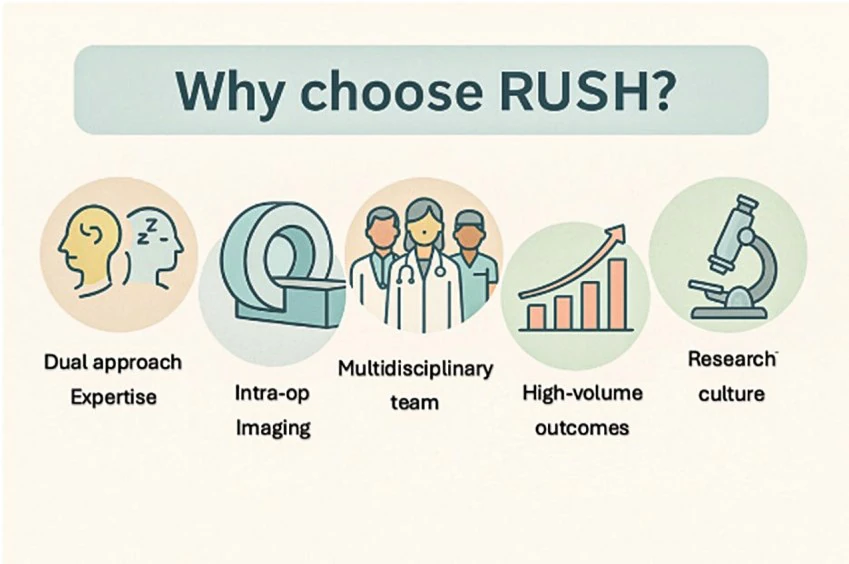
Choosing where to undergo Deep Brain Stimulation is just as important as deciding to have the procedure itself. DBS is not a single event—it is a comprehensive, long-term therapy that depends on accurate diagnosis, thoughtful patient selection, precise surgical technique, and expert postoperative programming. The quality of each of these steps directly influences the outcome. At RUSH, DBS is delivered as a fully integrated program built on decades of experience and a commitment to individualized patient care.
Experience and volume
RUSH has been a leader in functional neurosurgery and movement disorders for many years, with one of the most experienced DBS programs in the region. Patients are evaluated and treated by a multidisciplinary team that includes movement disorders neurologists, functional neurosurgeons, neuropsychologists, specialized nurses, and advanced practice providers. This team works closely together at every stage—from initial consultation through long-term follow-up—ensuring that decisions are not made in isolation but reflect a collective, expert perspective.
Patient selection
One of the defining strengths of the program is patient selection. Not every patient with a movement disorder is a good candidate for DBS, and identifying who will benefit—and how—is critical. At RUSH, each case is reviewed carefully, with attention to diagnosis, symptom profile, imaging, cognitive status, and patient goals. This thoughtful approach avoids unnecessary surgery and helps ensure that when DBS is recommended, it is likely to provide meaningful benefit.
Surgical precision
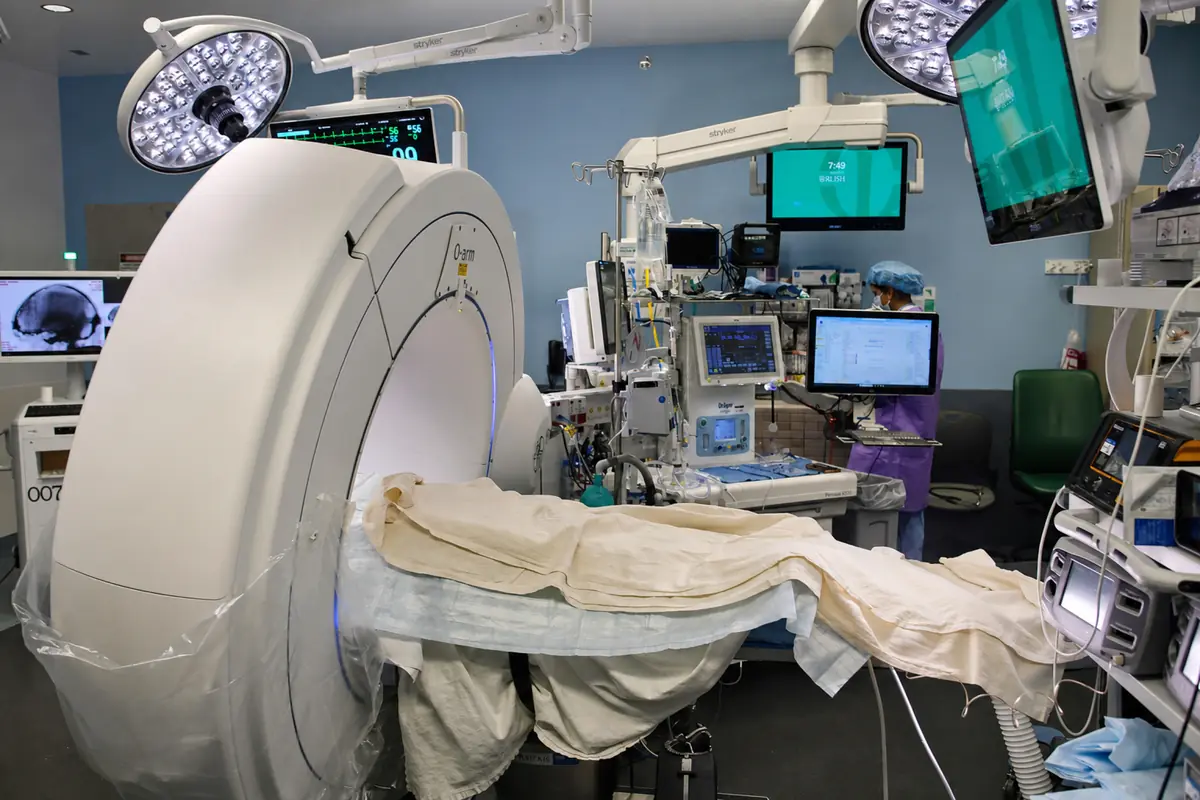
Surgical precision is another cornerstone. DBS procedures at RUSH are performed using advanced imaging, navigation systems, and, when appropriate, robotic and intraoperative imaging technologies. Both awake and asleep DBS techniques are offered, allowing the surgical approach to be tailored to the individual patient rather than constrained by a single method. The ability to choose the right technique for the right patient reflects both experience and flexibility.
Expert programming
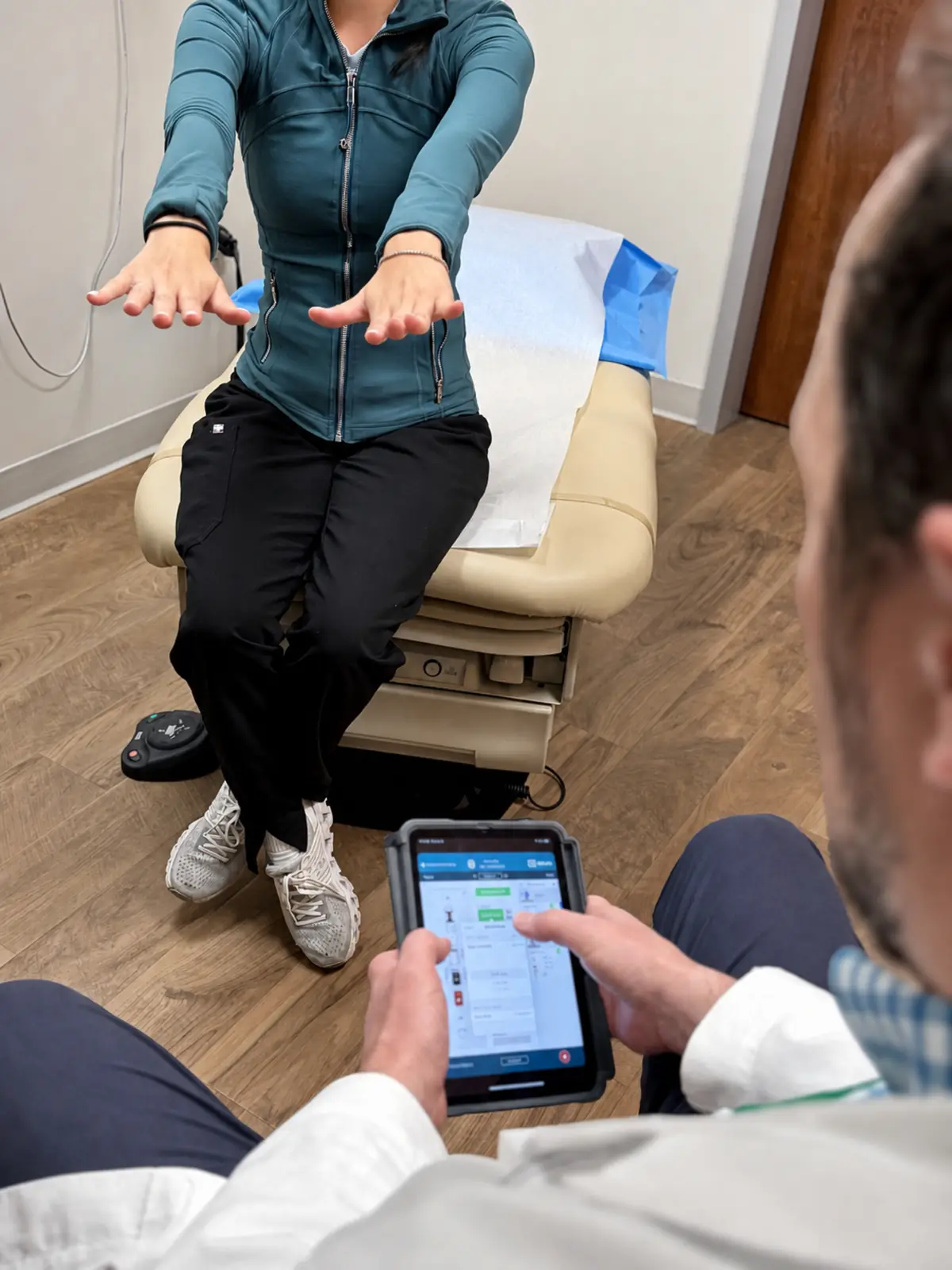
Equally important is postoperative programming, which is where the full benefit of DBS is realized. RUSH has a dedicated team of movement disorders neurologists with extensive experience in DBS programming. This is a nuanced and highly individualized process that evolves over time, and the depth of programming expertise is one of the key factors that distinguishes high-performing DBS centers.
Continuity of care
Patients also benefit from continuity of care. The same team that evaluates and performs the surgery remains involved in follow-up, adjustments, and long-term management. This continuity builds familiarity, trust, and a deeper understanding of each patient’s condition and goals.
Research and innovation
In addition to clinical care, RUSH is actively involved in research and innovation in neuromodulation. The program participates in clinical trials and incorporates the latest advances in DBS technology, including directional leads, sensing capabilities, and emerging adaptive stimulation approaches. This ensures that patients have access to current and evolving therapies within a structured and carefully monitored environment.
Patient-centered care
Beyond the technical aspects, there is a consistent emphasis on patient-centered care. Every patient arrives with a unique history, set of symptoms, and personal goals. The approach at RUSH is to listen carefully, communicate clearly, and guide patients through each step of the process with transparency and respect. The experience is designed to be organized and predictable, reducing uncertainty and allowing patients to focus on their recovery and outcomes.
For patients and families, the decision to undergo DBS often comes at a point when symptoms have become difficult to manage and quality of life is affected. Choosing a center with experience, structure, and a comprehensive approach can make a meaningful difference. At RUSH, DBS is not simply performed—it is carefully planned, executed, and supported over time with the goal of achieving the best possible outcome for each individual patient.