
Recovery after treatment is just as important as the procedure itself, and understanding what to expect can make a meaningful difference in how patients experience the journey. Deep Brain Stimulation (DBS) and MRI-guided Focused Ultrasound (MRgFUS) are both highly effective therapies, but they are fundamentally different in how they are performed—and as a result, recovery and expectations differ in important ways. DBS involves a surgical procedure with implanted hardware and a gradual, stepwise improvement that unfolds over weeks to months with programming. In contrast, focused ultrasound is incisionless, typically performed in a single session, and often produces noticeable changes much earlier, sometimes even during the procedure itself. Because of these differences, the recovery experience, timeline, and expectations for improvement are not the same. For this reason, we describe each pathway separately below, so you have a clear and accurate understanding of what to expect based on the treatment that is right for you.
Recovery After Deep Brain Stimulation (DBS)
Recovery after Deep Brain Stimulation is best understood as a process rather than a single event. While the surgery itself is only one day, the full benefit of DBS unfolds over time—through healing, careful programming, and ongoing partnership with your care team. Patients who understand this from the beginning tend to feel more comfortable, more confident, and ultimately more satisfied with their outcome.
The first days after surgery
Immediately after surgery, most patients spend one night in the hospital for observation. This allows the team to monitor for any early issues and ensure that you are safe, comfortable, and steady before going home. Many patients are pleasantly surprised by how manageable this part feels. A loved one can often stay with you, and by the following morning, most people are ready for discharge. One of the most common reactions we hear is that the experience feels “less intense than expected,” especially given that it involves brain surgery.
Physically, recovery is usually straightforward. The incisions—typically small and well-hidden—are modest in size, often around a couple of inches each. Pain is generally mild. At our center, we intentionally avoid opioid medications. Most patients do very well with simple medications such as acetaminophen (Tylenol) and anti-inflammatory agents like celecoxib (Celebrex). This reflects both the minimally disruptive nature of the surgery itself and our experience managing recovery in a way that prioritizes comfort without unnecessary medications.
In the first few days after surgery, it is normal to feel somewhat tired. This fatigue is not a sign of a problem—it is simply your body recovering from an important procedure. Some patients also notice mild soreness at the incision sites or a sense of tightness along the path of the implanted wires under the skin. These sensations typically improve steadily over the first one to two weeks. Most patients are able to return to light daily activities relatively quickly, while more strenuous activity is resumed gradually based on comfort and guidance from the care team.
Why the device waits
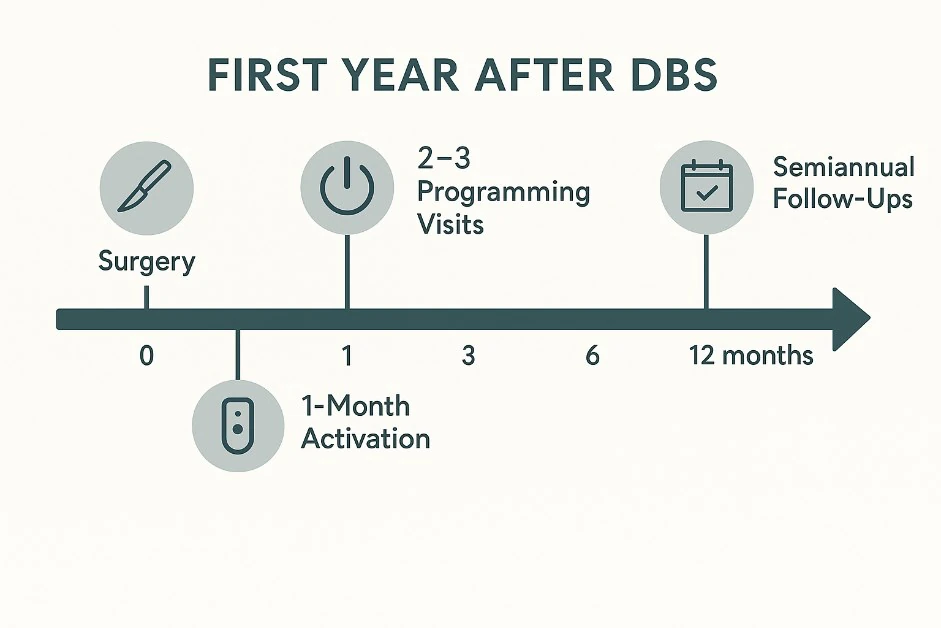
One of the most important concepts to understand is that DBS is not “turned on” right away. At Rush, initial programming is typically performed about four weeks after surgery. This waiting period allows the brain to recover fully from the procedure and ensures that programming is done under stable conditions. During this time, patients continue their medications exactly as they were before surgery. For some, this can feel like a pause—an in-between phase where the procedure is complete, but the benefit has not yet fully begun.
Occasionally, patients notice a temporary improvement in symptoms during this early period. This is sometimes referred to as a “lesion effect” or “honeymoon phase,” caused by subtle, temporary changes in the brain from electrode placement. While this can be encouraging, it is not the true effect of DBS and does not occur in every patient. Symptoms may fluctuate during this time, and that variability is expected.
Programming
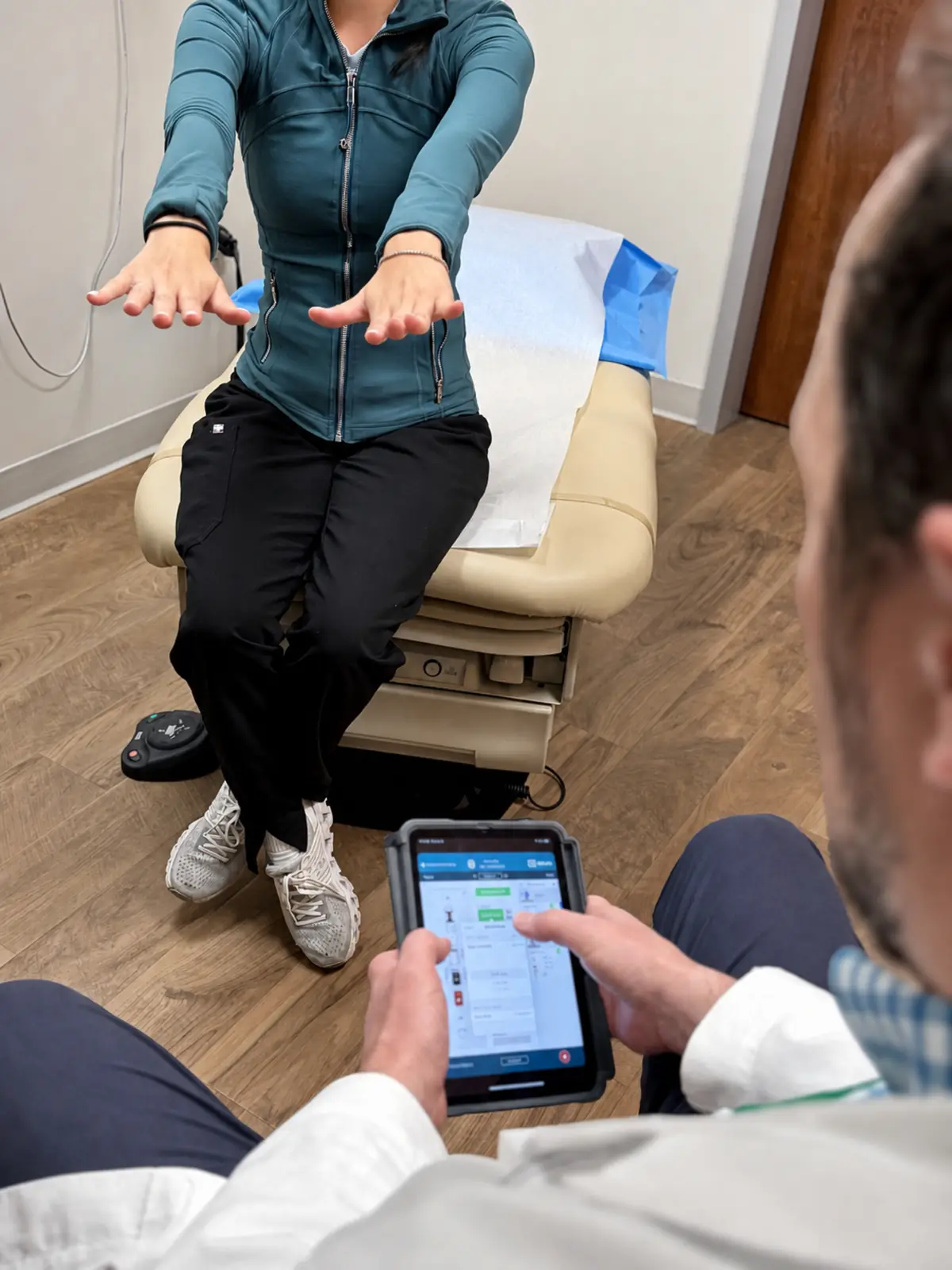
The true benefit of DBS begins with programming, which is one of the most critical parts of the entire treatment. During programming visits, the system is activated and carefully adjusted to match your specific symptoms and goals. This is not a one-time event. It is a gradual, thoughtful process that unfolds over several visits. Settings are adjusted, medications are fine-tuned, and the system is optimized over time. This stepwise approach is what allows DBS to be so powerful—it is not static, but adaptable.
Realistic expectations
It is important to set realistic expectations about what DBS can achieve. DBS is not a cure, and it does not stop the progression of underlying conditions such as Parkinson’s disease. Instead, it is designed to significantly improve the symptoms that are most responsive—such as tremor, stiffness, slowness, and medication-related fluctuations. Many patients experience smoother, more predictable days, with less reliance on medications and fewer side effects. For others, the greatest benefit is regaining control over daily activities that had become difficult or unpredictable.
At the same time, some symptoms—such as balance, speech, or cognitive changes—may not improve and, in some cases, may evolve over time as part of the natural disease process. This is why careful patient selection and preoperative discussion are so important. When expectations are aligned from the beginning, patients are better able to appreciate the improvements that DBS provides.
Long-term follow-up
Long-term, DBS becomes part of your ongoing care rather than a one-time intervention. Follow-up visits are used to maintain and optimize settings as your condition evolves. The system itself can be adjusted noninvasively, and in many cases, patients gain a sense of control knowing that their therapy can be fine-tuned over time.
Perhaps the most important message is this: you are not navigating this alone. Recovery after DBS is a collaborative process. Your neurologist, neurosurgeon, and care team remain closely involved, guiding each step—from the first programming session to long-term management. This continuity of care is one of the defining strengths of DBS and one of the reasons it continues to provide meaningful, durable benefit for so many patients.
For most individuals, the journey after DBS is not defined by the day of surgery, but by what follows: gradual improvement, increasing confidence, and the return of function and independence in everyday life.
Recovery After Focused Ultrasound (MRgFUS)
Recovery after MRI-guided Focused Ultrasound is often described by patients as surprisingly straightforward, especially when compared to traditional surgery. Because the procedure is completely incisionless—no cuts, no implants, no hardware—the body is not recovering from a surgical wound in the usual sense. Instead, recovery is centered on how the brain responds to the treatment itself. For many patients, this distinction becomes clear very quickly.
Going home
Most individuals go home the same day. After a short period of observation following the procedure, you are discharged without the need for an overnight hospital stay. Patients and families are often struck by how quickly the process moves—from undergoing a highly advanced brain procedure in the morning to being back home later that day. There are no stitches, no dressings to manage, and no restrictions related to wound care.
What is normal in the first days
That said, recovery is not entirely effortless, and it is important to understand what is normal. In the first few days, it is common to feel somewhat tired. This fatigue reflects both the intensity of the day and the brain’s response to treatment. Some patients also experience mild headaches or soreness at the pin sites from the head frame. These symptoms are usually short-lived and manageable with simple measures such as rest or over-the-counter medications.
Balance
The most important short-term effect to be aware of is balance. Many patients notice a temporary sense of unsteadiness, sometimes described as leaning to one side or feeling less sure-footed than usual. This is expected and relates to mild, temporary swelling in the brain around the treatment area. It often becomes most noticeable in the first several days and then gradually improves over the following weeks. During this time, caution is important. Using a cane, walker, or the support of a family member—especially in dim lighting or on uneven surfaces—can help prevent falls while your balance recovers.
Other temporary effects may include mild numbness or tingling (often around the lips or tongue), subtle speech changes, or a sense of clumsiness in the treated side. These symptoms can feel concerning if unexpected, but in most cases they improve steadily as the brain heals. The majority of patients find that these effects are temporary and manageable, especially when weighed against the improvement in tremor or other symptoms.
When the benefit appears
One of the most unique aspects of focused ultrasound is the timing of benefit. Unlike DBS, where improvement develops after programming, MRgFUS often produces noticeable changes very early—sometimes during the procedure itself. Many patients see an immediate reduction in tremor, which can be both striking and emotional. That improvement may fluctuate slightly in the days that follow as swelling evolves, but overall, the treated side typically remains significantly improved compared to before the procedure.
Setting expectations
Setting expectations remains important. Focused ultrasound is not a cure, and it does not stop the progression of underlying conditions such as essential tremor or Parkinson’s disease. It is designed to improve specific symptoms—most commonly tremor—on the treated side. If only one side is treated, the other side may still have symptoms. Over time, the underlying condition may evolve, and additional treatment decisions may be considered on a case-by-case basis.
Follow-up from home
One of the major advantages of MRgFUS becomes especially clear after the procedure: there is no device to manage and no programming required. Because there is no implanted hardware, there are no follow-up visits for device adjustments, no battery considerations, and no need for repeated in-person visits for optimization. This significantly simplifies the recovery experience.
As a result, most follow-up care is conducted through telemedicine. This allows patients to connect with their care team from home, without the need to travel back to the medical center. For individuals who live far away—or even out of state—this can make a substantial difference. It removes the burden of repeated travel, reduces time away from home or work, and makes ongoing care more accessible and convenient. At the same time, it maintains close communication with the team, ensuring that recovery, symptom improvement, and any side effects are monitored carefully.
Follow-up visits are still important. These typically occur at regular intervals to assess progress, review medications, and address any concerns. In some cases, medications can be reduced over time depending on the degree of improvement. These decisions are individualized and made gradually in coordination with your neurologist.
Ultimately, recovery after focused ultrasound reflects the nature of the procedure itself: precise, targeted, and designed to minimize disruption to the rest of your body and life. For many patients, the experience is defined not by a prolonged recovery, but by a relatively quick return to daily activities—paired with meaningful improvement in symptoms that had previously limited independence.
As with all treatments, the process does not end on the day of the procedure. But for MRgFUS, the path forward is often simpler: fewer physical barriers, fewer logistical burdens, and a recovery that allows you to focus more on living your life than on managing your treatment.