
Choosing where to undergo MRI-guided Focused Ultrasound is an important decision. Focused ultrasound is often described as “incisionless,” but that simplicity can sometimes obscure how technically demanding and experience-dependent the treatment actually is. Successful outcomes depend on much more than having access to the technology itself. They depend on accurate diagnosis, careful patient selection, sophisticated imaging analysis, precise targeting, multidisciplinary expertise, and thoughtful long-term follow-up. At RUSH, focused ultrasound is delivered within a comprehensive movement disorders and neuromodulation program built around exactly those principles.
Experience and volume
RUSH has become one of the leading focused ultrasound centers in the Midwest and nationally, with extensive experience treating patients with essential tremor and Parkinsonian tremor using MRI-guided focused ultrasound technology. Patients routinely travel to RUSH from across Illinois, the broader Midwest, and around the country because of the program’s combination of surgical expertise, movement disorders specialization, and streamlined patient-centered care.
One program, both therapies
One of the defining strengths of the RUSH program is that focused ultrasound is integrated within a larger multidisciplinary movement disorders center. Patients are evaluated not only by functional neurosurgeons, but also by movement disorders neurologists, advanced practice providers, imaging specialists, and other experts who work together routinely. This matters because not all tremor syndromes are the same, and determining whether focused ultrasound is truly the right treatment requires extensive experience with movement disorders broadly—not just the procedure itself.
Access and evaluation
At RUSH, the evaluation process is intentionally designed to simplify access to care. Many patients begin with a telemedicine consultation, often directly with the neurosurgeon specializing in focused ultrasound and neuromodulation. This allows patients and families to receive meaningful guidance early in the process without navigating multiple referrals or unnecessary delays. For patients traveling from outside Chicago, this direct-access approach can significantly reduce stress and uncertainty.
Patient selection
The program also places strong emphasis on patient selection, which is one of the most important determinants of outcome. Focused ultrasound can produce remarkable improvement in the right patient, but it is not appropriate for every tremor or every individual. Careful evaluation includes confirmation of diagnosis, detailed symptom assessment, MRI and CT analysis, skull density evaluation, and discussion of goals and expectations. This thoughtful approach helps ensure that treatment is offered when the likelihood of meaningful benefit outweighs the risks.
Technical precision
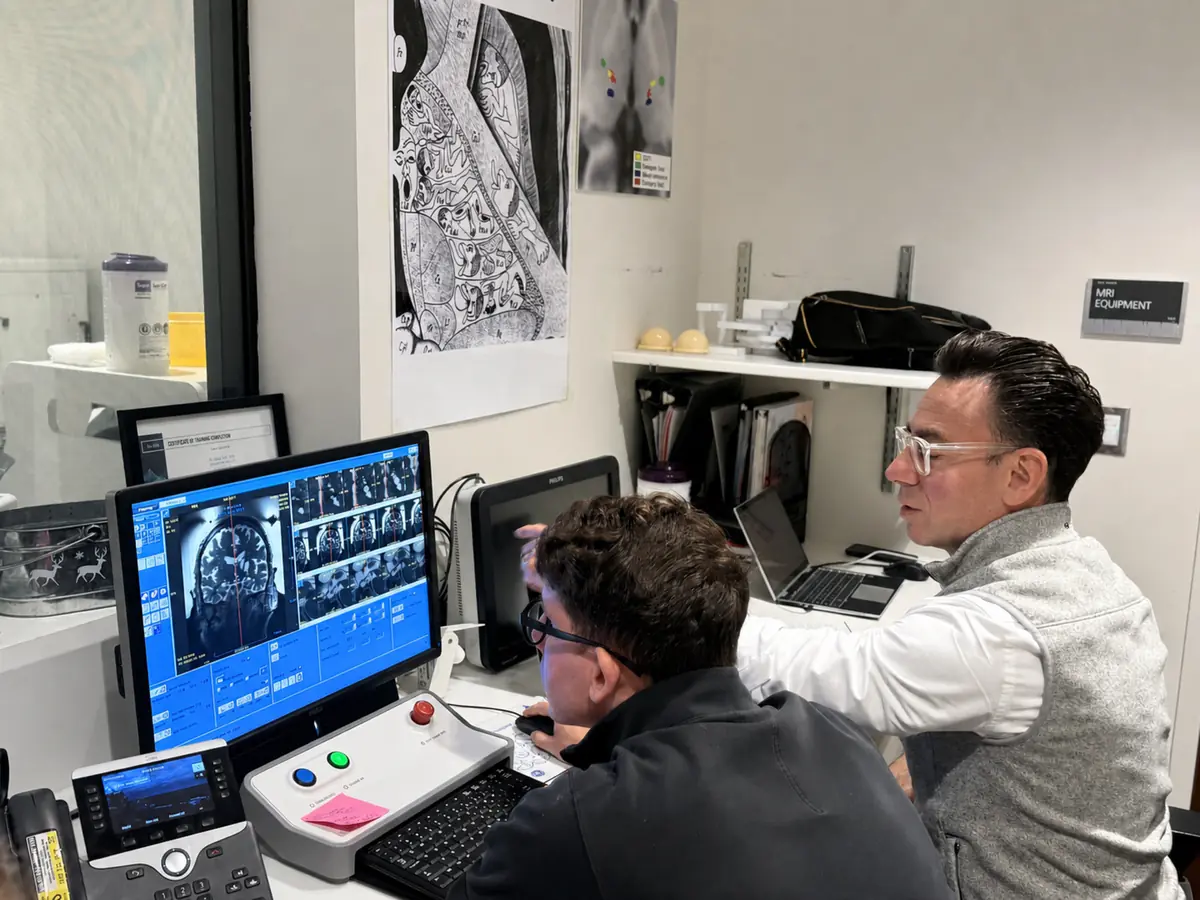
From a technical standpoint, focused ultrasound requires extraordinary precision. Millimeter-level targeting differences can influence both tremor control and side effects involving speech, sensation, balance, or coordination. At RUSH, treatment planning involves advanced MRI guidance, real-time MRI thermometry, and detailed anatomic analysis to optimize both safety and effectiveness. The team’s experience with neurosurgical anatomy, tremor circuitry, and lesioning procedures is central to this process.
Advancing the field
Importantly, RUSH has also been involved in the evolution of the field itself. The program has experience with advanced and emerging focused ultrasound applications, including bilateral staged treatment approaches. Through both clinical experience and academic contributions, the team has helped shape understanding of the benefits and risks associated with newer applications such as bilateral treatment, particularly regarding issues involving speech and balance outcomes.
Follow-up made simpler
Another major advantage for patients is the relative convenience of focused ultrasound follow-up at RUSH. Because there is no implanted hardware and no programming requirement, much of the long-term follow-up can be performed through telemedicine. This is particularly valuable for patients traveling long distances or living out of state, allowing ongoing care and communication without repeated trips back to Chicago.
The patient experience
The patient experience itself is also an important focus of the program. Tremor disorders and Parkinson’s disease affect far more than movement alone. They affect confidence, independence, work, social interaction, and quality of life. The approach at RUSH is to combine technical excellence with clear communication, realistic expectations, and compassionate longitudinal care. Patients are guided carefully through evaluation, treatment, recovery, and long-term follow-up with a team that performs focused ultrasound routinely and understands both the science and the human side of the process.
Getting here
Location also plays a practical role. RUSH University Medical Center is located near downtown Chicago within the Illinois Medical District, with convenient access from both O’Hare and Midway airports. Nearby hotels, restaurants, and transportation options make travel logistics manageable for patients and families coming from outside the region. The program’s structure is specifically designed to accommodate both local and traveling patients efficiently.
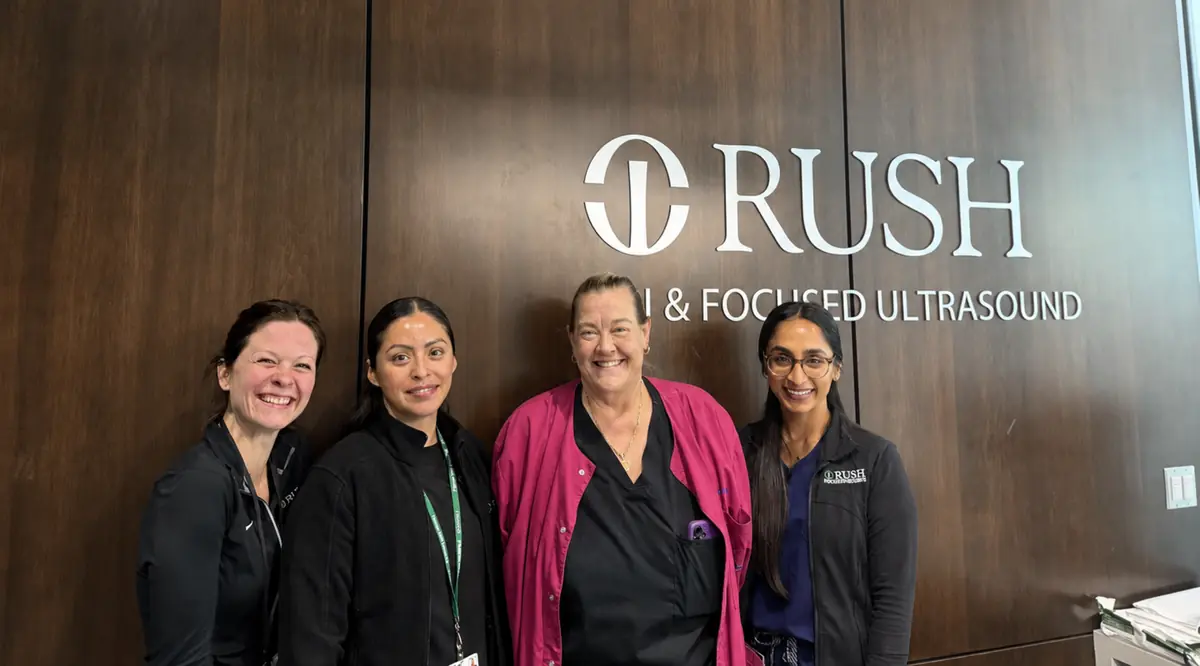
Ultimately, what distinguishes a high-level focused ultrasound center is not simply ownership of the technology. It is the ability to integrate imaging, movement disorders expertise, neurosurgical judgment, patient selection, technical precision, and long-term care into one cohesive program. At RUSH, focused ultrasound is approached not as an isolated procedure, but as part of a comprehensive neuromodulation philosophy focused on achieving the best possible functional outcome safely, thoughtfully, and individually for each patient.