
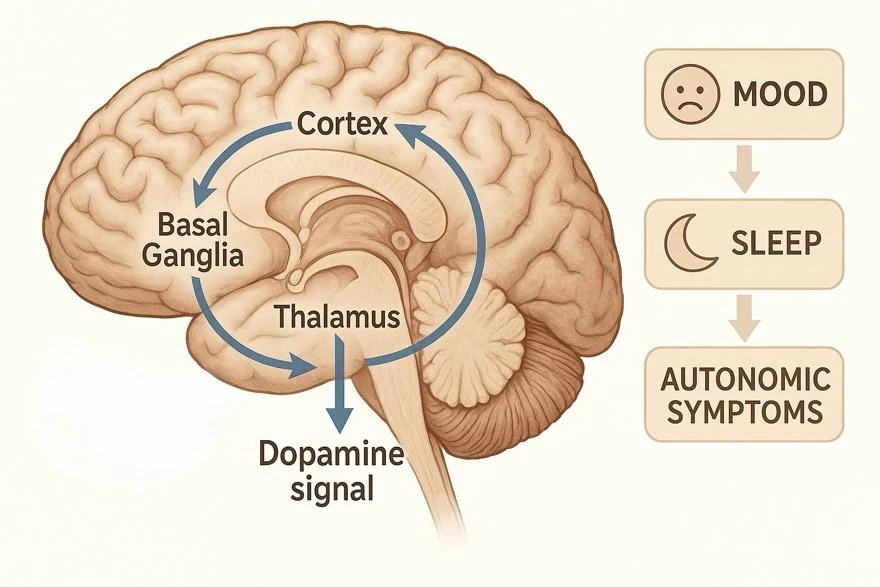
Parkinson’s disease is a progressive neurological condition that affects movement, coordination, and, over time, other aspects of daily life. It develops as dopamine-producing cells in the brain gradually decline, disrupting the circuits that allow for smooth and controlled movement. For many individuals, the diagnosis brings uncertainty and understandable concern. At RUSH, our goal is to provide clarity, guidance, and a thoughtful path forward—tailored to each person’s experience of the disease.
Symptoms
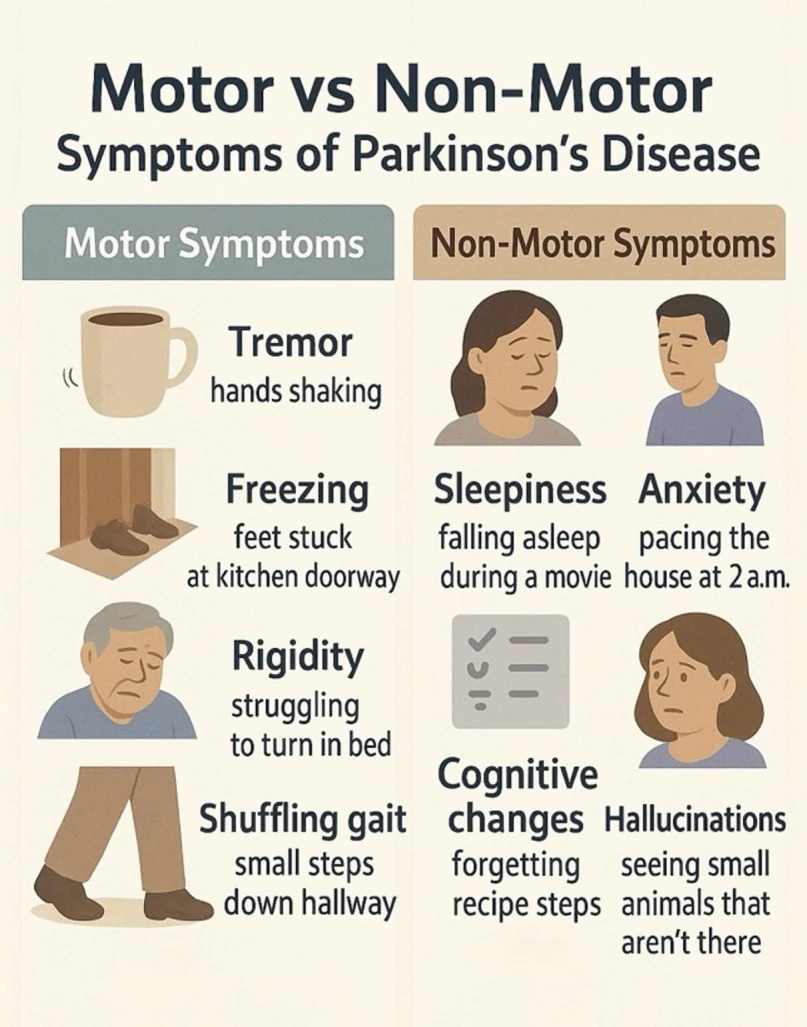
The symptoms of Parkinson’s disease can vary widely from one individual to another. Many patients first notice a tremor, often beginning on one side of the body. Others may experience a sense of slowing in movement, stiffness, or changes in balance and walking. As the condition evolves, some patients develop fluctuations in how well their medications control symptoms, along with involuntary movements known as dyskinesias. These motor symptoms are often the most visible aspects of Parkinson’s disease and are understandably a major focus of treatment.
The symptoms that are less visible
Equally important, however, are the non-motor symptoms that accompany Parkinson’s disease—symptoms that are not always as visible, but can have a profound impact on quality of life. Many patients experience increased anxiety, changes in sleep, persistent fatigue, and shifts in mood or cognition over time. These changes can be subtle at first, but may gradually become more significant. Social isolation and depression are also common and can be among the most challenging aspects of the disease, affecting not only patients but their families as well. Recognizing and addressing these non-motor symptoms is an essential part of comprehensive care, and an important component of how we approach treatment at RUSH.
When medication stops being enough
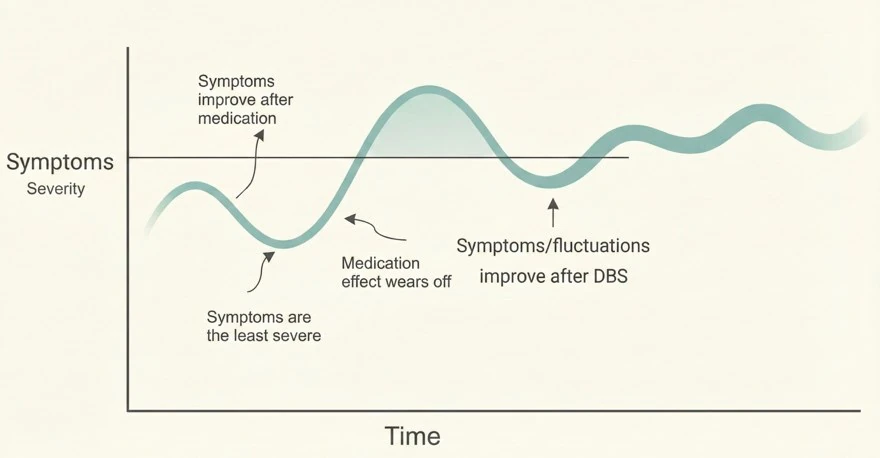
For a period of time, medications can provide excellent symptom control and allow patients to maintain a high quality of life. However, as the disease progresses, medications may become less predictable, with periods when they work well and others when symptoms return despite treatment. Some patients also find that increasing medication doses leads to unwanted side effects. When these challenges begin to interfere with daily activities, it may be appropriate to consider advanced therapies. This decision is highly individualized and is best made through careful evaluation by a team with deep experience in Parkinson’s disease.
How we approach treatment
At RUSH University Medical Center, treatment begins with a comprehensive understanding of each patient’s symptoms, goals, and lifestyle. Medication management remains an essential foundation, and our movement disorders specialists work closely with patients to optimize therapy at every stage. When additional treatment is needed, we offer advanced options including deep brain stimulation (DBS) and MRI-guided focused ultrasound (FUS), both of which are delivered within one of the most experienced programs in the country.
Deep brain stimulation
Deep brain stimulation is a well-established and highly effective therapy for many patients with Parkinson’s disease whose symptoms are no longer adequately controlled with medication alone. The procedure involves placing thin electrodes in carefully selected areas of the brain that regulate movement. These electrodes deliver gentle electrical stimulation to help restore more normal patterns of brain activity. DBS can significantly reduce motor fluctuations, improve tremor, stiffness, and slowness, and in many cases allow for a reduction in medication burden. Because the system is adjustable, it can be tailored over time as the disease evolves, offering a level of flexibility that is unique among treatment options.
Focused ultrasound
Focused ultrasound is a non-invasive alternative that may be appropriate for certain patients, particularly those whose symptoms are dominated by tremor. This technology uses precisely targeted ultrasound energy, guided by MRI, to treat specific areas of the brain without the need for incisions or implanted hardware. Many patients experience immediate improvement in tremor during the procedure itself. While focused ultrasound is a powerful tool, it is typically used to treat one side of the brain and is more focused in its effects than DBS. Determining whether it is the right option depends on a careful assessment of each patient’s symptom profile and goals.
What to expect from treatment
The outcomes of these treatments can be meaningful and life-changing when patients are thoughtfully selected. Deep brain stimulation offers broad and durable control of many motor symptoms, while focused ultrasound provides targeted relief, often with immediate results. Our role is to guide patients through these options with honesty and precision, helping them understand not only the potential benefits, but also the limitations of each approach.
Why RUSH
The Parkinson’s disease program at RUSH is among the most experienced in the nation, with decades of expertise in both deep brain stimulation and focused ultrasound. Our team includes specialists in neurology, neurosurgery, and advanced patient care who work together to ensure that every decision is made with a full understanding of the individual patient. We are also actively involved in research and clinical trials, contributing to ongoing advances in the treatment of Parkinson’s disease.
Above all, our approach is centered on the individual. No two patients experience Parkinson’s disease in exactly the same way, and no single treatment path is right for everyone. We take the time to understand each patient’s goals, concerns, and priorities, and we design a care plan that reflects those values. Whether patients are early in their diagnosis or considering advanced therapies, our focus remains the same: to provide expert care with clarity, compassion, and a commitment to long-term outcomes.
For those exploring next steps, we offer comprehensive evaluations, including the option for telemedicine consultations, to help guide decisions in a thoughtful and informed way.