
Deciding together
DBS or focused ultrasound?
These are not competing technologies. They are two treatments with genuinely different trade-offs, and the right one depends on your symptoms, your stage of disease, how much you value adjustability, and whether one side or both need treating.
The core difference
A permanent lesion, or adjustable stimulation
Nearly every other difference follows from this one. Focused ultrasound uses sound energy to create a small, permanent lesion in a circuit. DBS implants a lead that modulates the same circuit with electricity you can change at any time.
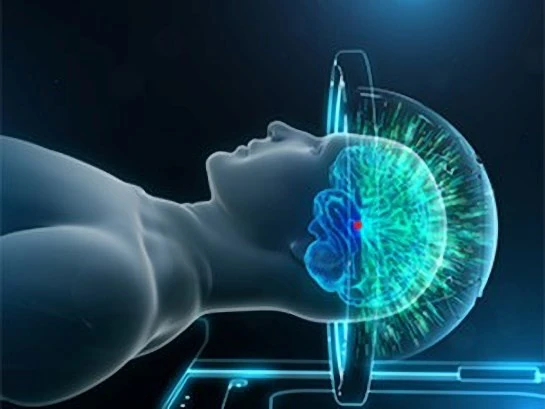
MRI-guided focused ultrasound
One treatment, then complete
No incision, no implanted hardware, no drilling and usually no overnight stay. Nothing to charge, no programming visits and no future battery replacement. The trade-off is permanence: a lasting side effect cannot be reversed.
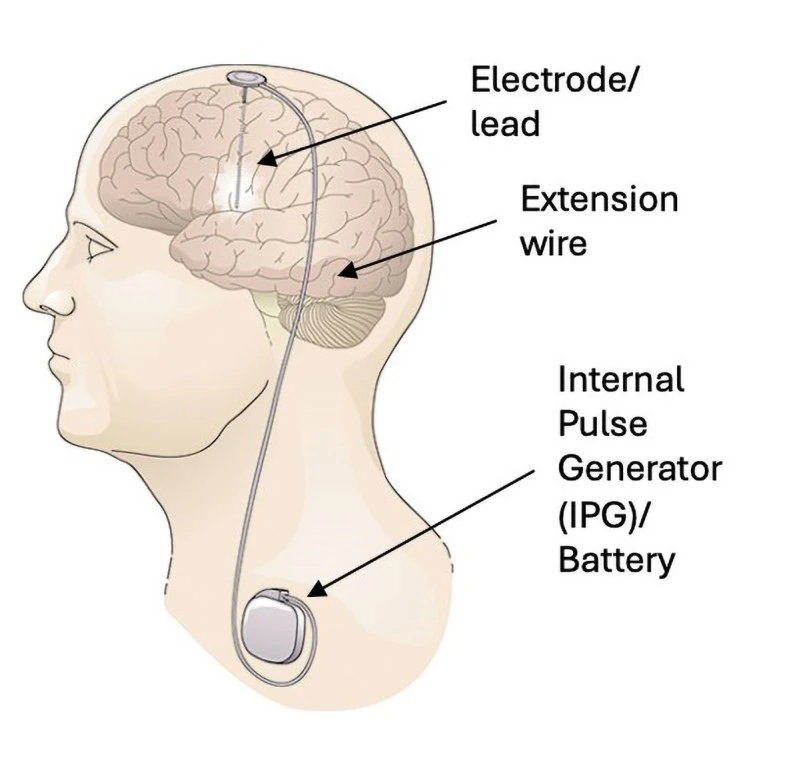
Deep brain stimulation
A therapy you continue to tune
Implanted hardware and an ongoing programming relationship, in exchange for control. Settings can be increased, reduced, redirected or switched off as the disease changes, and most stimulation-related side effects can be programmed away.
Side by side
The comparison in full
| Factor | Focused ultrasound (MRgFUS) | Deep brain stimulation (DBS) |
|---|---|---|
| What it does | Creates a small, permanent lesion in a movement circuit | Delivers adjustable electrical stimulation to a movement circuit |
| Invasiveness | Incisionless. No skull opening, no implant | Surgery with implanted leads, extension wires and a chest battery |
| Anesthesia | Awake throughout, responding to the team | Awake or asleep, depending on the approach chosen |
| Hospital stay | Usually home the same day | Usually one night for observation |
| When benefit appears | Often during the procedure itself | Begins with programming, about four weeks after surgery |
| Adjustability | Permanent. Cannot be reversed or reduced | Adjustable, reversible, and removable if necessary |
| Ongoing maintenance | Minimal. No batteries, no programming | Programming visits, charging or battery replacement over time |
| Treating both sides | Staged bilateral treatment is possible in selected patients, with added cumulative risk | Routine. Bilateral treatment is a long-standing strength of DBS |
| Best established for | Essential tremor; tremor-dominant Parkinson's disease; selected Parkinsonian motor complications | Parkinson's disease, essential tremor, dystonia; OCD and epilepsy in selected cases |
| Characteristic risks | Numbness, imbalance, gait difficulty, dysarthria or incoordination that cannot be switched off if they persist | Bleeding, infection, hardware malfunction, lead migration, future battery procedures |
| Often suits | Older patients, those who prefer no implanted hardware, those for whom regular programming visits would be difficult | Younger patients, those needing both sides treated, evolving Parkinson's symptoms, those who value long-term flexibility |
These are tendencies rather than rules. There are younger patients for whom focused ultrasound is clearly right, and older patients better served by DBS. Read the long-form comparison →
Worth thinking about beforehand
Four questions that shape the decision
Which symptom is limiting you?
Focused ultrasound is more symptom-specific and is very effective for tremor. DBS gives broader control across the range of Parkinson's motor symptoms. Naming the one symptom you most want back is the single most useful thing to bring to a consultation.
One hand, or both?
Where both sides are disabling, DBS has historically had the clear advantage. Staged bilateral focused ultrasound is now possible in carefully selected patients, but the cumulative risk to speech, balance and coordination is weighed treatment by treatment.
Is your disease likely to change?
Adjustability matters most when symptoms are still evolving. In younger patients, and in Parkinson's disease that continues to progress, the ability to reprogram years later carries real value.
Does the center offer both?
A center that performs only one therapy can only recommend that therapy. At RUSH both sit within the same program and are reviewed by the same multidisciplinary team, so the recommendation follows the patient rather than the available equipment.
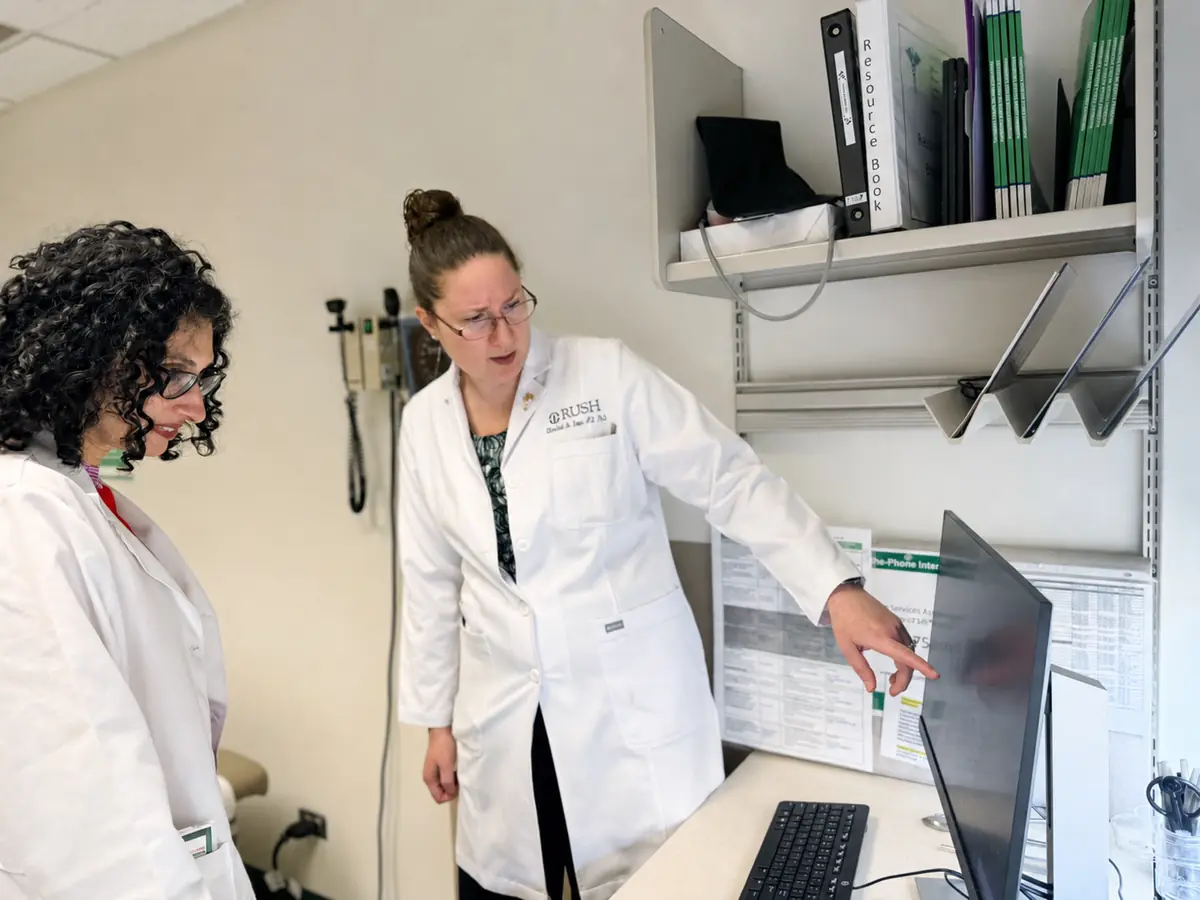
You do not have to decide alone
Candidacy decisions here are not made by one person. Neurology, neurosurgery, neuropsychology, advanced practice providers and coordinators each contribute a different view of the same patient, and the recommendation comes out of that discussion.
You should expect to leave a consultation with a clear picture: which symptoms are likely to improve, which are not, what the realistic risks are, and what the alternative would involve.
What to expect at your evaluation →
See the full care journey →
Talk it through with our team
A consultation commits you to nothing, and many patients start with a video visit before traveling.