
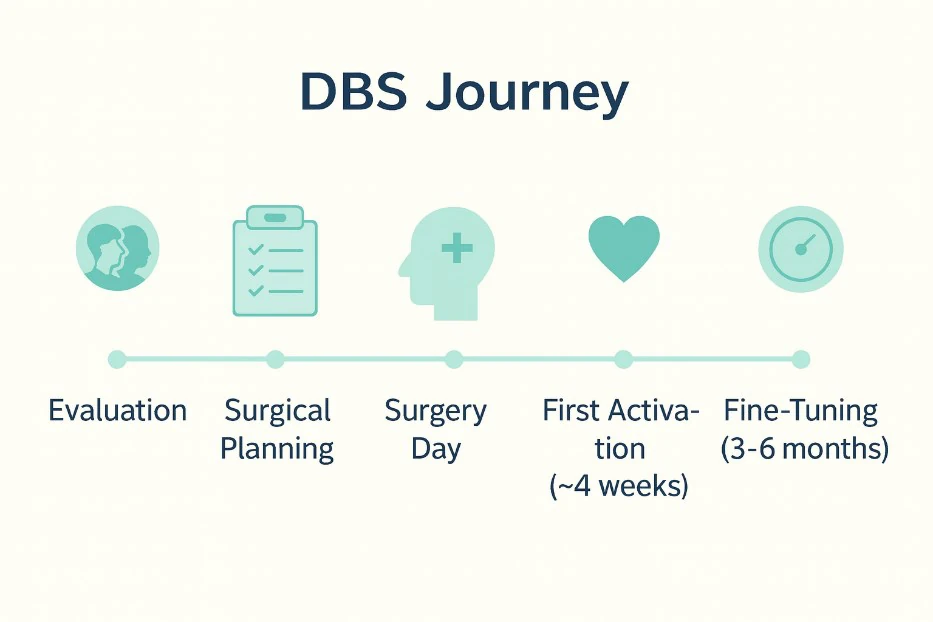
Preparing for Deep Brain Stimulation is a process that unfolds over time, not just in the days before surgery. For most patients, it begins weeks to months earlier with one of the most important steps: making sure this is the right treatment for you. This phase often feels less like “preparing for surgery” and more like building a foundation. You will meet with your neurologist and surgical team, review your diagnosis carefully, and make sure that your symptoms—and your goals—align with what DBS can realistically offer. These conversations are deliberate and thoughtful. They are designed to ensure that when you move forward, you do so with confidence, clarity, and the reassurance that this decision is the right one for you.
The practical phase
As surgery becomes more concrete, the preparation shifts into a more practical phase. In the days to weeks leading up to the procedure, attention turns to details that help ensure safety and smooth execution. This may include imaging studies, routine lab work, and adjustments to medications—particularly blood thinners or other drugs that could affect surgery. Your care team will guide you through each of these steps so nothing feels uncertain or rushed. At the same time, many patients notice something else during this period: a growing sense of anticipation. It is very common to feel a mix of hope, nervousness, and even anxiety as the surgery approaches. This is a normal and expected part of the process. For many, it reflects the significance of the decision and the possibility of meaningful change ahead.
Reducing uncertainty
As the day of surgery draws closer, preparation becomes both mental and logistical. One of the most helpful strategies is to reduce as many unknowns as possible. Some patients find it reassuring to do a “dry run” a few days in advance—driving to the hospital, identifying where to park, and walking through the path they will take on the day of surgery. Removing these small uncertainties can make a meaningful difference, allowing you to arrive focused and calm rather than rushed or frustrated. Planning ahead for simple details—what time to leave, who will accompany you, what to bring—helps create a sense of control during a time that can otherwise feel overwhelming.
What your team is doing
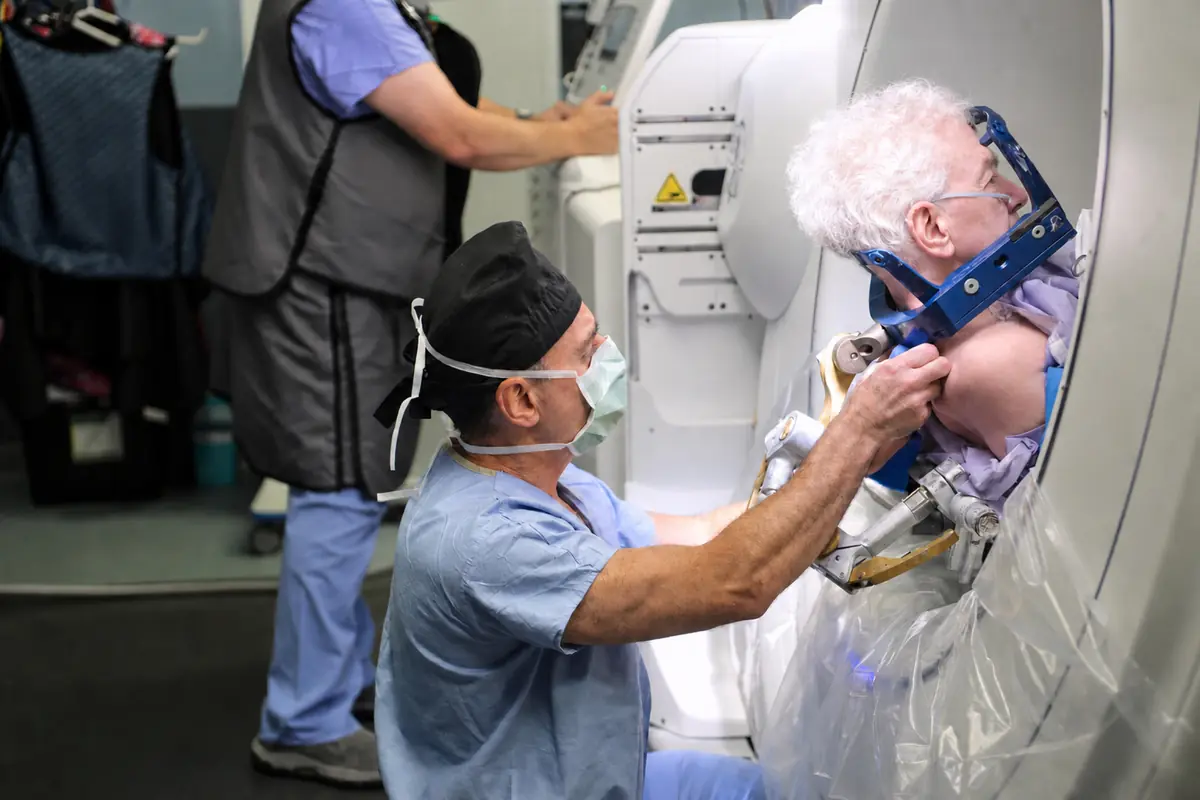
Behind the scenes, your surgical team is preparing just as carefully. In the days leading up to your procedure, your imaging is reviewed in detail, surgical plans are finalized, and advanced systems—including navigation software, imaging platforms, and robotic or stereotactic technology—are precisely configured for your individual anatomy. This preparation is meticulous and patient-specific. By the time you arrive on the day of surgery, your team is not starting from scratch—they are executing a plan that has already been thoughtfully designed around you.
The day of surgery
On the day itself, most patients are surprised by how organized and supportive the experience feels. You are guided step by step, surrounded by a team that does this routinely and understands both the technical and emotional aspects of the process. While it is natural to feel nervous, many patients describe a sense of calm once the day begins, as the focus shifts from anticipation to action.
Immediately after surgery
After surgery, expectations are often very different from what patients initially imagine. Most individuals stay in the hospital overnight for observation. In many cases, a loved one can remain with you, which provides additional comfort and reassurance. By the next morning, the majority of patients are ready to go home. One of the most common reactions is surprise—not at how difficult the experience was, but at how manageable it felt. Despite the complexity of brain surgery, the physical recovery is typically much lighter than expected.
The first days at home
In the days that follow, it is normal to feel somewhat tired. Your body has been through an important procedure, and rest is part of the recovery. Pain is usually minimal. The incisions are small—generally only a couple of inches—and most patients do not require opioid medications. At our center, we intentionally avoid them. Instead, simple medications such as acetaminophen (Tylenol) and celecoxib (Celebrex) are typically more than sufficient to keep patients comfortable. This often comes as a relief, especially for those concerned about stronger pain medications.
When the benefit begins
One important aspect of DBS that differs from other treatments is timing of benefit. Unlike some procedures where results are immediate, DBS requires a period of healing before the system is activated. At Rush, initial programming typically occurs about four weeks after surgery. During this time, you will continue your medications as you were taking them before surgery. Some patients notice a temporary improvement in symptoms during this period, often referred to as a “honeymoon” or lesion effect, caused by mild, temporary changes in the brain from electrode placement. This can be encouraging, but it does not occur in everyone and does not represent the long-term effect of DBS.
The true benefit of DBS begins with programming—when the system is turned on and carefully adjusted to your specific needs. This is a gradual and collaborative process, one that builds on the preparation you have already completed.
Taken together, preparing for DBS is not just about getting ready for surgery. It is about aligning expectations, building trust with your care team, and moving forward in a way that is thoughtful, supported, and individualized. By the time you reach the operating room, the most important work—the decision, the planning, and the preparation—has already been done.