
Depression is a serious and complex medical condition that affects far more than mood. It can change the way a person sleeps, thinks, eats, works, relates to others, and experiences hope. For some patients, depression occurs as a single episode that improves with treatment. For others, it is recurrent, long-lasting, or part of a broader mood disorder such as bipolar depression. Depression is not one disease with one face; it is a multi-dimensional condition with different subtypes, patterns, triggers, biological features, and clinical presentations. This is why careful evaluation is essential before deciding which treatment path is most appropriate.
The burden of depression
The burden of depression can be profound. It affects relationships, work, school, physical health, and the ability to participate fully in life. Globally, depression is common, can lead to suicide, and is associated with major personal and public health consequences. The World Health Organization estimates that approximately 332 million people worldwide live with depression and notes that depression can affect all aspects of life, including family, community, school, and work. Suicide is also a major public health concern, with more than 720,000 people dying by suicide each year worldwide.
Established treatment
For many patients, depression can be treated effectively. Psychotherapy, medication, lifestyle interventions, and psychiatric care can help many individuals return to a more stable and meaningful life. The National Institute of Mental Health notes that treatment commonly involves psychotherapy, medication, or both, and that brain stimulation therapies may be considered when symptoms do not improve sufficiently with standard treatments.
Treatment-resistant depression
Despite appropriate treatment, however, a proportion of patients continue to suffer from treatment-resistant depression. These patients may have tried multiple medications, therapy approaches, and other established treatments without achieving lasting relief. The result can be devastating: persistent sadness or emptiness, loss of interest, fatigue, impaired concentration, sleep disruption, social withdrawal, loss of productivity, self-harm risk, and a narrowing of life around the illness. For these patients, the question becomes whether more advanced approaches can help modulate the brain networks involved in mood, motivation, anxiety, and emotional regulation.
Where neuromodulation fits
Neuromodulation has become an important area of treatment and research for difficult-to-treat depression. Some forms of neuromodulation are well established, including electroconvulsive therapy and transcranial magnetic stimulation. Others, such as vagus nerve stimulation and deep brain stimulation, are used or studied in more selected populations. These therapies are based on the idea that depression is not simply a “chemical imbalance,” but a disorder of brain networks—circuits connecting mood, attention, motivation, sleep, memory, and bodily regulation.
Vagus nerve stimulation
Vagus nerve stimulation, or VNS, is one of the earlier implanted neuromodulation approaches studied for treatment-resistant depression. VNS involves placing a small device under the skin below the collarbone, connected to the vagus nerve in the neck. The device sends intermittent electrical stimulation through the vagus nerve, which communicates with brain regions involved in mood regulation. In a 2005 randomized controlled trial, adjunctive VNS did not show definitive short-term benefit on the primary depression scale at 10 weeks, but later research has continued because VNS may require a longer treatment window to show its full effect.
RUSH is participating in the RECOVER trial, a major prospective, multicenter, randomized, controlled, blinded study evaluating VNS Therapy as an adjunctive treatment for treatment-resistant depression. The RUSH clinical trial listing describes VNS as an outpatient implanted device placed below the collarbone and connected to a nerve in the neck, with random assignment to stimulation or no stimulation. The listed eligibility criteria include adults with difficult-to-treat bipolar depression who have tried at least four depression treatments without sufficient benefit.
Deep brain stimulation
Deep brain stimulation, or DBS, represents another important chapter in the history of neuromodulation for depression. DBS uses thin implanted electrodes to deliver carefully controlled stimulation to specific brain circuits. In movement disorders, DBS is already an established therapy. In depression, DBS remains investigational, but it has been studied for patients with severe, chronic, treatment-resistant illness. One of the most important targets has been the subcallosal cingulate region, also known as Brodmann area 25, a region strongly connected to networks involved in mood, anxiety, motivation, memory, autonomic function, and emotional regulation.
The major historical DBS trial in this field was the BROADEN study, a multicenter randomized sham-controlled trial of subcallosal cingulate white matter stimulation for treatment-resistant depression. The study was designed to test whether DBS could improve chronic, unremitting depression. In the double-blind phase, patients were implanted and randomized to active or sham stimulation. At the time of futility analysis, the trial did not show a statistically significant difference between active stimulation and sham stimulation during the 6-month blinded phase, although the study confirmed feasibility and provided important safety and methodological lessons.
The interpretation of BROADEN is important. The trial did not prove that DBS was ineffective for depression; rather, it showed that the specific study design, timing, targeting methods, patient heterogeneity, and outcome structure may not have been sufficient to demonstrate benefit in such a complex illness. Depression is biologically and clinically heterogeneous, and neuromodulation may require precise patient selection, network-based targeting, longer observation periods, and individualized programming strategies. These lessons have shaped the next generation of studies.
The TRANSCEND trial
The current Abbott-sponsored TRANSCEND trial builds on this history. TRANSCEND stands for Treatment ResistAnt DepressioN Subcallosal CingulatE Network DBS. It is a prospective, multicenter, double-blind, randomized, delayed-stimulation/sham-controlled study evaluating bilateral stimulation of the subcallosal cingulate white matter using Abbott’s Infinity DBS system as an adjunctive treatment for adults with non-psychotic unipolar major depressive disorder who have had inadequate response to four or more antidepressant treatments. The study is actively recruiting and is designed to evaluate both safety and effectiveness.
Our center is one of the select programs participating in TRANSCEND. This reflects our broader commitment to advancing responsible, evidence-based neuromodulation for psychiatric illness. For patients with severe refractory depression, participation in a clinical trial may offer access to investigational therapies within a carefully monitored research structure. It is not appropriate for every patient, and it is not presented as a guaranteed treatment. Rather, it is part of a thoughtful, rigorous effort to determine which patients may benefit, how to target treatment more precisely, and how to reduce the burden of severe depression.
Our approach at RUSH
At RUSH, our approach begins with respect for the complexity of depression and for the person living with it. We recognize that patients with treatment-resistant depression have often endured years of symptoms, multiple treatments, disappointment, stigma, and uncertainty. Our role is to evaluate carefully, collaborate across psychiatry, neurology, neurosurgery, psychology, and research teams, and identify whether advanced treatment or clinical trial participation may be appropriate.
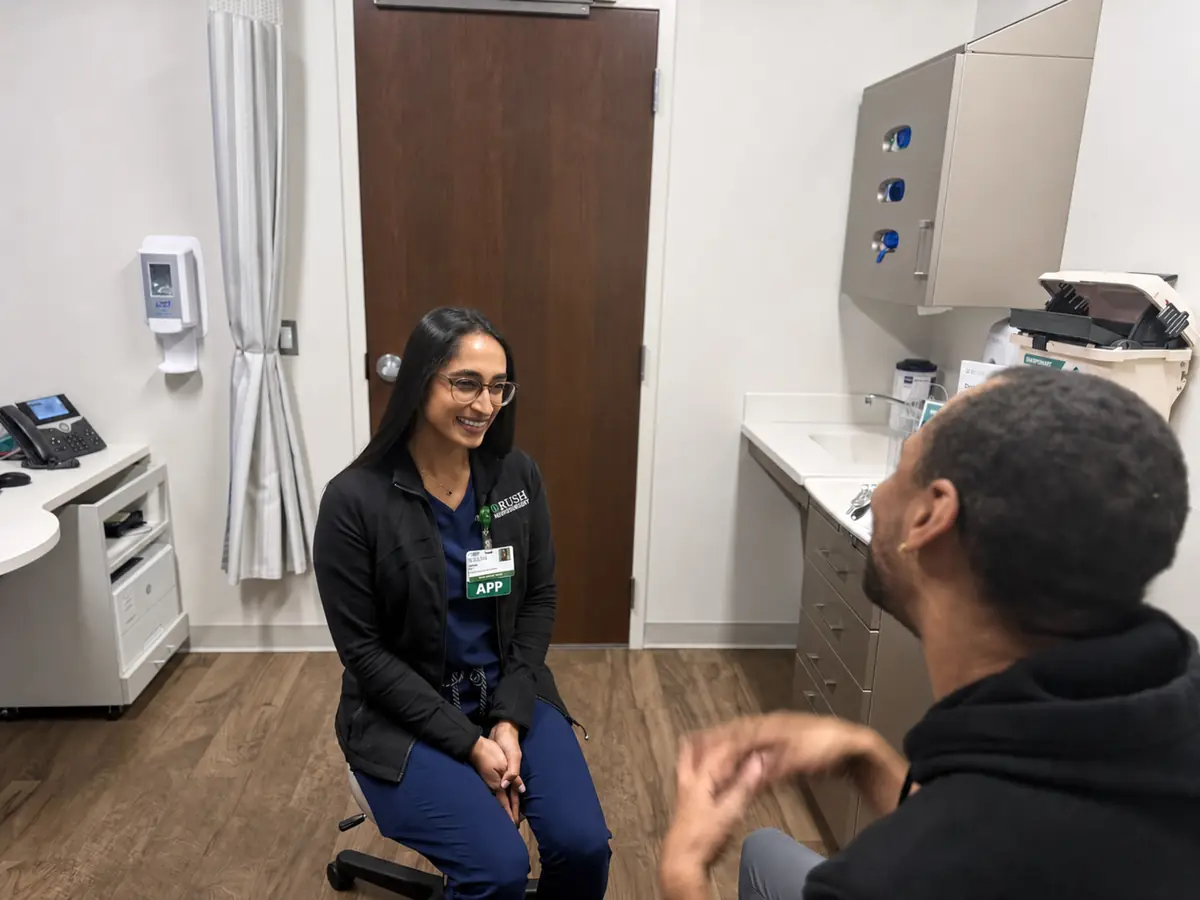
Our program is heavily experienced in neuromodulation and deeply committed to developing more advanced treatment options for refractory depression. The goal is not simply to treat a symptom score, but to help reduce suffering, restore function, and give patients the opportunity to re-engage with life, relationships, work, and purpose.