
Patient Care
Conditions we treat
Movement disorders disrupt the control of movement — producing too much of it, as tremor, jerks and twisting, or too little, as stiffness and slowness. The circuits involved are well mapped, and for several of these conditions neuromodulation can restore a great deal of function.
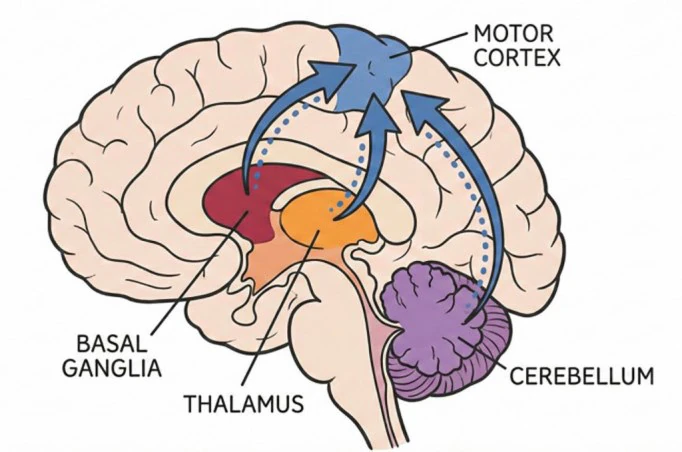
Movement disorders
Where DBS and focused ultrasound are established therapy
DBS · Focused ultrasound
Parkinson's Disease
Tremor, rigidity, slowness, motor fluctuations and dyskinesia — and the point at which medication alone stops being predictable enough.
DBS · Focused ultrasound
Essential Tremor
The most common movement disorder. Both therapies work well here, which makes choosing between them the most consequential decision.
DBS
Dystonia
Involuntary contractions that twist posture or movement. Botulinum toxin and medication first; pallidal DBS when symptoms remain disabling.
Assessed individually
Other Conditions
Medication-refractory and mixed tremor syndromes, tardive dystonia and dyskinesia, and tremor following stroke, injury or multiple sclerosis.
Neuropsychiatric conditions
Where neuromodulation is used selectively
For severe, treatment-resistant psychiatric illness, neuromodulation is approached carefully and always jointly with psychiatry. These evaluations proceed deliberately.
Tourette Syndrome
Motor and vocal tics beginning in childhood, sitting at the intersection of movement, behavior and emotion. DBS is reserved for severe, refractory disease.
Obsessive-Compulsive Disorder
When obsessions and compulsions consume hours a day despite full treatment, DBS of specific circuits is an established option for a small, carefully selected group.
Depression
Depression is not one condition with one presentation. Evaluation focuses on subtype, treatment history, and whether neuromodulation belongs in the plan at all.
Which symptoms respond, and which do not
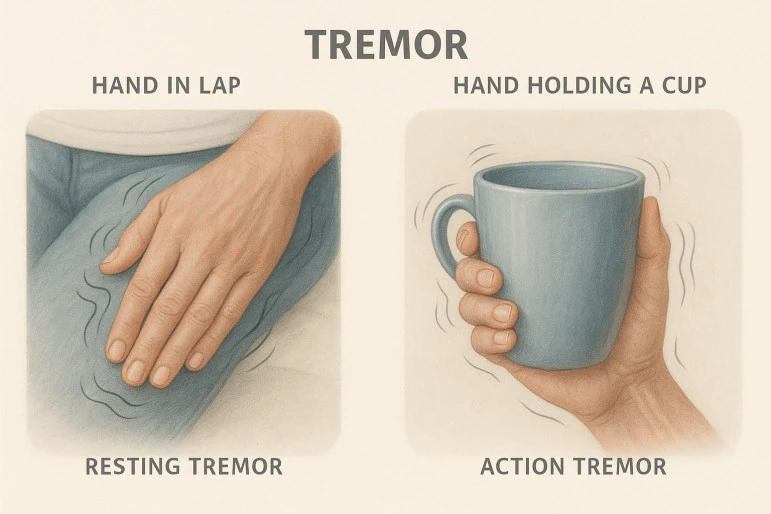
This distinction explains why one person is an excellent candidate and another is not. Neuromodulation reliably improves tremor, rigidity, bradykinesia, dystonia, medication-related dyskinesia and motor fluctuations.
It generally does not improve ataxia — the unsteady, uncoordinated movement caused by cerebellar disease — because that arises in different circuits. Balance problems not caused by Parkinson's disease itself usually do not improve either.
This is why evaluation begins with the diagnosis rather than the procedure.
Compare DBS and focused ultrasound →
See what an evaluation involves →
Not sure your condition fits?
Complex and mixed presentations are a large part of what we see. If your movement disorder has never fitted neatly into a category, that is a reason to be evaluated rather than a reason not to be.