
Overview: Your Care Team
Advanced treatment for movement disorders and neuromodulation conditions is rarely about a single procedure or a single physician. The best outcomes are usually the result of a highly coordinated team working together across multiple specialties, each bringing a different perspective and area of expertise to the care of a single patient. At RUSH, this philosophy forms the foundation of the entire program.
A small team inside a large academic center
Our movement disorders and neuromodulation center is built around a tightly integrated boutique-style expert team operating within one of the country’s leading academic medical centers. While RUSH is a large nationally recognized institution with extensive resources, the patient experience itself is intentionally designed to feel coordinated, personal, and continuous. Patients are not passed randomly from one unfamiliar provider to another. Instead, they are paired with a dedicated and consistent team that remains involved throughout evaluation, treatment, recovery, and long-term follow-up.
Who we care for
Patients come to RUSH from throughout the Midwest, across the United States, and internationally for evaluation and treatment of complex tremor disorders, Parkinson’s disease, dystonia, and other neuromodulation-related conditions. The program maintains one of the highest procedural volumes in the country and among the highest surgical and focused ultrasound treatment volumes in the Midwest region. This depth of experience matters because movement disorders are nuanced, highly individualized conditions that often require sophisticated diagnostic evaluation, careful treatment selection, and precise long-term management.
Grounded in academic medicine
At the same time, the program remains grounded in the principles of academic medicine. The specialists involved in patient care are not only clinicians, but also educators, researchers, and innovators who help train the next generation of neurologists, neurosurgeons, psychiatrists, neuropsychologists, advanced practice providers, nurses, and neuroscientists. Fellows, residents, and students are trained within an environment built around complex neuromodulation care, advanced surgical technologies, and multidisciplinary collaboration. For patients, this means their care is being delivered within a center deeply immersed in the science and evolution of the field itself.
Direct access to subspecialists
One of the unique aspects of the RUSH experience is the degree of direct access patients have to subspecialists from the very beginning. In many healthcare systems, patients entering a complex surgical evaluation pathway may first encounter a generalized call center, fragmented scheduling systems, or layers of referrals before eventually reaching the actual specialists involved in treatment decisions. At RUSH, the process is intentionally different. From the earliest stages, patients are connected directly with individuals who are deeply familiar with movement disorders and neuromodulation care. In many cases, one of the earliest physicians patients meet is the surgeon who may ultimately remain involved in their care long after treatment is completed.
Coordinators and navigators
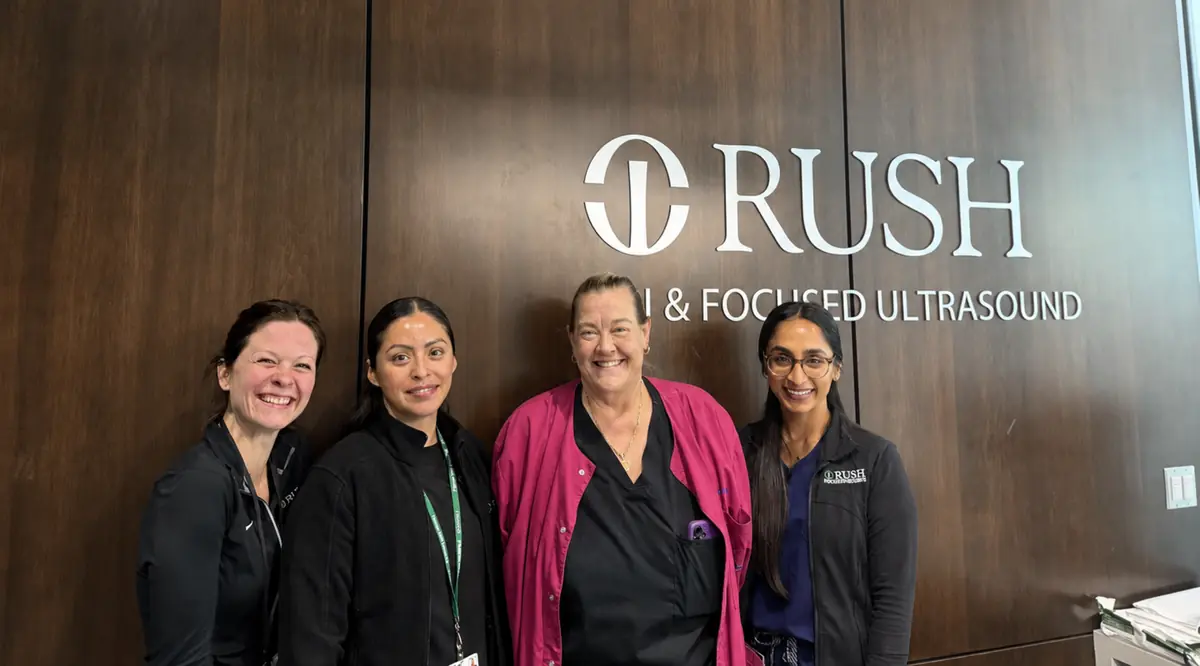
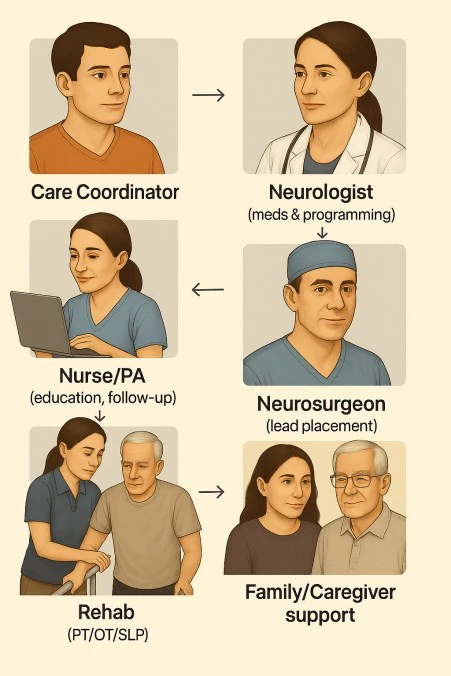
This continuity extends well beyond physicians alone. Dedicated care coordinators and patient navigators help guide patients through every phase of the process—from the first phone call and imaging review to scheduling, insurance coordination, telemedicine integration, procedural preparation, recovery, and follow-up care. Because these teams work specifically within the movement disorders and neuromodulation program, they understand the process in detail and are able to help patients navigate it with far greater clarity and confidence than is often possible in more fragmented healthcare systems.
How cases are reviewed
Care at RUSH is also inherently collaborative. Patients are evaluated not only individually by subspecialists, but also collectively through interdisciplinary discussion and review. Neurologists, neurosurgeons, psychiatrists, neuropsychologists, advanced practice providers, nurses, and imaging specialists each bring different experiences and perspectives to the table. These discussions are often detailed, thoughtful, and at times intensely debated—not because the team is uncertain, but because every specialist is advocating for the safest and most effective plan for that individual patient. In many ways, this collaborative tension is one of the strengths of a high-level academic center: decisions are refined through the combined experience of experts who have collectively treated thousands of patients over decades of practice.
Long-term relationships
The structure of the program also allows for long-term relationships to develop naturally over time. Patients often arrive initially focused on a procedure—DBS, focused ultrasound, or another treatment—but gradually realize that the process becomes much more about the people surrounding that treatment. The same neurologists, neurosurgeons, nurses, advanced practice providers, and coordinators who guide patients through evaluation often continue caring for them for years afterward. That consistency creates familiarity, trust, and a level of continuity that can be difficult to replicate in less integrated systems.
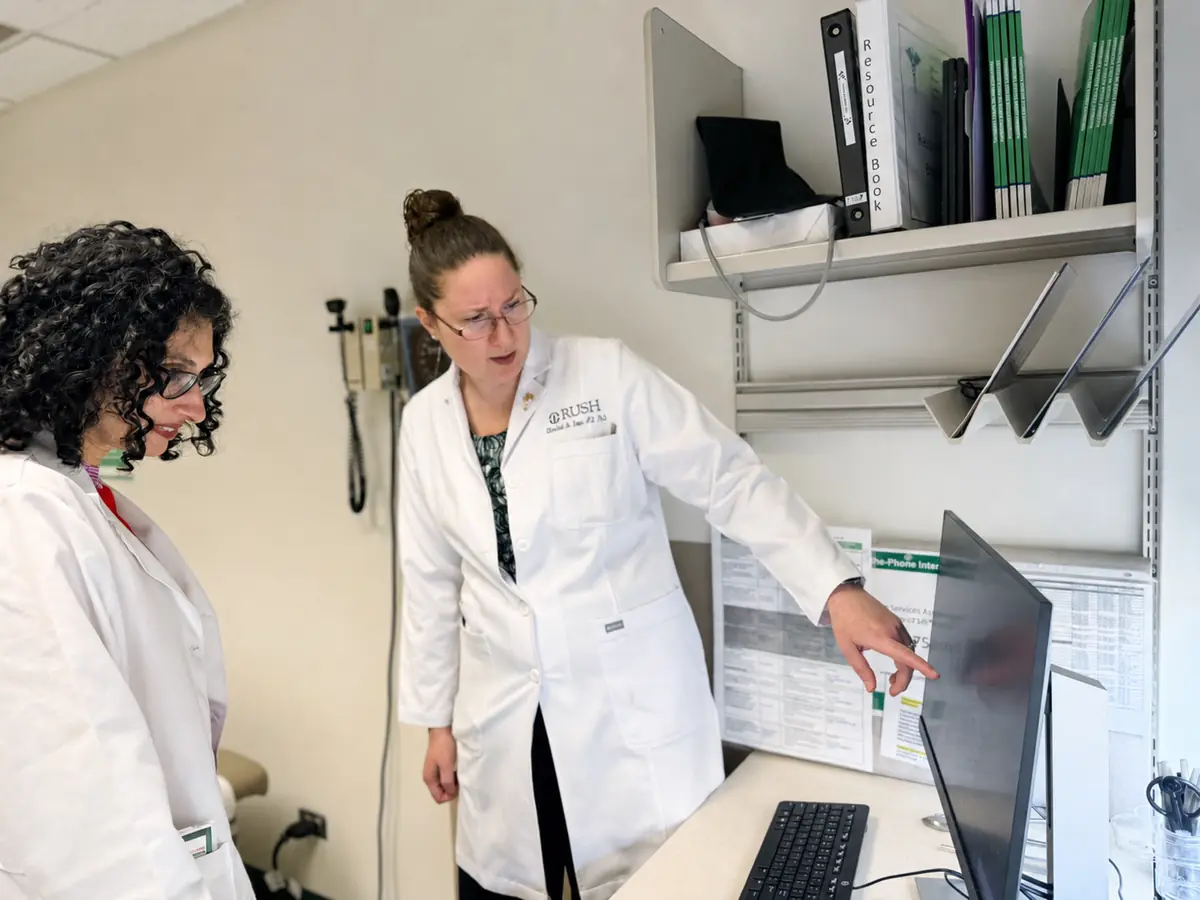
Ultimately, the goal of the RUSH team is not simply to deliver advanced procedures. It is to create a comprehensive environment where expertise, coordination, technology, judgment, and human connection work together seamlessly. Patients are cared for by a team that combines national-level experience and academic depth with an approach that remains highly personal, coordinated, and deeply invested in the long-term outcome of every individual entrusted to its care.