
MRI-guided Focused Ultrasound can provide meaningful, often immediate improvement for carefully selected patients with medication-refractory tremor and selected Parkinson’s disease motor symptoms. The most important point is that outcomes depend on matching the right patient, the right diagnosis, and the right target. Focused ultrasound is not a cure for essential tremor or Parkinson’s disease, and it does not stop the underlying condition from progressing. Its purpose is to quiet a specific abnormal brain circuit so that the treated symptom—most commonly tremor—becomes less disruptive in daily life.
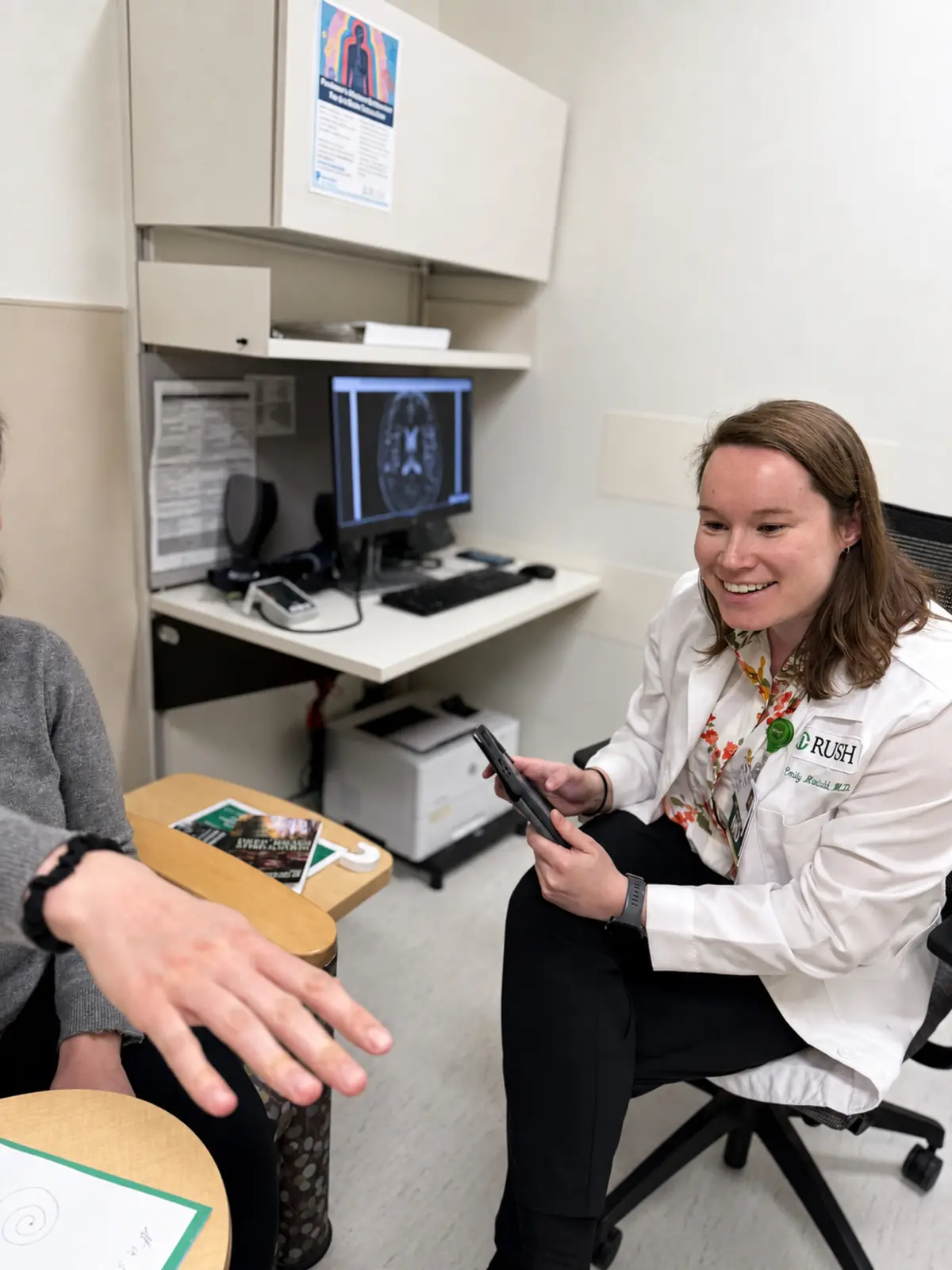
For many patients, success is not measured only by a number on a tremor scale. It is measured by being able to drink from a glass without spilling, sign a name more clearly, eat in public with more confidence, use a phone, apply makeup, shave, button clothing, or return to activities that tremor had made difficult. Because the treatment is performed while the patient is awake, improvement can often be seen during the procedure itself. Patients may notice the treated hand becoming steadier as the team gradually delivers therapeutic sonications.
Expected Outcomes for Essential Tremor
For medication-refractory essential tremor, the most established focused ultrasound treatment is thalamotomy targeting the VIM, a tremor relay region in the thalamus. Published studies generally show substantial improvement in treated-hand tremor. In the pivotal clinical trial that led to FDA approval, patients treated with focused ultrasound had approximately 50% improvement in tremor and motor function at 3 months, with approximately 40% improvement maintained at 12 months.

Longer-term follow-up has also been encouraging. Five-year follow-up data from the pivotal study showed sustained benefit, with treated-hand postural tremor improvement of approximately 73% at 4 and 5 years, and combined hand tremor/motor scores remaining significantly improved over baseline. Importantly, no new delayed complications were reported in that long-term follow-up group.
At RUSH, our experience is consistent with the broader literature. In appropriately selected patients, we generally counsel that unilateral focused ultrasound produces approximately 60–70% tremor improvement on average, with many patients experiencing immediate functional benefit in the treated hand. Some patients do better than this, while others have more modest improvement depending on tremor severity, anatomy, skull characteristics, and the underlying diagnosis.
Expected Outcomes for Parkinson’s Disease
For tremor-dominant Parkinson’s disease, focused ultrasound thalamotomy may improve medication-refractory tremor on the treated side. It is important to be very clear about this: VIM thalamotomy is primarily a tremor treatment. It does not treat the full spectrum of Parkinson’s disease. Slowness, stiffness, walking difficulty, balance problems, speech issues, and non-motor symptoms may not improve with thalamic focused ultrasound.
Focused ultrasound has also expanded beyond tremor in Parkinson’s disease. Pallidal-circuit targets, including GPi pallidotomy and pallidothalamic tractotomy, are used in selected patients with dyskinesia, OFF dystonia, or motor fluctuations. These are more specialized applications and require careful evaluation by a team experienced in both movement disorders and functional neurosurgery. The goal is not simply to “treat Parkinson’s disease,” but to identify whether a specific Parkinson’s symptom pattern matches a specific focused ultrasound target.
Bilateral Treatment
Historically, lesion-based procedures were usually performed on only one side of the brain because treating both sides raised concerns about speech, swallowing, balance, and coordination. Modern focused ultrasound has changed this discussion by allowing staged bilateral treatment in carefully selected patients. “Staged” means one side is treated first, and the second side is considered later only after recovery and reassessment.
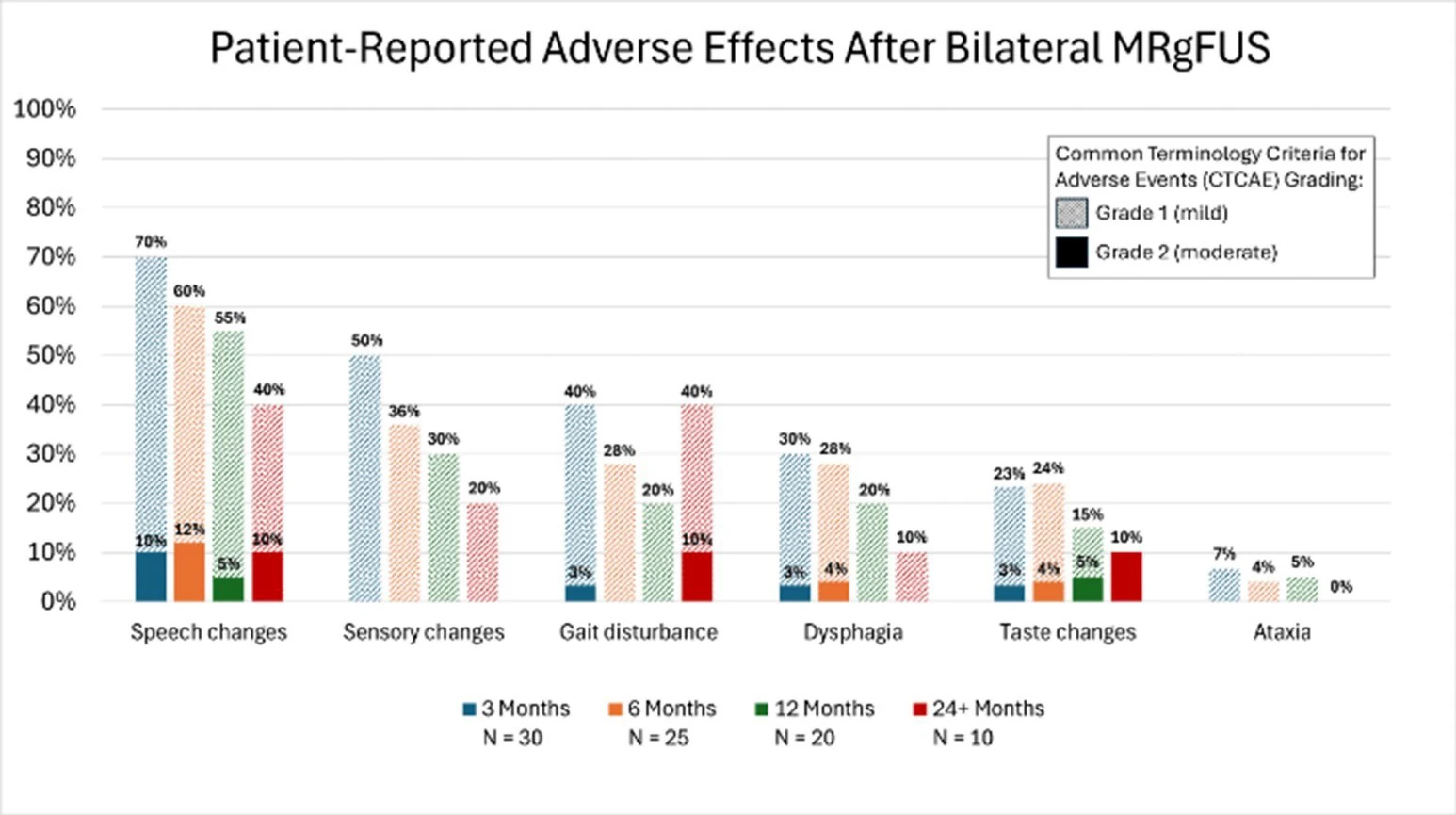
A 2024 multicenter trial of staged bilateral focused ultrasound thalamotomy in essential tremor showed a 66% improvement in tremor/motor scores at 3 months after second-side treatment. Functional disability scores also improved substantially. Side effects were mostly mild and often improved over time, but second-side treatment did carry a higher likelihood of temporary neurologic symptoms than first-side treatment.
At RUSH, we approach bilateral treatment cautiously and thoughtfully. The second side can be very helpful for patients who need both hands for eating, dressing, writing, work, or caregiving. However, it is not automatic. We carefully consider how much benefit the first treatment provided, whether any side effects remain, how important the second hand is to the patient’s daily function, and whether the expected gain justifies the added risk.
Risks and Side Effects
Focused ultrasound avoids many of the risks associated with traditional surgery. There is no incision, no implanted hardware, no battery, no device infection risk, and no programming requirement. That is a major advantage. However, focused ultrasound is still a brain procedure. It creates a permanent lesion in a precise location, and the nearby brain pathways involved in sensation, balance, speech, and coordination must be respected.
Most side effects are mild and temporary, but some can persist. The risk profile depends on the target, whether treatment is unilateral or bilateral, patient anatomy, pre-existing balance or coordination issues, skull characteristics, and the experience of the treatment team.
Balance Difficulty and Gait Unsteadiness
Temporary imbalance is one of the most common side effects after focused ultrasound. Patients may feel as though they are leaning, drifting, or less steady on their feet, especially in the first days to weeks after treatment. This is usually related to temporary swelling around the treatment site and the close relationship between tremor circuits and coordination pathways.
In unilateral focused ultrasound studies, gait disturbance and imbalance are among the more commonly reported adverse events. In the staged bilateral trial, unsteadiness or imbalance occurred in 10 of 51 patients, or about 20%, but resolved in all reported cases by 12 months. Gait disturbance occurred in 5 of 51 patients, or about 10%, with 1 patient still reporting mild gait disturbance at 12 months.
For most patients, balance symptoms improve gradually. During early recovery, we advise caution with stairs, uneven surfaces, nighttime walking, and rapid turns. Patients who already have significant balance difficulty before treatment require especially careful evaluation because focused ultrasound can temporarily or, rarely, persistently worsen gait confidence.
Numbness and Tingling
Some patients experience numbness or tingling, often involving the lips, tongue, face, fingers, or treated-side extremity. This occurs because the tremor target lies near sensory pathways. In many cases, these sensations are mild and improve with time.
In the staged bilateral trial, numbness or tingling was reported in 17 of 51 patients, or about 33%, and persisted in 8 patients at 12 months, although these symptoms were generally mild.
For patients, the key point is that sensory symptoms are usually not dangerous, but they can be bothersome. They are discussed carefully before treatment because focused ultrasound is not adjustable after the lesion is created.
Speech Changes
Speech changes can include slurring, reduced clarity, or difficulty articulating certain words. These effects are usually mild and temporary, but they are particularly important when considering bilateral treatment.
In the staged bilateral trial, dysarthria was reported in 15 of 51 patients, or about 29%, and persisted in 7 patients at 12 months, generally mild. Speech difficulty, including phonation, articulation, and swallowing measures, was described as generally mild and transient.
Speech risk is one reason we evaluate patients carefully before second-side treatment. If a patient already has speech changes after first-side treatment, we are more cautious about treating the second side.
Ataxia or Clumsiness
Ataxia refers to incoordination or clumsiness. A patient may feel that the treated hand or leg is less precise, or that fine motor control is temporarily awkward. This occurs because tremor and coordination pathways are anatomically close.
In the staged bilateral trial, ataxia occurred in 12 of 51 patients, or about 24%, and persisted in 6 patients at 12 months, generally mild by study criteria.
Patients with pre-existing cerebellar problems, ataxia, or severe imbalance require special caution because treating tremor may not improve overall function if coordination remains poor.
Taste Changes
Some patients notice a change in taste, reduced taste, or altered sensation in the mouth. This is usually mild but can be noticeable.
In the staged bilateral trial, taste disturbance was reported in 7 of 51 patients, or about 14%, and persisted in 3 patients at 12 months. Hypogeusia, or reduced taste, was reported in 4 of 51 patients, with 3 patients still reporting symptoms at 12 months.
Swallowing Difficulty
Swallowing symptoms are less common but important, especially in bilateral treatment or in patients with pre-existing swallowing difficulty.
In the staged bilateral trial, dysphagia was reported in 4 of 51 patients, or about 8%, and persisted in 3 patients at 12 months, generally mild.
Any pre-existing swallowing problem should be discussed before treatment, particularly if second-side treatment is being considered.
Headache, Scalp Discomfort, and Frame-Related Symptoms
Because the head frame is secured with pins after numbing medication, patients may have soreness at the pin sites, mild headache, or forehead/eye swelling afterward. These effects are usually short-lived and managed with simple medications and time.
Headache was uncommon in the staged bilateral trial, reported in 1 of 51 patients.
Weakness or Facial Droop
Weakness or facial droop is uncommon but can occur if swelling or treatment effect involves nearby motor pathways. In the staged bilateral trial, facial droop was reported in 1 of 51 patients, and weakness was reported in 1 of 51 patients, with weakness resolved by 12 months.
Tremor Recurrence or Incomplete Benefit
Focused ultrasound does not cure essential tremor or Parkinson’s disease. Tremor can recur or progress over time because the underlying condition continues to evolve. Some patients also have incomplete benefit because tremor networks vary, skull characteristics limit energy delivery, or the tremor syndrome is more complex than classic essential tremor.
In a 5-year single-center experience, return of tremor affecting activities of daily living was reported in 5 of 44 patients, or about 11%.
This does not mean the procedure “failed” for most patients. Many still remain substantially better than before treatment. But it is important for patients to understand that focused ultrasound is not a guarantee of complete or permanent tremor elimination.
Permanent Side Effects
Most side effects improve over time, but permanent or long-lasting symptoms can occur. Long-term studies generally describe persistent adverse events as mild or moderate, with no progressive delayed complications in the 5-year pivotal follow-up. In one 5-year single-center experience, adverse events were reversible in all but 5 of 44 patients, or about 11%.
This is why focused ultrasound requires careful counseling. The treatment is incisionless, but the lesion is permanent. Unlike DBS, it cannot be reprogrammed after the fact.
How We Think About Risk
The purpose of discussing risk is not to create fear. It is to make the decision clear and honest. Focused ultrasound is often much easier on the body than traditional surgery, but it still requires the same level of respect as any procedure that changes brain circuitry.
The most important ways to reduce risk are accurate diagnosis, careful patient selection, high-quality imaging, precise targeting, staged decision-making for bilateral treatment, and experience. At RUSH, focused ultrasound is not offered simply because a patient has tremor. It is offered when the team believes the patient’s diagnosis, anatomy, symptom pattern, and goals align with what the treatment can realistically and safely provide.
For the right patient, focused ultrasound can be life-changing. The goal is not perfection. The goal is a meaningful reduction in disabling symptoms with a recovery process that is manageable and a treatment plan that respects both the benefits and the limits of the technology.