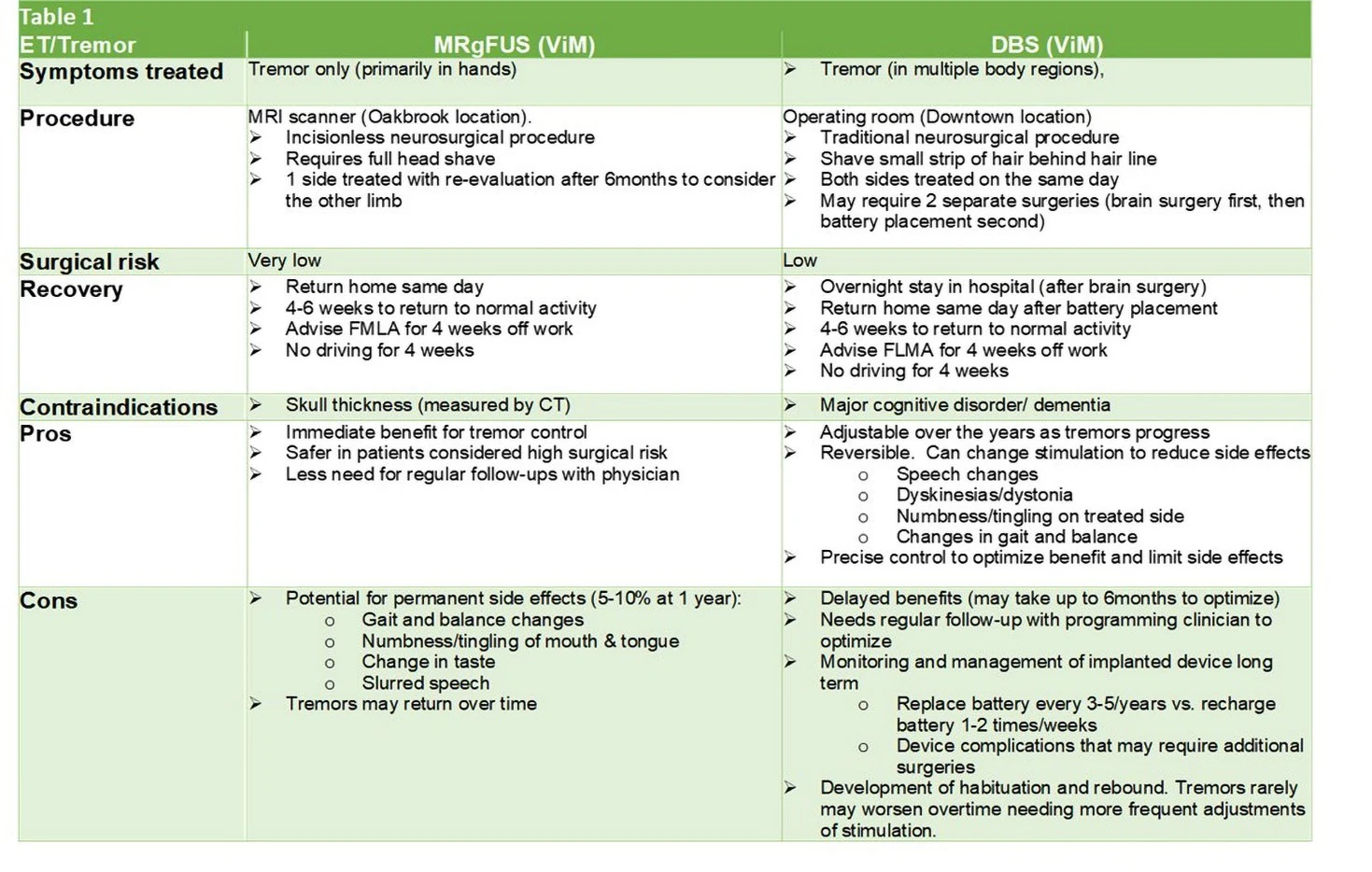
One of the most common questions patients ask is whether they should pursue MRI-guided Focused Ultrasound (MRgFUS) or Deep Brain Stimulation (DBS). This is an important discussion because both are highly effective treatments for selected movement disorders, yet they work in fundamentally different ways and each has distinct advantages and limitations.
At a broad level, both therapies are forms of neuromodulation. They target abnormal brain circuits responsible for symptoms such as tremor, stiffness, dyskinesia, or dystonia. Both are capable of producing substantial improvement in carefully selected patients. However, the way they achieve that effect—and the long-term implications for the patient—are very different.
The most important principle is this: the “best” treatment is not universal. The right choice depends on the patient’s diagnosis, symptom profile, age, anatomy, medical history, goals, tolerance for risk, and personal preferences. At experienced centers, the decision is individualized rather than driven by a one-size-fits-all philosophy.
The Fundamental Difference
The simplest way to understand the difference is this:
-
Focused ultrasound creates a permanent lesion
-
DBS modulates brain activity using adjustable electrical stimulation
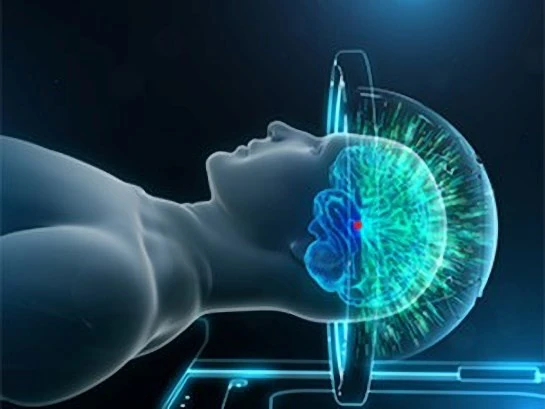
Focused ultrasound uses highly focused sound waves to create a small targeted lesion within a tremor or motor circuit. There is no implanted hardware, no battery, and no ongoing programming. Once the treatment is complete, the effect comes directly from the lesion itself.
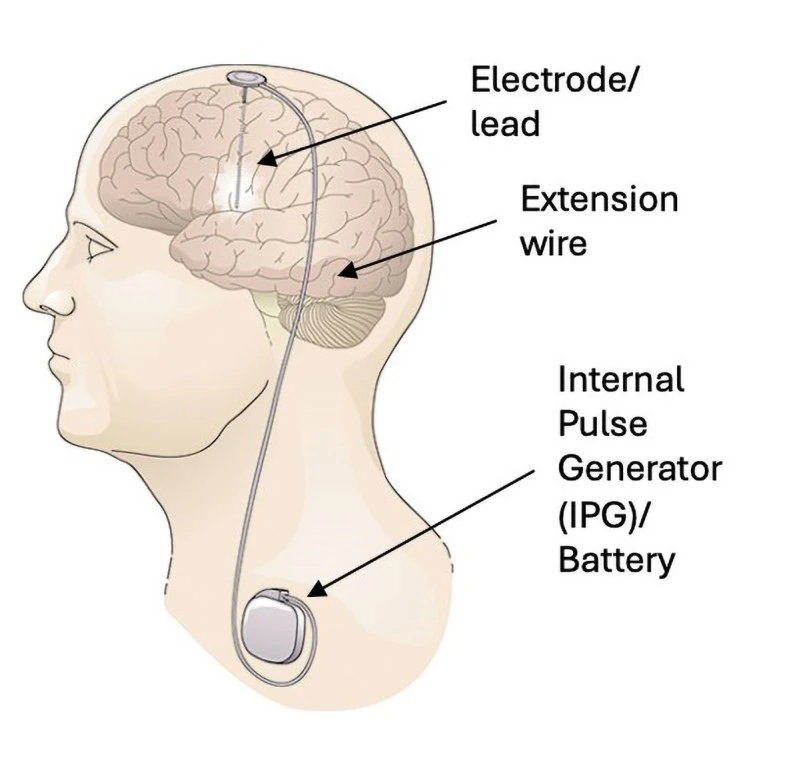
DBS, on the other hand, involves implanting thin electrodes into the brain that deliver electrical stimulation to abnormal circuits. The stimulation is adjustable, reversible, and programmable over time. The system includes implanted leads, extension wires, and a battery placed beneath the skin in the chest.
This difference—permanent lesion versus adjustable stimulation—shapes nearly every other distinction between the two treatments.
Invasiveness and Physical Recovery
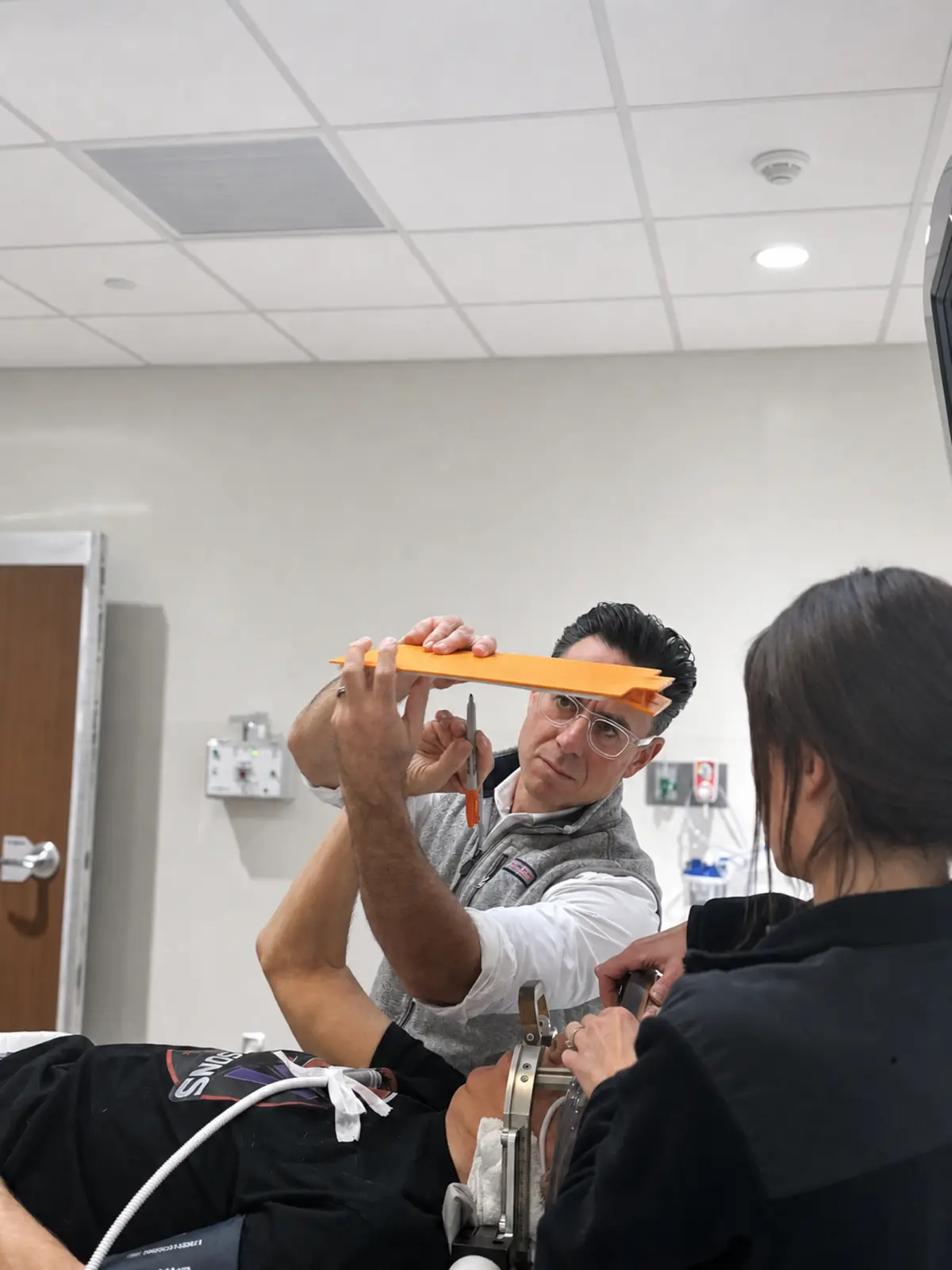
Focused ultrasound is often attractive because it is completely incisionless. There are:
-
no scalp incisions,
-
no implanted devices,
-
no drilling into the skull,
-
and usually no overnight hospitalization.
Most patients go home the same day, and recovery is generally fast and physically straightforward.
DBS is more invasive in a physical sense because it involves implanted hardware and brain electrodes. Even though modern DBS surgery is much less physically demanding than many patients imagine, it is still surgery involving operating rooms, implanted devices, and a short hospital stay.
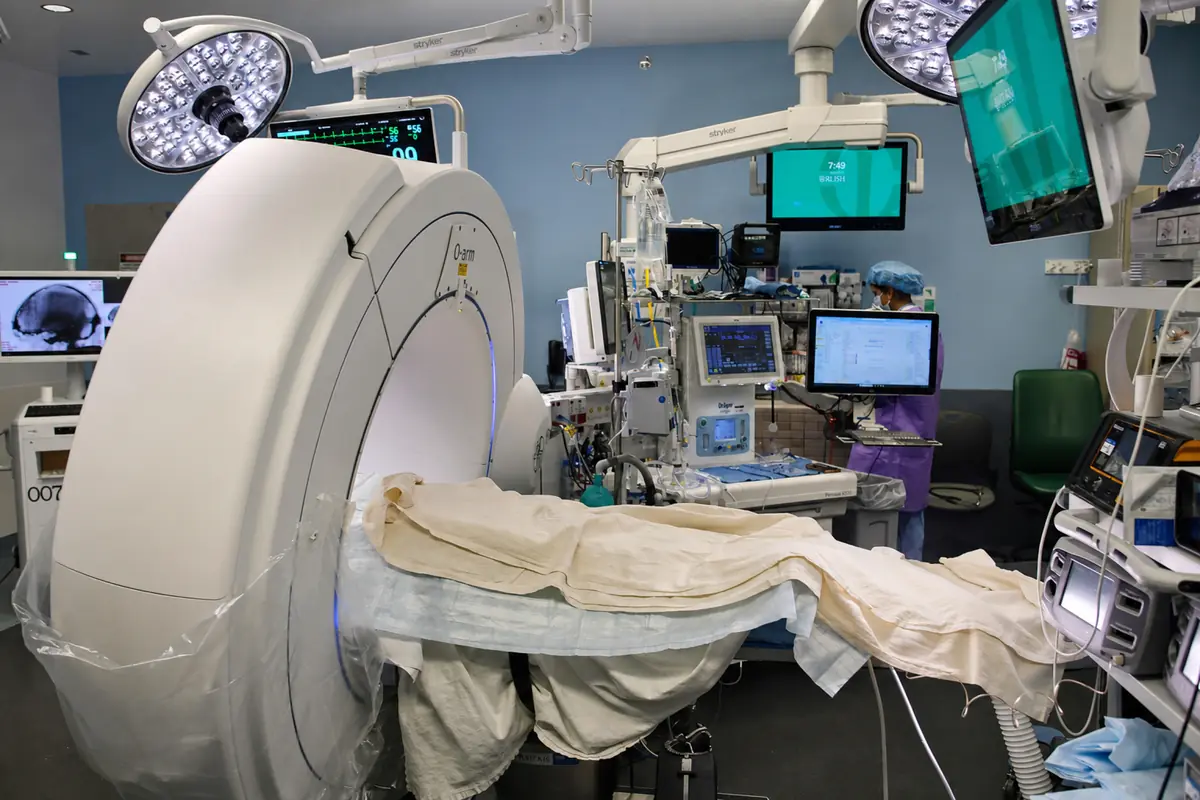
For patients who strongly prefer avoiding implants or who are anxious about hardware, focused ultrasound may feel more appealing.
Adjustability vs. Permanence
This is perhaps the single most important distinction between the two therapies.
DBS is adjustable. After surgery, the system can be programmed and reprogrammed over time. Stimulation settings can be changed as symptoms evolve, side effects occur, or new technologies emerge. If necessary, the device can even be turned off or removed.
Focused ultrasound is permanent. Once the lesion is created, it cannot be reprogrammed or reversed. This simplicity is one of its advantages—there is no need for programming or hardware maintenance—but it also means there is less flexibility if symptoms evolve or side effects occur.
This distinction matters greatly in younger patients or in diseases that change over time, such as Parkinson’s disease.
Programming and Long-Term Maintenance
Focused ultrasound has very little ongoing maintenance. There are no batteries to replace, no charging systems, and no programming visits. Follow-up is generally simpler and can often be done through telemedicine.
DBS requires ongoing management. Programming is one of the most important parts of DBS therapy and often unfolds over multiple visits, particularly during the first several months after surgery. Batteries eventually require replacement or recharging depending on the system used.
For some patients, this adjustability is a major advantage. For others, the simplicity of focused ultrasound is more appealing.
Bilateral Treatment
DBS has historically had a major advantage when bilateral treatment is needed.
Because DBS stimulation is adjustable and reversible, treating both sides of the brain is generally safer and more flexible. This is particularly important for patients with:
-
severe bilateral tremor,
-
advanced Parkinson’s disease,
-
dystonia,
-
or evolving motor symptoms.
Focused ultrasound initially began as a unilateral treatment because lesioning both sides of the brain carried increased risks of speech, balance, and swallowing problems. More recently, staged bilateral focused ultrasound has become possible and is now FDA approved for selected patients. However, bilateral focused ultrasound still carries a higher risk of dysarthria, gait disturbance, and coordination problems compared with unilateral treatment.
For this reason, DBS often remains the preferred option when:
-
both sides require aggressive treatment,
-
symptoms are evolving,
-
or long-term adjustability is likely to be important.
Symptom Coverage
Focused ultrasound is currently most established for:
-
essential tremor,
-
tremor-dominant Parkinson’s disease,
-
and selected Parkinsonian motor complications.
DBS has a broader range of established applications, including:
-
Parkinson’s disease,
-
essential tremor,
-
dystonia,
-
obsessive-compulsive disorder,
-
epilepsy,
-
and emerging psychiatric indications.
DBS also tends to provide broader symptom control in Parkinson’s disease because stimulation can target multiple motor symptoms simultaneously and be adjusted over time.
Focused ultrasound is often more symptom-specific, particularly when used for tremor.
Risks and Side Effects
Both procedures are safe when performed at experienced centers, but the risks differ.
Focused Ultrasound Risks
Focused ultrasound avoids:
-
infection from implanted hardware,
-
battery issues,
-
lead fracture,
-
and incision-related complications.
However, because it creates a permanent lesion, side effects such as:
-
numbness,
-
imbalance,
-
gait difficulty,
-
dysarthria,
-
or coordination problems
cannot be “turned off” if they persist.
DBS Risks
DBS carries risks associated with implanted hardware and surgery, including:
-
bleeding,
-
infection,
-
hardware malfunction,
-
lead migration,
-
and future battery replacement procedures.
However, stimulation-related side effects are often adjustable through programming.
In other words:
-
Focused ultrasound has less hardware burden but less flexibility.
-
DBS has more hardware complexity but greater long-term control and adaptability.
Age and Patient Preference
Focused ultrasound is often attractive for:
-
older patients,
-
patients who prefer a one-time incisionless treatment,
-
patients who do not want implanted hardware,
-
or patients who may not want ongoing programming visits.
DBS is often attractive for:
-
younger patients,
-
patients needing bilateral treatment,
-
patients with evolving Parkinson’s symptoms,
-
or patients who value adjustability and long-term flexibility.
These are not strict rules, however. There are younger patients who strongly prefer focused ultrasound and older patients who do exceptionally well with DBS.
The Role of Experience
Perhaps the most important factor is not the technology itself, but the experience of the center helping guide the decision.
One of the challenges in modern neuromodulation is that some centers primarily offer one therapy and naturally steer patients toward that option. At comprehensive, high-volume programs, the goal is different: to determine which treatment truly fits the patient best.
At RUSH, both DBS and focused ultrasound are integrated within the same multidisciplinary movement disorders and neuromodulation program. This allows patients to receive balanced recommendations rather than being forced toward a single technology. Some patients are clearly better candidates for DBS. Others are ideal for focused ultrasound. Many require detailed discussion about the tradeoffs between the two.
The goal is not simply to perform a procedure. The goal is to match the right therapy to the right patient, maximizing functional improvement while minimizing risk and long-term burden.
Ultimately, MR-guided Focused Ultrasound and DBS are not competing technologies so much as complementary tools within modern functional neurosurgery. Each has transformed the treatment landscape for movement disorders, and each offers meaningful benefit when applied thoughtfully and carefully to the right patient.