
Life after MRI-guided Focused Ultrasound is often defined by the simplicity of the treatment itself. Because there is no implanted hardware, no battery, no wires, and no programming, most patients do not have to organize their lives around a device. There are no charging routines, no battery checks, no restrictions related to an implanted stimulator, and no repeated programming visits. For many patients, this is one of the most appealing parts of focused ultrasound: once the procedure is complete and recovery has stabilized, the treatment largely fades into the background.

The first days and weeks
In the first days and weeks after treatment, patients should expect a period of adjustment. Some people notice immediate improvement in tremor during the procedure itself, but the brain still needs time to settle. Mild fatigue, imbalance, scalp soreness, headache, tingling, or a feeling of clumsiness can occur early on. These symptoms are usually temporary and improve as swelling around the treatment area resolves. During this time, it is important to be patient, avoid over-testing yourself, and focus on steady, safe recovery.
Balance
One of the most important practical issues after focused ultrasound is balance. Even when tremor improves dramatically, some patients may feel temporarily unsteady. This is especially noticeable in low light, on stairs, on uneven surfaces, or when turning quickly. For the first several days to weeks, it is wise to move carefully, use handrails, avoid rushing, and accept support from a family member or walking aid if needed. The goal is not to be overly cautious forever, but to prevent falls while the brain is healing.
Returning to everyday activities
As recovery progresses, many patients begin rediscovering activities that had become difficult or embarrassing because of tremor. Writing a note, signing a check, drinking coffee, eating soup, using a fork, applying makeup, shaving, or holding a phone can feel very different when the treated hand is steadier. These changes may seem small to others, but for patients who have lived with tremor for years, they can be deeply meaningful.
What focused ultrasound does not do
It is also important to understand what focused ultrasound does not do. It does not cure essential tremor or Parkinson’s disease, and it does not stop the underlying condition from changing over time. In essential tremor, the untreated hand, head, or voice may still have symptoms. In Parkinson’s disease, focused ultrasound may improve the targeted symptom—often tremor—but other features such as stiffness, slowness, balance, walking, speech, sleep, mood, and non-motor symptoms may still require ongoing care with a neurologist.
Medications
Medications may or may not change after treatment. Some patients with essential tremor are able to reduce or stop tremor medications if the treated hand improves enough. Others continue medication because the untreated side still bothers them or because the medication helps other symptoms. Patients with Parkinson’s disease usually continue Parkinson’s medications, especially if symptoms other than tremor remain active. Medication changes should be made gradually and only with guidance from the treating neurologist or medical team.
Follow-up
Follow-up remains important, even though there is no device to adjust. The care team will want to monitor tremor improvement, balance, speech, sensation, coordination, medication needs, and overall function. A major advantage of focused ultrasound is that much of this follow-up can often be completed by telemedicine. This is especially helpful for patients who travel from outside Chicago or live out of state. Because there is no hardware to interrogate or program, many patients can recover at home while still maintaining close contact with the team.
The longer term
Long-term, patients often describe the benefit less as a dramatic medical event and more as a return of confidence. They stop planning every meal around tremor. They stop avoiding certain tasks. They begin trusting the treated hand again. The best outcomes are not just measured by tremor scores, but by restored independence and reduced self-consciousness in daily life.
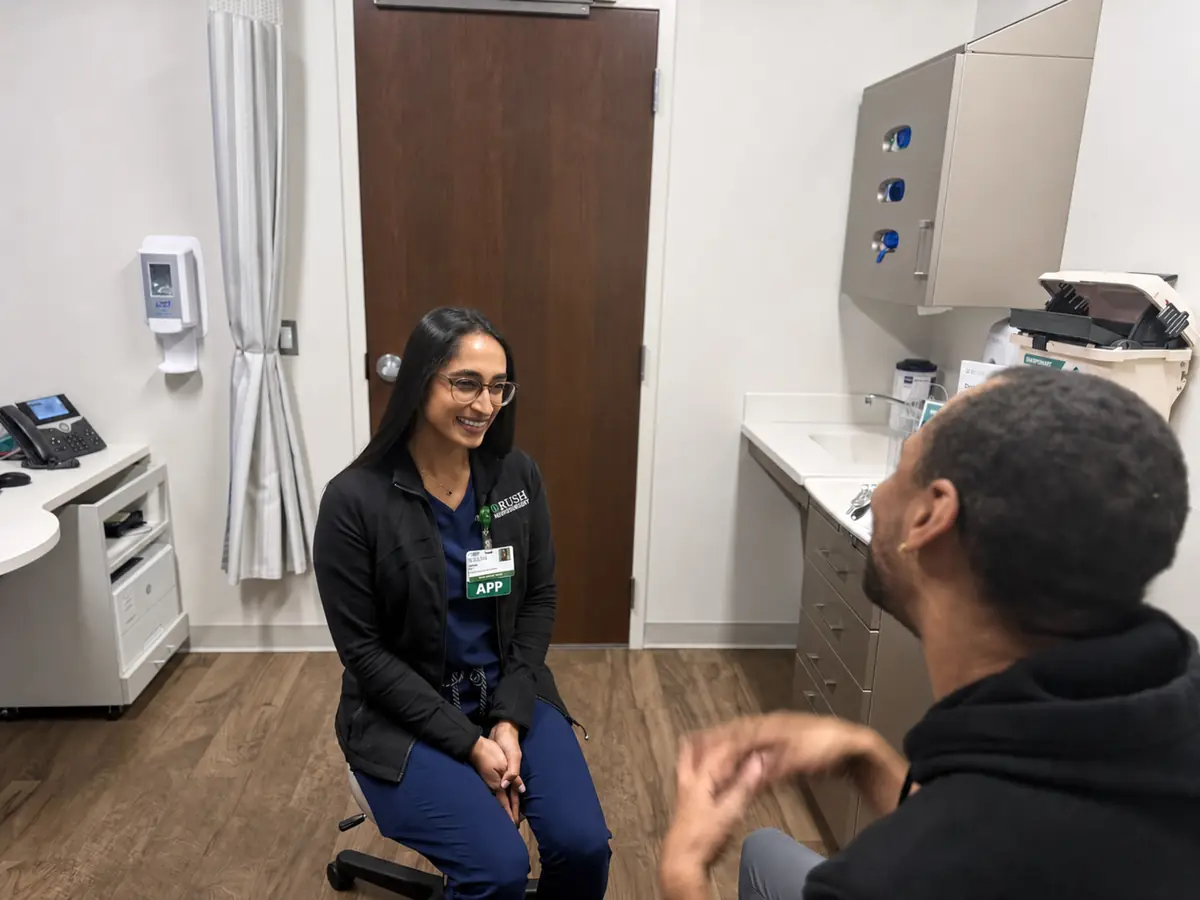
Focused ultrasound is meant to reduce the burden of symptoms, not replace ongoing neurologic care. Patients should continue routine follow-up for their underlying condition, maintain exercise and general health, and notify the team if tremor returns, balance changes worsen, or new neurologic symptoms develop. For selected patients with persistent disability from the untreated side, staged second-side treatment may be discussed later, but only after careful evaluation of benefit, recovery, and risk.
The central message is that life after focused ultrasound is usually simpler than patients expect. There is no device to manage and no surgical wound to heal, but there is still a period of neurologic recovery and adaptation. With thoughtful follow-up and realistic expectations, many patients find that focused ultrasound gives them something they had gradually lost: the ability to move through ordinary moments with less attention, less hesitation, and more confidence.