
The evaluation process for MRI-guided Focused Ultrasound is designed to answer a very important question: is this the right treatment for this particular patient? While focused ultrasound can produce remarkable improvement in the right situation, it is not appropriate for every tremor or every patient. Careful evaluation is therefore one of the most important parts of achieving a good outcome.
Starting from home
At RUSH, the process is intentionally designed to be as streamlined and accessible as possible, particularly for patients traveling from outside the Chicago area. Many patients begin with a telemedicine consultation, often directly with the neurosurgeon specializing in focused ultrasound and neuromodulation. This allows patients and families to connect early with a lead specialist, discuss symptoms and goals, review prior treatments, and obtain a realistic sense of whether focused ultrasound may be a reasonable option. For many individuals, this direct access simplifies the process significantly and avoids unnecessary layers of referrals or repeated visits before meaningful guidance is provided.
Confirming the diagnosis
During the evaluation, one of the first priorities is confirming the diagnosis and understanding the specific symptom pattern. Tremor can arise from many different neurologic conditions, and not all tremor syndromes respond equally well to focused ultrasound. Distinguishing between essential tremor, Parkinsonian tremor, dystonic tremor, cerebellar tremor, medication-related tremor, and other mixed tremor syndromes requires experience and careful neurologic assessment.
Understanding how tremor affects your day
The team also focuses heavily on understanding how tremor affects daily life. This may sound simple, but it is extremely important. The goal of treatment is not merely to improve an examination score in clinic—it is to restore meaningful function. Patients are often asked about writing, eating, drinking, dressing, work-related activities, hobbies, social interactions, and overall independence. Understanding these practical limitations helps clarify whether intervention is appropriate and what outcomes would be considered meaningful.
Specialist assessments
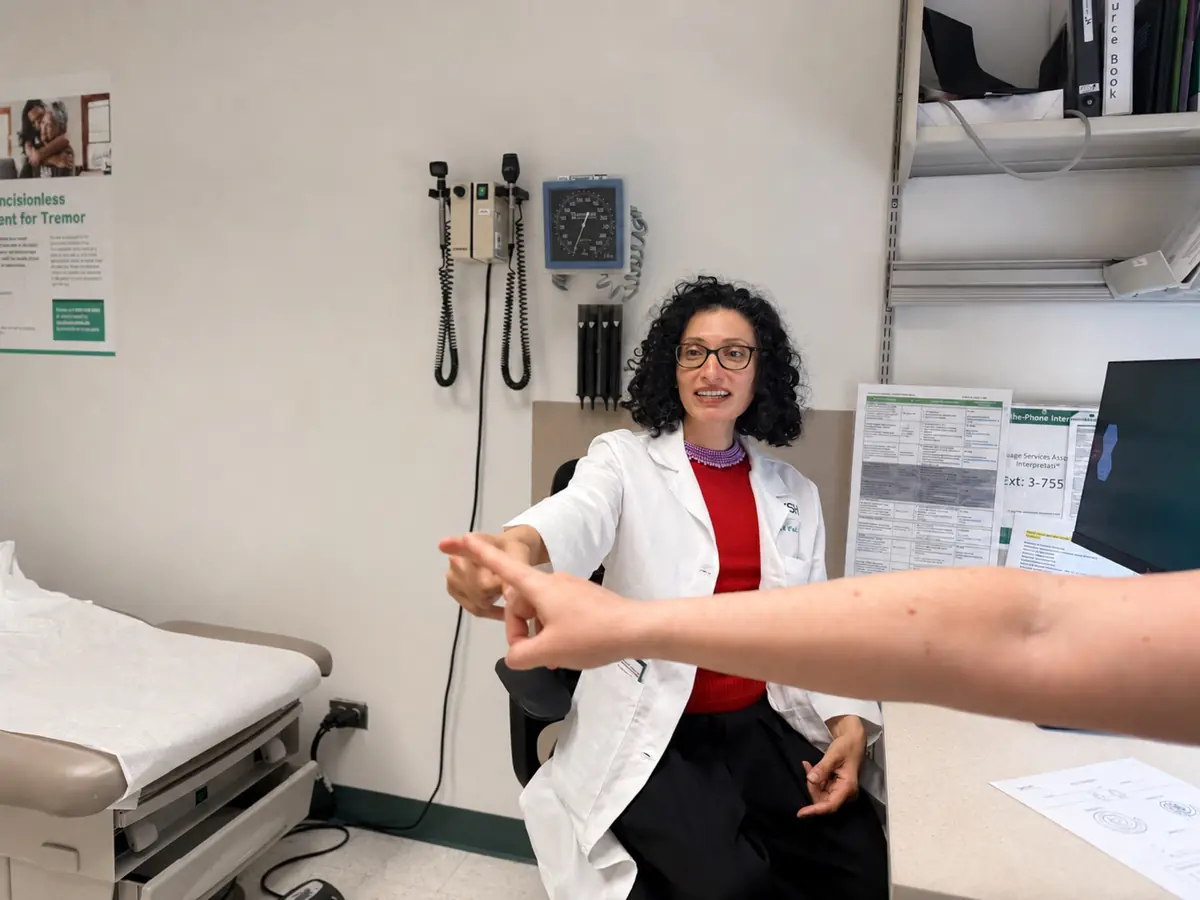
As part of the formal evaluation process, patients may also undergo consultation with a movement disorders neurologist who specializes in tremor disorders and neuromodulation. The neurologic evaluation helps confirm the diagnosis, identify any atypical features or “red flags,” and determine whether the symptom profile matches the strengths and limitations of focused ultrasound.
Imaging
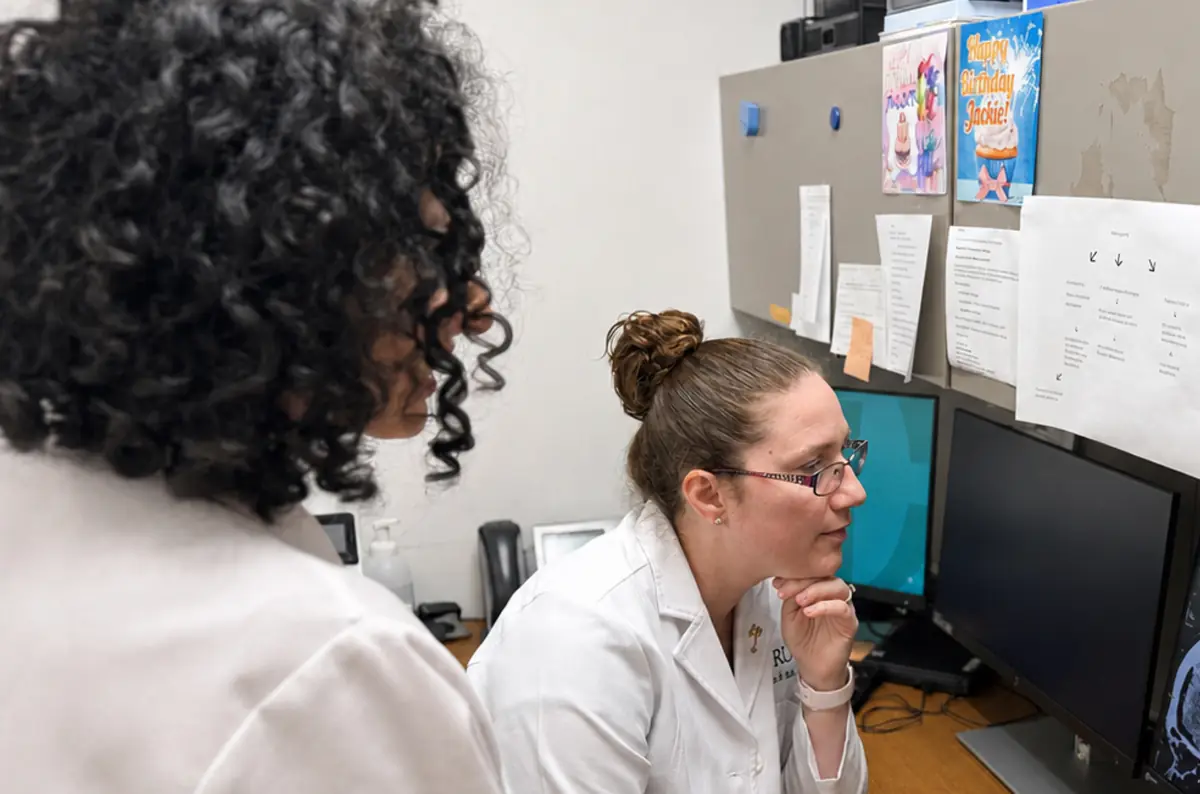
Advanced imaging is another critical component of evaluation. Patients undergo a high-resolution MRI of the brain to evaluate anatomy, exclude structural abnormalities, and assist with treatment planning. In addition, focused ultrasound requires a specialized CT scan of the skull to calculate what is known as the skull density ratio (SDR).
The skull density ratio
The SDR is unique to focused ultrasound and plays an important role in determining candidacy. Ultrasound energy must pass through the skull efficiently in order to safely reach therapeutic temperatures within the brain. Some skulls transmit ultrasound energy very effectively, while others absorb or scatter the energy to a greater degree. The SDR helps predict how efficiently energy will travel through the skull and whether treatment is technically feasible. A lower SDR does not automatically exclude treatment, but it may make treatment more difficult, less efficient, or occasionally inadvisable depending on the individual circumstances.
Medical history and overall health
The evaluation process also includes review of medical history, medications, prior surgeries, gait and balance function, cognitive status, and overall health. Although focused ultrasound is incisionless, it is still a highly precise brain procedure, and understanding the broader neurologic picture is important. In selected patients, neuropsychological testing may also be recommended, particularly if there are concerns regarding memory or cognition.
Alternatives and expectations
Another major part of evaluation involves discussing alternatives and setting expectations. Focused ultrasound and DBS are both excellent treatments, but they have different strengths. Focused ultrasound offers an incisionless, hardware-free approach without future programming or battery management. DBS, on the other hand, offers adjustability, reversibility, and often greater flexibility for bilateral treatment and evolving symptoms. The evaluation process helps determine which treatment philosophy best aligns with the patient’s symptoms, anatomy, goals, and long-term needs.
How the recommendation is reached
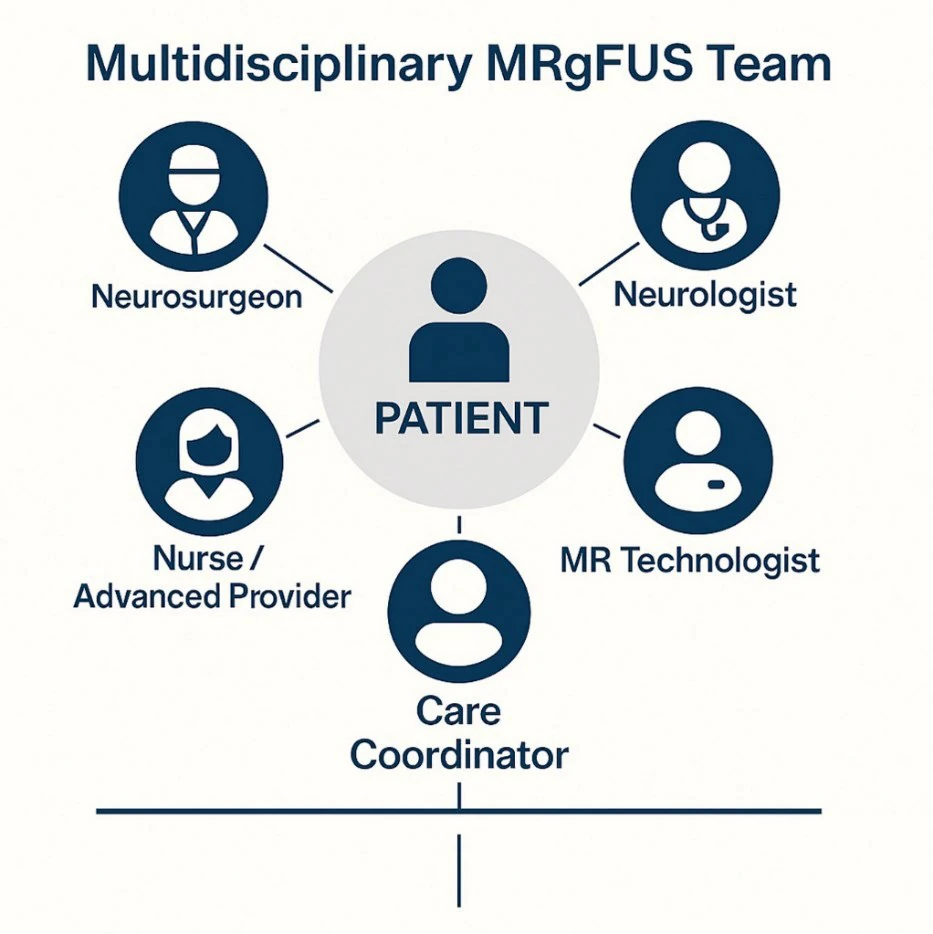
At experienced centers, candidacy decisions are rarely based on one single factor. Instead, the recommendation emerges from a combination of diagnosis, imaging, symptom severity, anatomy, risk assessment, and patient goals. This multidisciplinary approach is important because successful focused ultrasound treatment depends just as much on selecting the right patient as it does on performing the procedure itself.
For many patients, the evaluation process itself becomes reassuring. What initially feels like a complicated decision often becomes much clearer once the diagnosis, treatment options, expected outcomes, and logistics are carefully reviewed with the team. The purpose of the evaluation is not simply to decide whether treatment can be done—it is to determine whether it should be done, and whether it is likely to provide meaningful benefit safely and predictably.