
One of the most important recent developments in MRI-guided Focused Ultrasound has been the evolution from unilateral treatment to carefully selected bilateral staged treatment. Historically, lesion-based procedures in functional neurosurgery were almost always limited to one side of the brain because treating both sides carried a substantially increased risk of speech, swallowing, balance, and coordination problems. This caution was based on decades of experience with older lesioning techniques, where bilateral procedures could sometimes produce disabling side effects.
Why treating one side was the norm
For many years, this was one of the major distinctions between focused ultrasound and Deep Brain Stimulation. DBS allowed bilateral treatment because stimulation could be adjusted, reduced, or turned off if side effects developed. Focused ultrasound, by contrast, creates a permanent lesion. As a result, the field initially approached bilateral treatment very cautiously.
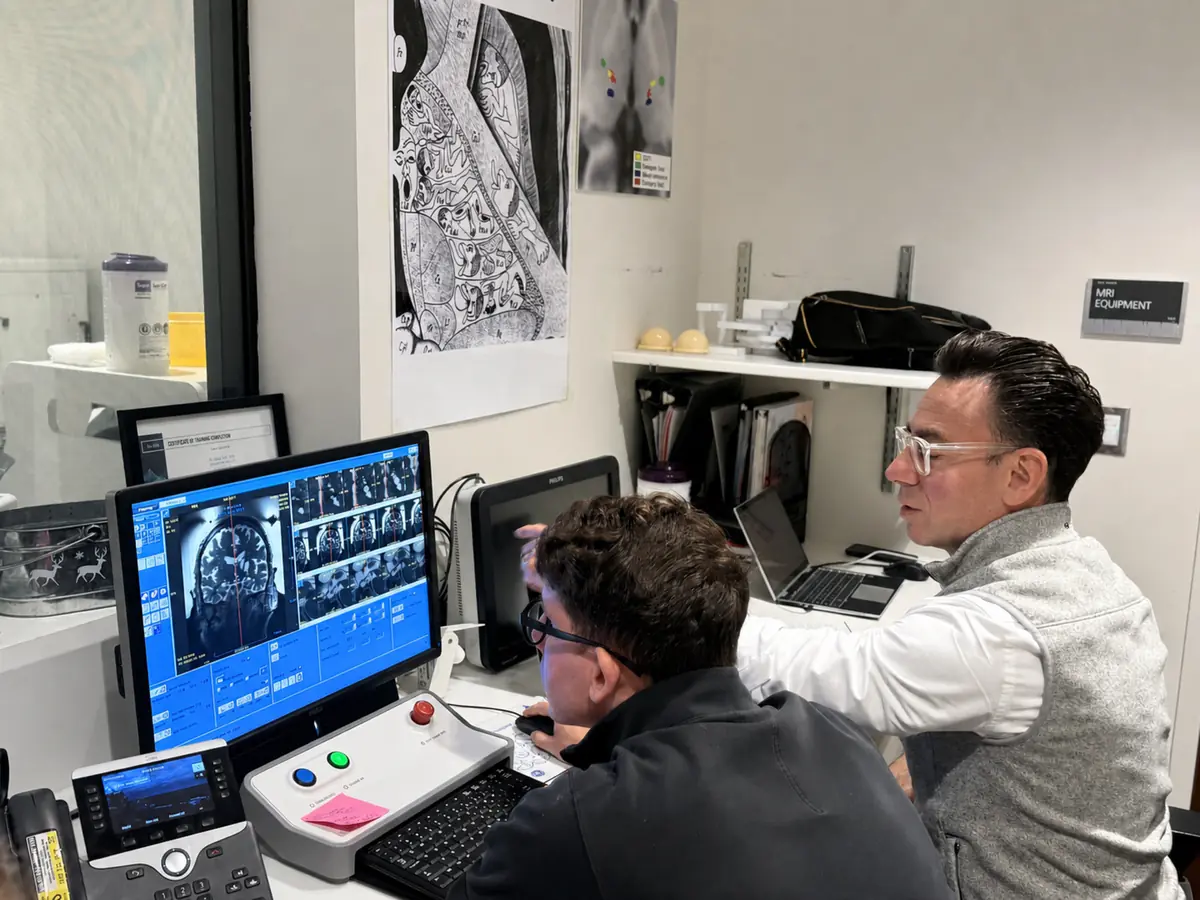
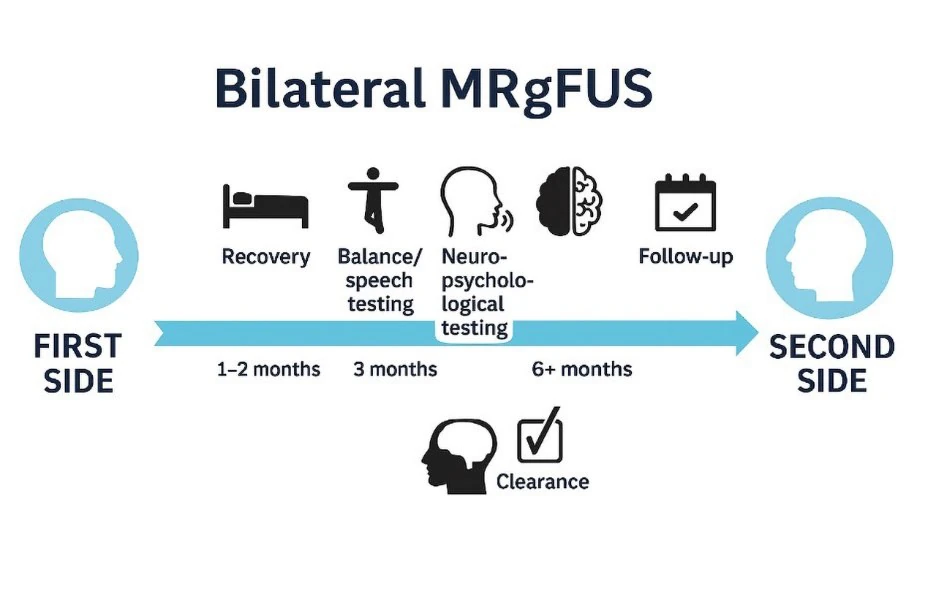
Over time, however, improvements in imaging precision, targeting accuracy, treatment planning, and patient selection led to growing interest in whether focused ultrasound could safely be performed on both sides of the brain in a staged fashion. “Staged” means that one side is treated first, followed by a significant recovery period and reassessment before the second side is even considered. This allows the treatment team to evaluate both the benefit and any residual side effects from the initial procedure before deciding whether the second side is appropriate.
Why the second side matters
The reason bilateral treatment matters is simple: many patients suffer from disabling tremor in both hands. A patient may experience substantial improvement in the first treated hand, yet continue to struggle with eating, dressing, writing, computer use, or other daily activities because the untreated hand remains severely affected. For some individuals, second-side treatment can significantly improve independence and quality of life.
What the studies show
In recent years, clinical studies demonstrated that staged bilateral focused ultrasound treatment could be performed with meaningful improvement in tremor and function, leading to FDA approval of staged bilateral treatment for selected patients with essential tremor. More recently, bilateral lesioning approaches involving pallidothalamic pathways have also been approved for selected Parkinson’s disease applications.
The added risk of treating both sides
At the same time, bilateral focused ultrasound is fundamentally different from unilateral treatment from a risk standpoint. Treating both sides of the brain increases the likelihood of side effects because the structures involved in tremor control sit very close to pathways responsible for speech, balance, coordination, and swallowing. Even subtle effects from each side can become more noticeable when combined.
Speech
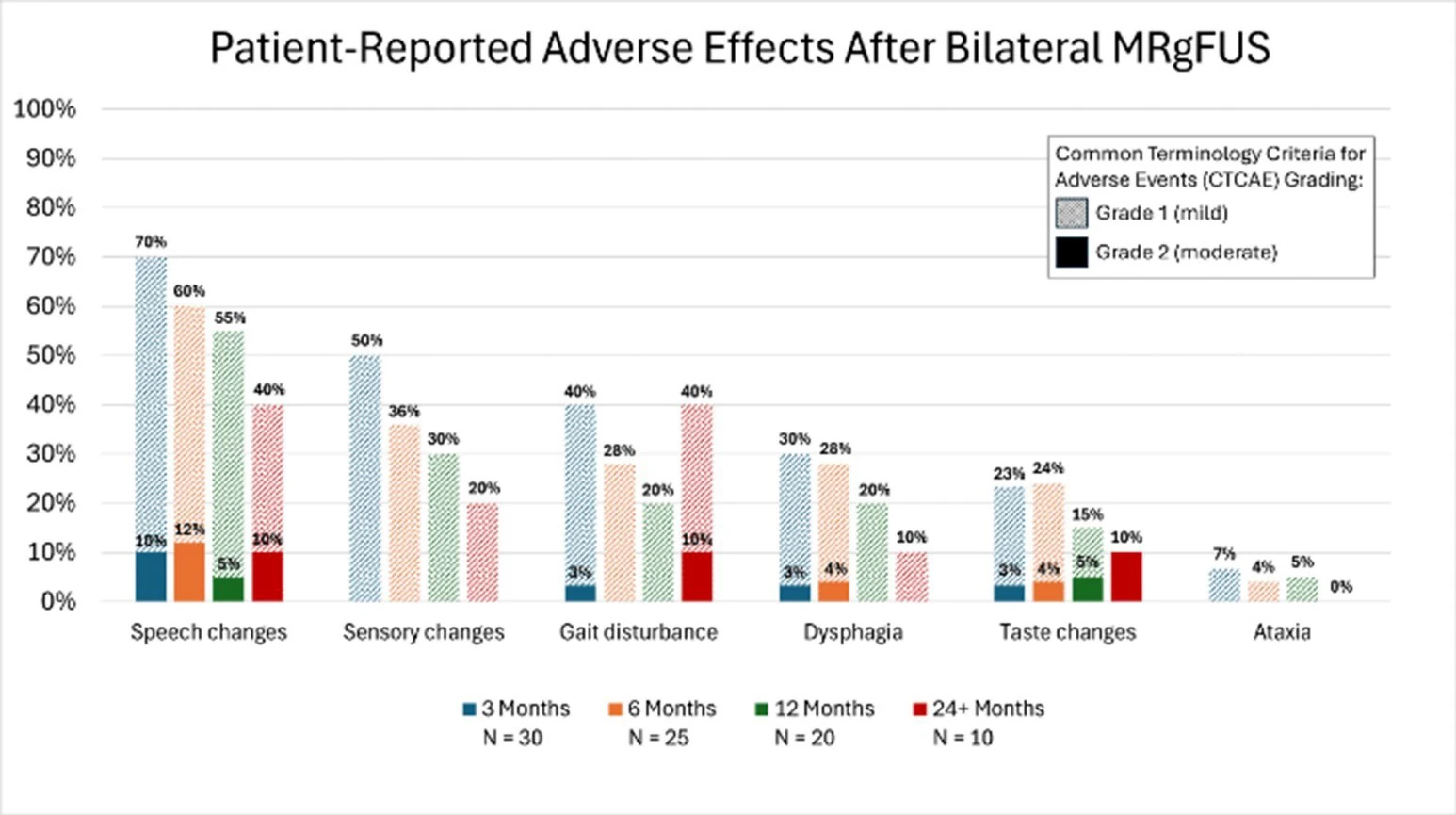
One of the most important issues in bilateral treatment is dysarthria, or difficulty with speech clarity and articulation. This can range from very mild slurring to more functionally noticeable speech impairment. While dysarthria can occur after unilateral treatment, it becomes substantially more relevant after second-side procedures because speech networks rely on bilateral coordination.
Our own experience and peer-reviewed work examining bilateral focused ultrasound treatment demonstrated that the rate of dysarthria may be higher than initially expected in some early reports. Importantly, many of these cases were mild, but the findings reinforced the need for careful patient counseling and thoughtful selection before proceeding with second-side treatment. In practical terms, this means that even if bilateral treatment can improve tremor significantly, the possibility of tradeoffs involving speech and balance must be discussed honestly beforehand.
How the decision is made
This concept is extremely important for patients to understand. The decision to proceed with second-side treatment is not based solely on how severe the untreated tremor remains. It is based on balancing:
-
the disability caused by the remaining tremor,
-
the benefit achieved from the first procedure,
-
the patient’s functional goals,
-
and the cumulative risk of neurologic side effects.
Our approach at RUSH
At RUSH, bilateral focused ultrasound is approached conservatively and thoughtfully. Patients are followed carefully after the initial treatment, and the second side is considered only after recovery has stabilized and long-term function can be assessed realistically. The process is individualized. Some patients are excellent candidates for second-side treatment, while others may be better served by leaving the second side untreated or considering alternative therapies such as DBS.
Timing between treatments
The timing between treatments also matters. The brain requires time to adapt after the first lesion, and subtle balance or speech effects may evolve gradually over weeks to months. Rushing into bilateral treatment before this process stabilizes can make it more difficult to appreciate the true neurologic baseline before second-side intervention.
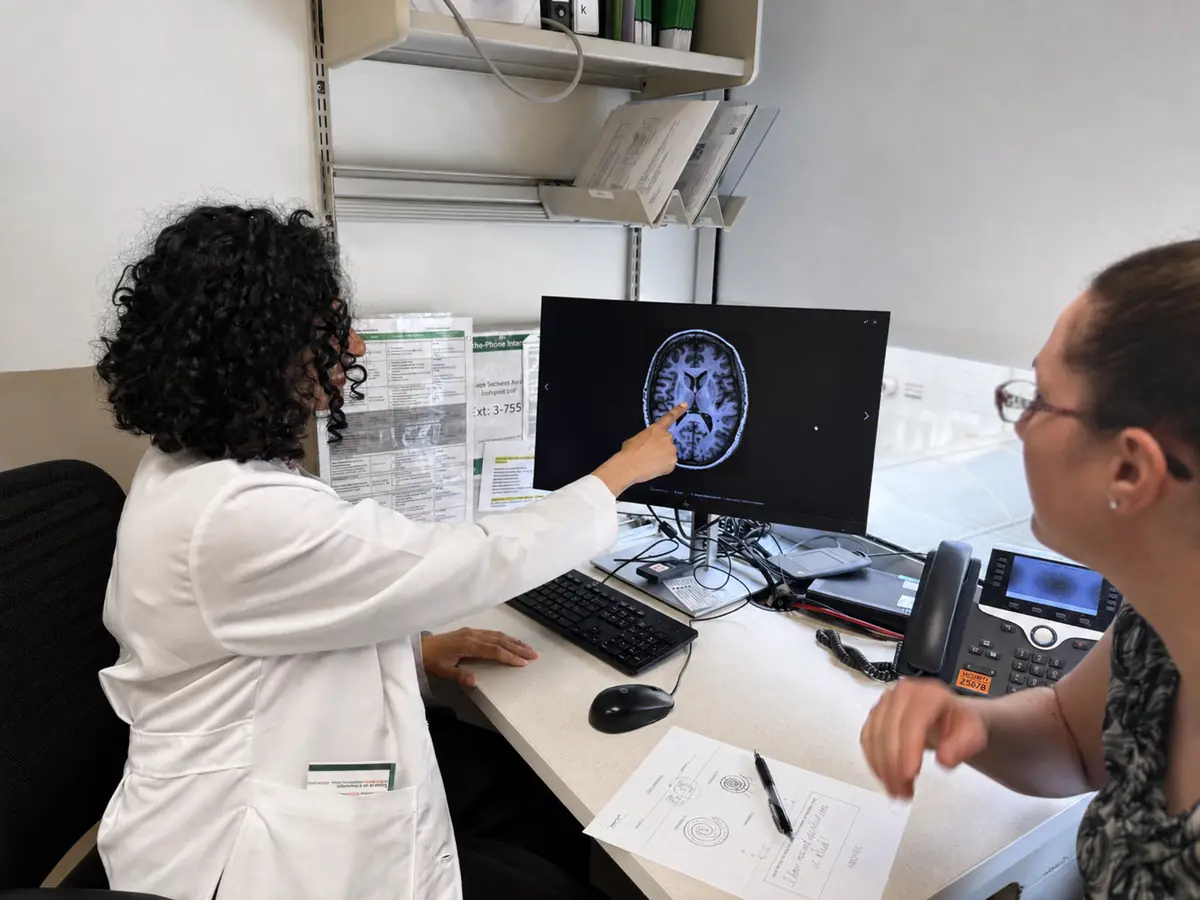
Another important consideration is that not all patients prioritize the same outcomes. Some individuals are willing to accept a higher risk of mild speech or balance changes in exchange for improved control of both hands. Others place a much higher value on preserving speech clarity or gait stability. There is no universally correct answer. The role of the treatment team is to provide realistic expectations, detailed risk assessment, and individualized guidance.
Reported outcomes and side effects
Published studies of staged bilateral focused ultrasound treatment have shown meaningful improvements in tremor and functional disability scores. However, these same studies also demonstrate increased rates of adverse neurologic effects compared with unilateral treatment, particularly involving:
-
dysarthria,
-
imbalance,
-
gait disturbance,
-
numbness,
-
and coordination difficulty.
Most of these side effects are mild and improve over time, but some can persist long-term. This is why bilateral focused ultrasound should not be viewed simply as “doing the same procedure twice.” It is a distinct treatment category with its own risk-benefit considerations.
An evolving field
It is also important to understand that bilateral treatment remains an evolving area of neuromodulation. As imaging, targeting, tractography, and treatment planning continue to improve, the safety profile will likely continue to evolve as well. Ongoing research is focused not only on improving tremor outcomes, but also on minimizing side effects by refining targets and treatment parameters.
At experienced centers, bilateral focused ultrasound is not approached casually or algorithmically. It is approached with respect for both the remarkable potential benefit and the unique neurologic risks associated with bilateral lesioning procedures. The goal is not simply maximal tremor reduction at any cost. The goal is achieving the best overall functional outcome for the individual patient while preserving speech, balance, coordination, and quality of life.