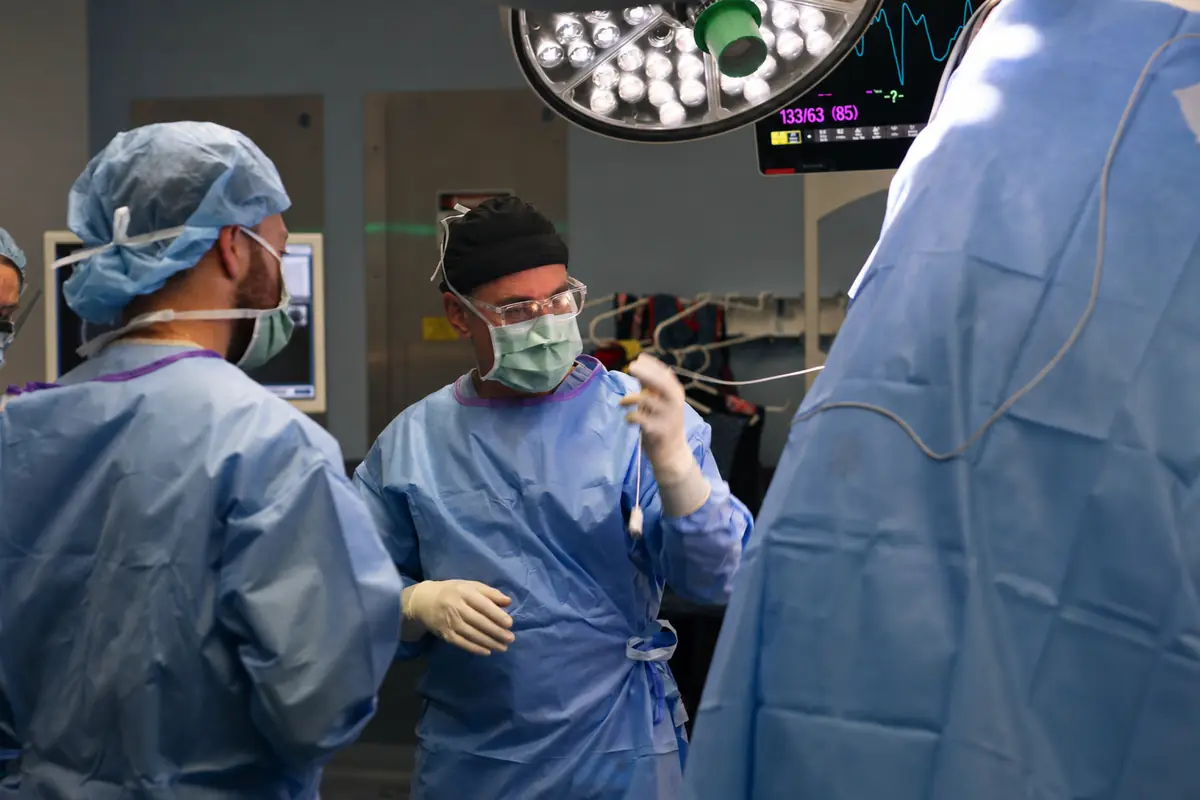
Deep Brain Stimulation, or DBS, is one of the most important advances in modern functional neurosurgery. Its origins go back to the work of French neurosurgeon Alim-Louis Benabid, who helped transform the field in the late 1980s by showing that high-frequency electrical stimulation of deep brain targets could calm abnormal movement symptoms without permanently destroying brain tissue. Before DBS, many surgical treatments for tremor and Parkinson’s disease relied on creating small lesions in the brain. Those procedures could be effective, but they were permanent and not adjustable. Benabid’s work opened the door to a different idea: instead of removing or burning a target, we could place a tiny electrode into the circuit and use controlled electrical stimulation to regulate abnormal brain activity.
How DBS became established treatment
Over the following decades, DBS became an established treatment for movement disorders. In the United States, DBS received FDA approval for tremor in 1997, for advanced Parkinson’s disease symptoms involving the STN or GPi targets in 2002, and for dystonia under a Humanitarian Device Exemption in 2003. More recently, DBS has continued to evolve with newer indications, improved devices, directional stimulation, brain sensing, and adaptive stimulation technology.
How the system works
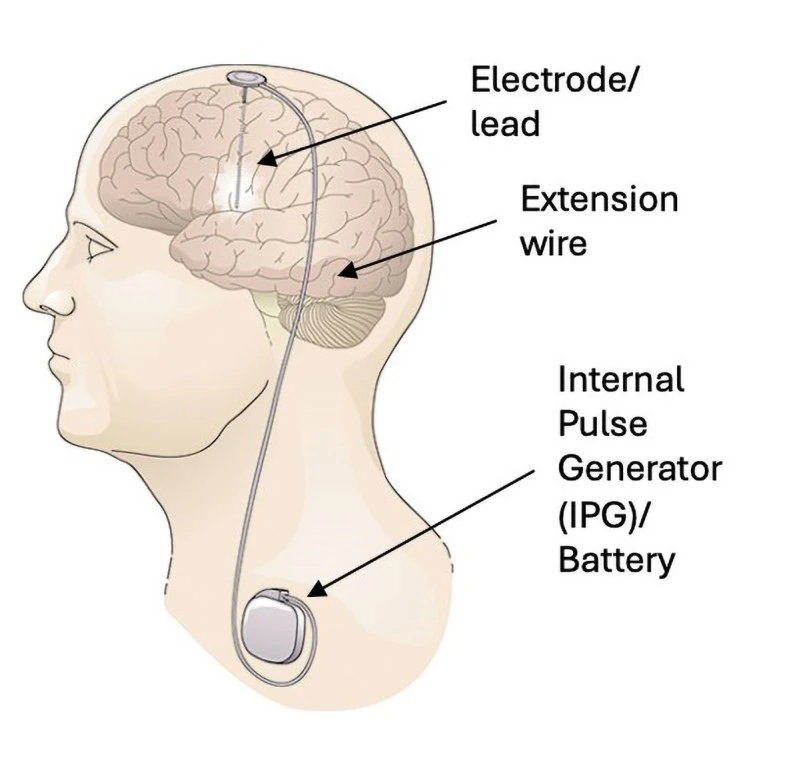
At its simplest, DBS involves placing a very thin insulated wire, called a lead, into a specific area of the brain. The lead is connected to a small battery-powered device, usually placed under the skin in the chest, similar in concept to a pacemaker. The system delivers carefully controlled electrical pulses to the target area. Although the stimulation is delivered to a small location, the effect is not limited to that one spot. The brain works through networks, and DBS influences the broader movement circuits connected to that target. In Parkinson’s disease, essential tremor, and dystonia, these circuits can become overactive, irregular, or poorly synchronized. DBS helps reshape that activity so the network functions in a more stable and coordinated way.
This is why DBS can improve symptoms such as tremor, stiffness, slowness, dyskinesia, and dystonia. It does not cure the underlying disease, and it does not stop conditions such as Parkinson’s disease from progressing. Instead, it helps regulate the abnormal electrical patterns that produce many of the most disabling movement symptoms. Many patients think of DBS as helping the brain “find a steadier rhythm.”
Adjustable and reversible
One of the most important advantages of DBS is that it is adjustable and reversible. The stimulation can be increased, decreased, redirected, or turned off. If symptoms change over time, the settings can be modified. If side effects occur, the stimulation can usually be adjusted to reduce them. If a better treatment becomes available in the future, DBS does not usually prevent that patient from considering other therapies. In rare circumstances, the system can also be removed. This flexibility is one of the major reasons DBS remains so valuable compared with treatments that create permanent lesions.
Directional leads and brain sensing
Modern DBS is far more sophisticated than the early systems. Older DBS leads delivered stimulation in a relatively uniform pattern around the electrode. Newer segmented or directional leads allow the clinician to steer stimulation toward the area that provides benefit and away from areas that cause side effects. In practical terms, this gives the programming team more control and a wider therapeutic window.
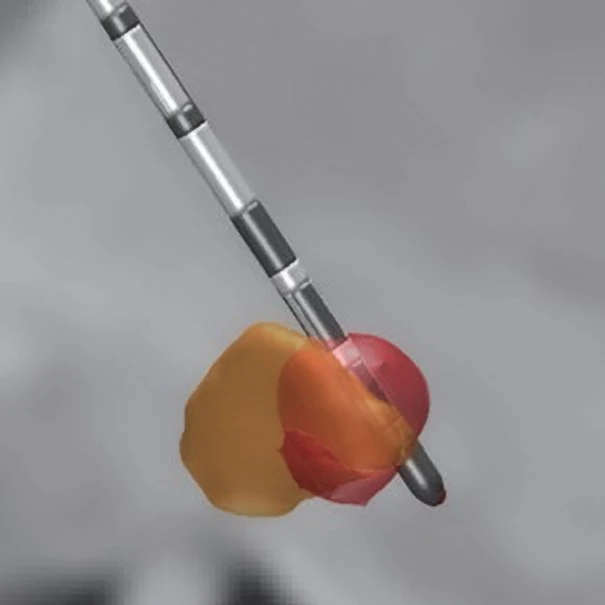
The newest systems may also include brain sensing, meaning the device can record certain brain signals from the implanted lead. These signals can help clinicians understand how a patient’s brain activity changes with symptoms, medications, and stimulation. In Parkinson’s disease, this has led to the development of adaptive DBS, in which stimulation can be adjusted based on real-time brain activity within clinician-defined limits. The FDA authorized adaptive DBS programming features for certain systems in 2025, marking an important step toward more personalized, responsive neuromodulation.
What this means for patients
For patients, the most important message is that DBS is not simply a wire and a battery. It is a highly precise, programmable therapy designed to tune dysfunctional brain networks. Its success depends on selecting the right patient, choosing the right target, placing the lead accurately, and programming the system thoughtfully over time. At an experienced center, DBS is not just a procedure—it is a long-term partnership built around careful evaluation, precision surgery, expert programming, and continued follow-up.