Deep Brain Stimulation can be a profoundly meaningful treatment for the right patient, but it is important to discuss outcomes and risks with clarity and precision. DBS is not a cure, and it does not stop the progression of underlying conditions such as Parkinson’s disease, essential tremor, or dystonia. Its purpose is to improve symptoms driven by abnormal brain circuitry—tremor, stiffness, slowness, dyskinesia, and dystonia—so that daily life becomes more predictable and functional. In appropriately selected patients, DBS can restore independence, reduce medication burden, and improve quality of life. The best outcomes occur when careful patient selection, precise lead placement, and expert programming all come together.
For Parkinson’s disease, DBS is most effective for symptoms that respond to levodopa, including tremor, rigidity, bradykinesia, dyskinesia, and motor fluctuations. Many patients describe smoother, more consistent days with fewer OFF periods and less reliance on tightly timed medications. Symptoms such as balance problems, speech changes, and cognitive decline are less likely to improve, particularly if they are not medication-responsive prior to surgery.
For essential tremor, DBS can provide substantial and durable tremor reduction, particularly in the treated limb. The benefit is most meaningful in restoring function—writing, eating, drinking, and other daily activities. For patients with bilateral symptoms, DBS offers the advantage of adjustability on both sides over time.
For dystonia, improvement tends to develop more gradually. Some patients experience dramatic changes, while others have more moderate but still meaningful improvements in posture, movement, and pain. Outcomes depend on dystonia type, duration, and underlying cause, which is why careful selection is critical.
Understanding the Risks
Although DBS is considered safe and well-established, it remains brain surgery, and it is important to understand the potential risks. These are generally grouped into surgical risks, hardware-related risks, and stimulation-related effects.
Bleeding (Intracranial Hemorrhage):
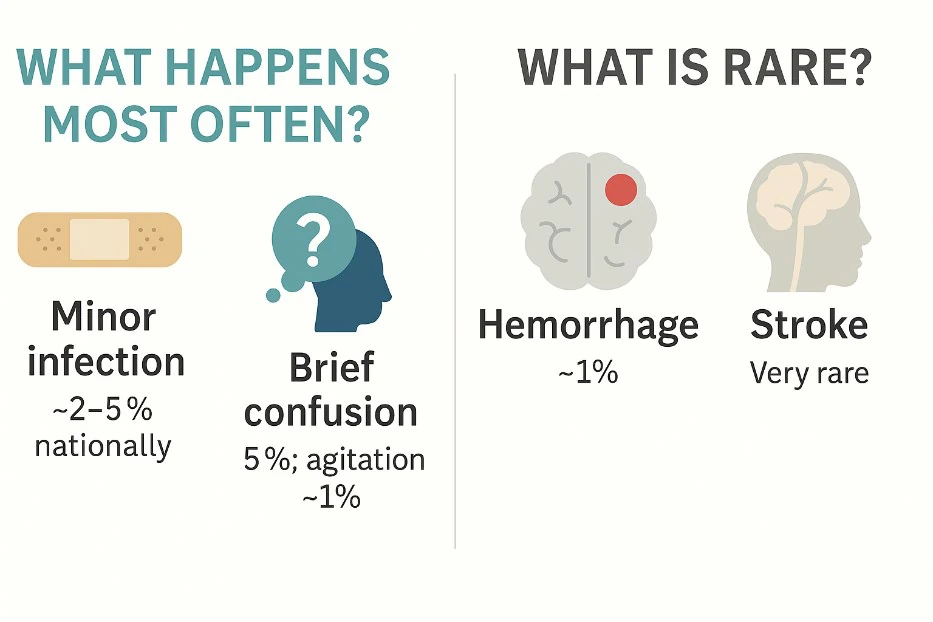
Bleeding in the brain is one of the most serious but fortunately rare risks. Across large published series, the risk of symptomatic bleeding is typically reported in the range of 1–2%, with the risk of permanent deficit lower than that. At RUSH, our experience reflects even lower rates, with bleeding risk under 1% for awake DBS and under 0.5% for asleep DBS. This difference is largely related to technique, imaging guidance, and minimizing the number of passes into the brain.
Infection:
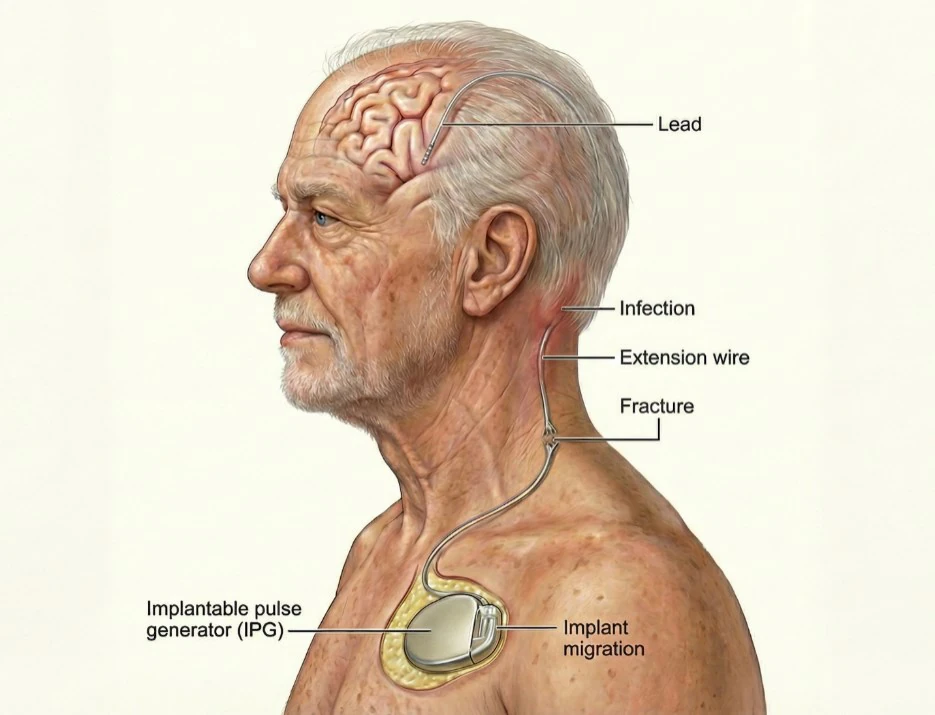
Infection can occur at the incision sites or involve the implanted hardware. In the broader literature, infection rates are generally reported between 2–5%, depending on follow-up duration and definition. At RUSH, our infection rate is approximately 0.5%, reflecting careful surgical technique, standardized protocols, and close postoperative monitoring. When infections do occur, some can be treated with antibiotics, while others may require hardware removal.
Hardware Malfunction:
Because DBS involves an implanted system, there is a small ongoing risk of hardware-related issues over time. This includes lead fracture, extension wire problems, or battery-related issues. These are not immediate surgical risks but occur gradually. In general, hardware-related complications occur in approximately 2–5% of patients per year. Most of these issues are identifiable and correctable, often with relatively minor procedures.
Lead Repositioning:
In a small percentage of cases, the electrode may need to be repositioned if the clinical benefit is not optimal or if side effects limit programming. Published rates vary, but are generally reported around 2–4%. At RUSH, lead revision or repositioning occurs in approximately 2% of cases, reflecting careful targeting, intraoperative confirmation, and experience with DBS anatomy and technique.
Stimulation-Related Effects:
These are not surgical complications but rather side effects of stimulation itself. They may include tingling, muscle pulling, speech changes, imbalance, or visual phenomena depending on the target. Importantly, most of these effects are adjustable and reversible with programming changes.
Cognitive and Mood Considerations:
DBS does not cause dementia, but patients with pre-existing cognitive decline may be at higher risk for postoperative confusion or functional decline. Mood changes can also occur, particularly if stimulation affects nearby circuits. This is why formal neuropsychological evaluation is part of the candidacy process—to identify risks and guide decision-making before surgery.
Awake vs. Asleep DBS: Outcomes and Relative Risks
Both awake and asleep DBS are well-established and can produce excellent results. Modern literature consistently shows that clinical outcomes—particularly motor improvement in Parkinson’s disease—are comparable between the two approaches when performed at experienced centers.
The primary differences relate to workflow and certain aspects of risk:
-
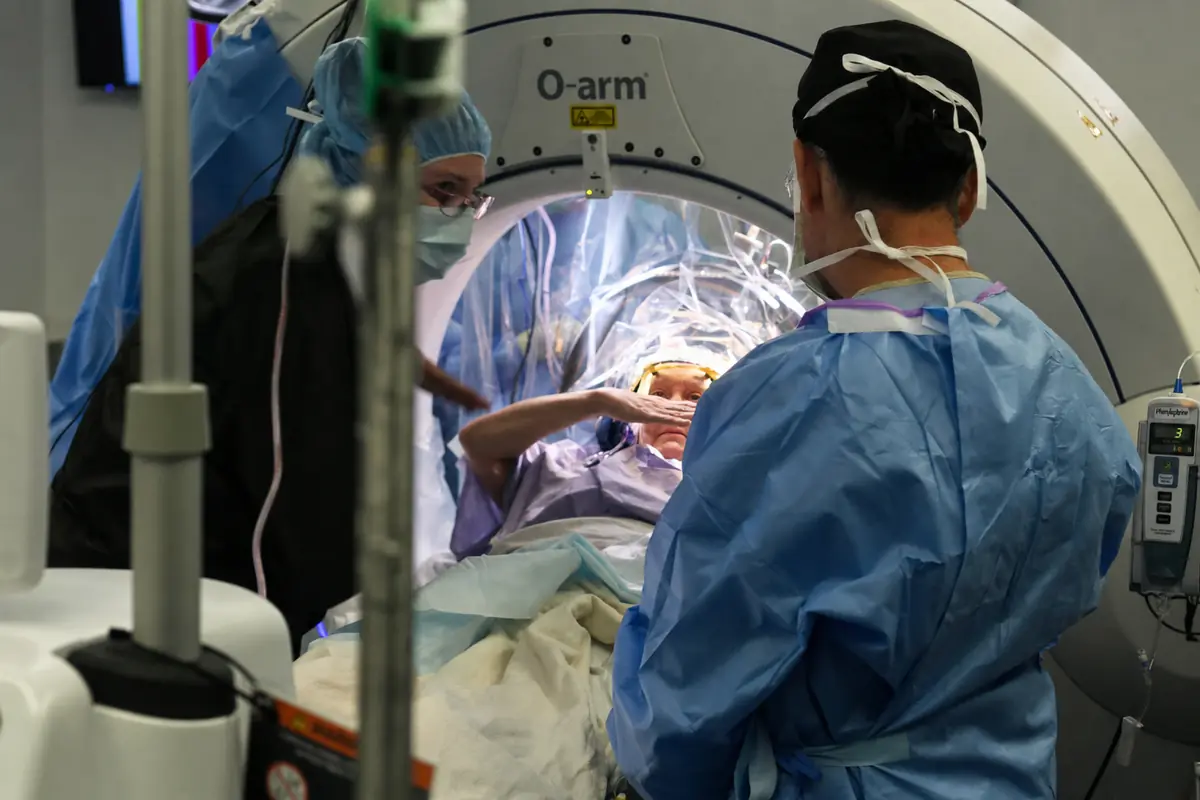
Asleep DBS relies on advanced imaging and intraoperative confirmation. It often involves fewer brain passes and a more streamlined approach. This can contribute to lower bleeding risk, as reflected in our experience at RUSH. It is also less physically and emotionally stressful for patients, since they are under general anesthesia.
-
Awake DBS uses microelectrode recording and real-time testing. This can provide physiologic confirmation of the target and immediate feedback on symptom improvement and side effects. In certain cases, this may help refine lead placement, particularly in more complex anatomy or less well-visualized targets.
From a complication standpoint, both approaches are safe. Some studies suggest slightly lower hemorrhage rates with asleep DBS, likely related to fewer recording passes, while others note that awake DBS may offer advantages in specific targeting scenarios. Overall, the differences are modest, and outcomes depend far more on the experience of the center and the quality of execution than on the choice of technique itself.
How to Think About Risk
Numbers are important, but context matters more. The majority of patients undergoing DBS do not experience serious complications. When side effects do occur, many are temporary, manageable, or correctable. The purpose of discussing risk in detail is not to create fear, but to ensure that decisions are informed and grounded.
The most important way to reduce risk is through:
-
Careful patient selection
-
High-quality imaging and planning
-
Surgical precision
-
Experienced intraoperative decision-making
-
Expert postoperative programming and follow-up
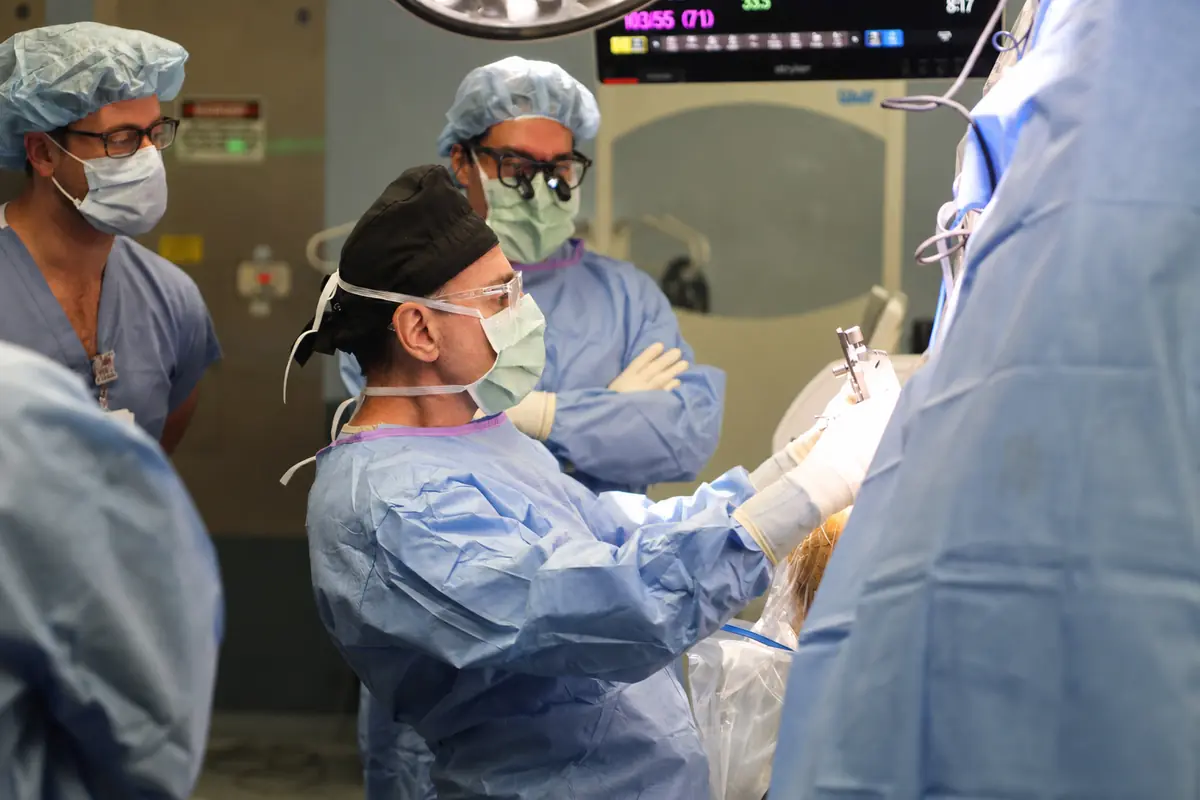
At RUSH, DBS is approached as a comprehensive program—not just a procedure. The same team that evaluates you helps guide the surgery, manages recovery, and performs long-term programming. That continuity, combined with experience and attention to detail, is what allows us to achieve both strong outcomes and low complication rates.
The central message is straightforward: DBS carries real risks, but in the right hands, for the right patient, those risks are low—and the potential benefits can be significant and lasting.