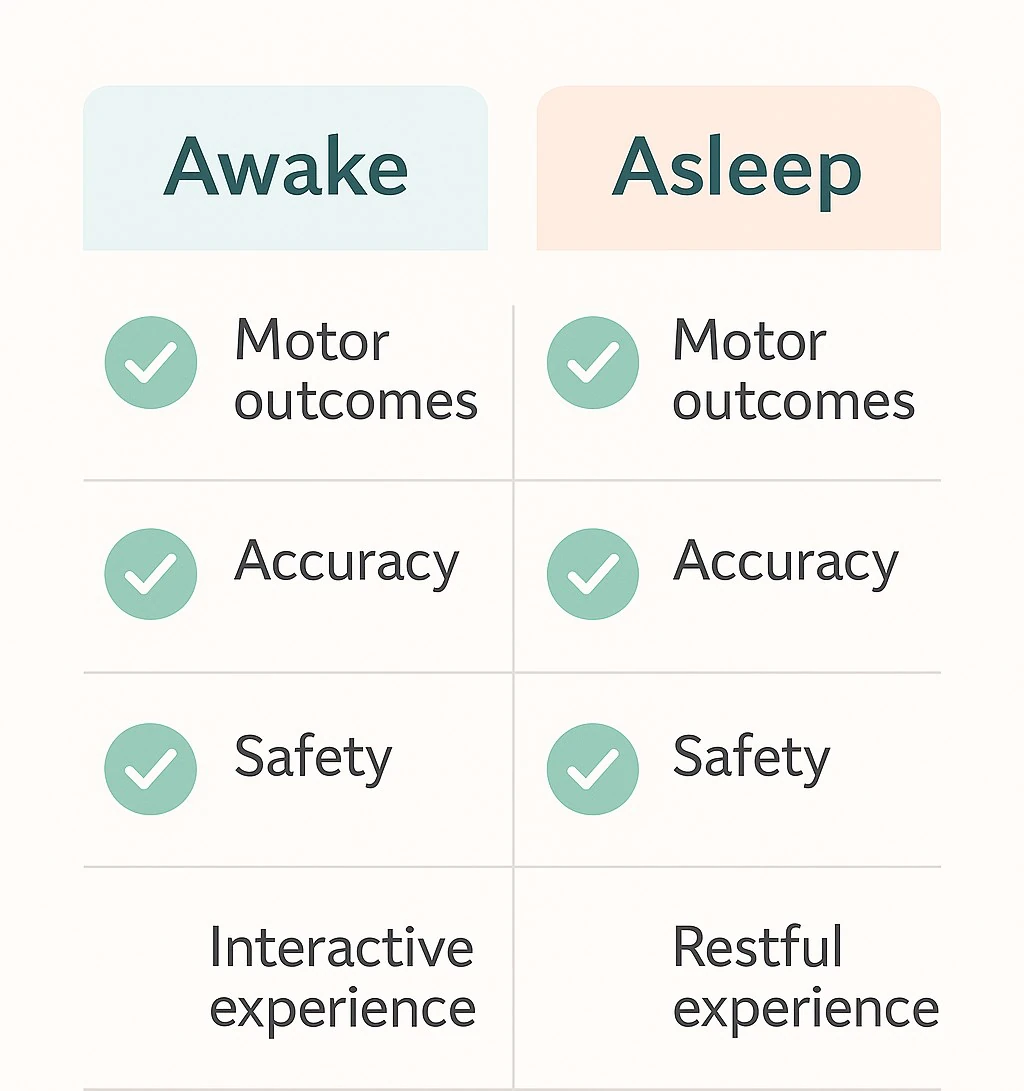
For many patients, one of the most confusing parts of learning about DBS is understanding the difference between “awake” and “asleep” surgery. It is common to find centers that strongly favor one approach over the other, sometimes presenting it as the only or “best” option. In reality, both techniques are valid, well-established, and capable of producing excellent outcomes. The most important factor is not whether the surgery is done awake or asleep—it is the experience of the center and the team performing it, and their ability to select and execute the right approach for each individual patient.
Why DBS used to be performed awake
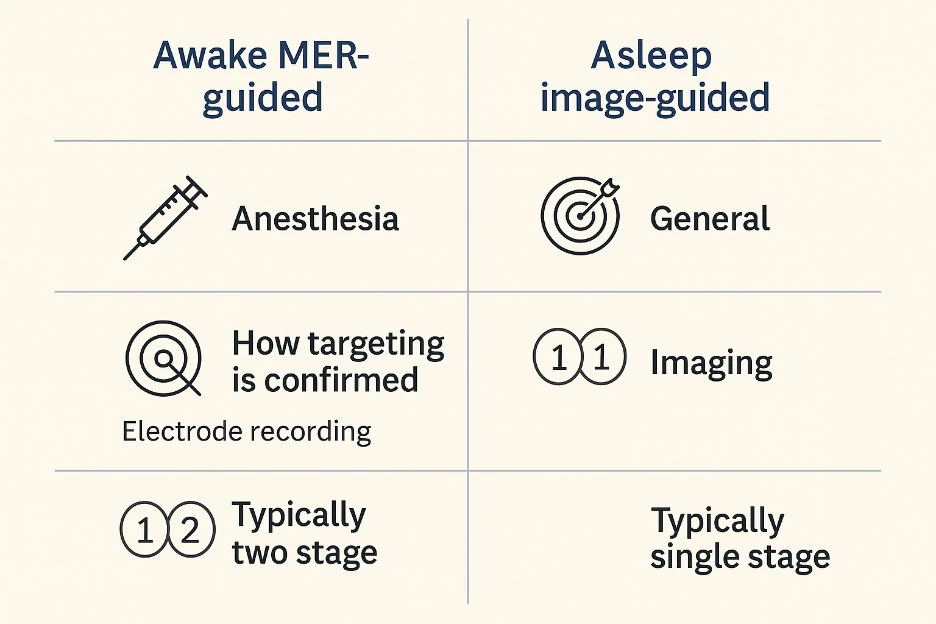
Historically, DBS was almost always performed awake. This was not because being awake was inherently better, but because it was necessary. Early in the development of DBS, surgeons did not have the same ability to clearly visualize deep brain targets on imaging. As a result, they relied heavily on microelectrode recording (MER) and real-time patient testing to confirm they were in the correct location. These surgeries could take many hours, with multiple recording passes used to map the brain in fine detail. Over time, through thousands of cases worldwide, the field developed a deep understanding of the anatomy and physiology of these targets.
What changed
At the same time, imaging technology advanced significantly. Modern MRI now allows us to directly visualize many of the key DBS targets or their surrounding structures with high resolution. In addition, navigation systems, stereotactic and robotic platforms, and intraoperative imaging have made it possible to confirm lead placement with a high degree of accuracy during the operation itself. Just as importantly, many of the physiologic signals that once required a fully awake patient can now be obtained or inferred under anesthesia using modern techniques.
Because of these advances, the field has evolved. While awake DBS remains an excellent and appropriate option in selected cases, asleep DBS has become the dominant approach at many experienced, high-volume centers. This shift is not driven by convenience alone. It reflects a combination of improved imaging accuracy, streamlined workflow, and a recognition that general anesthesia can make the experience less stressful for patients, while maintaining—and in many cases matching—clinical outcomes seen with awake techniques.
What this means for you
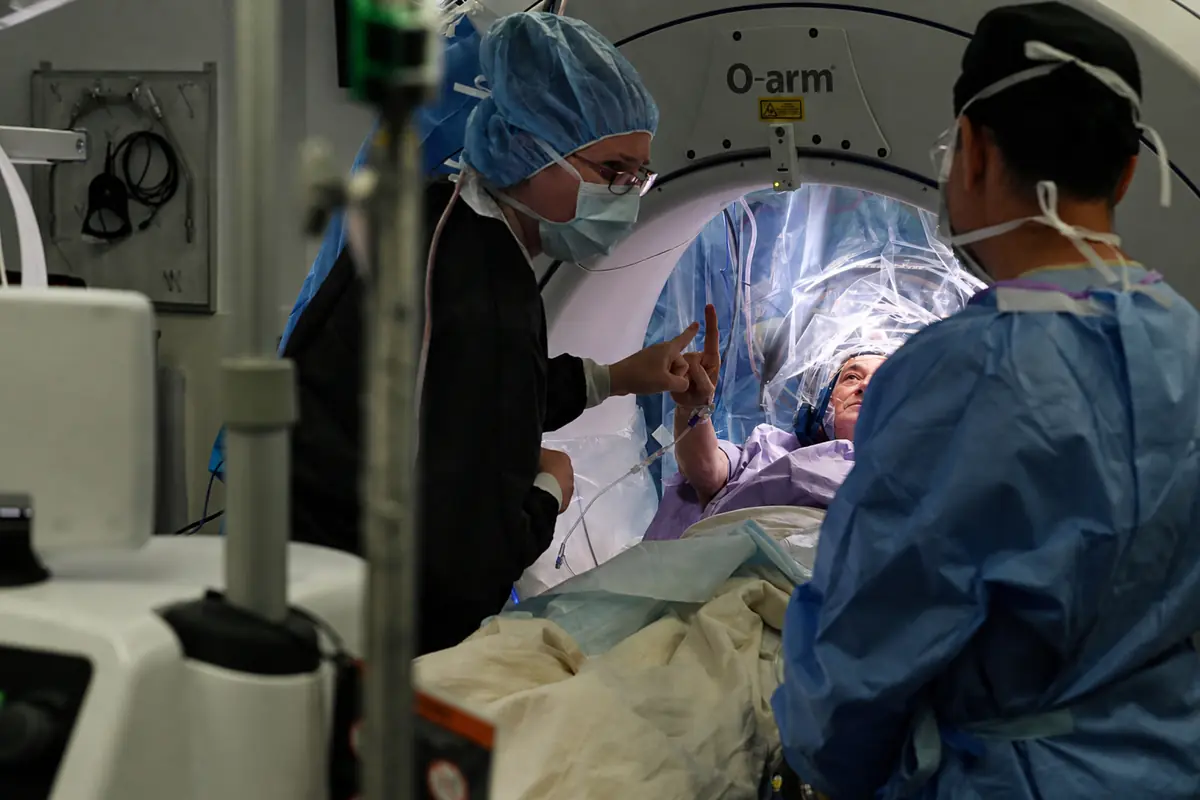
For patients, this means that the decision is no longer about choosing between “old” and “new,” or “better” and “worse.” It is about choosing the approach that best fits your specific condition, anatomy, symptoms, and comfort level. An experienced DBS program offers both options and makes a thoughtful recommendation based on those factors, rather than applying a single approach to every patient.
How the two approaches differ in practice
The technical details of how awake and asleep DBS are performed are described in the Procedure section. In practical terms, awake DBS allows for real-time testing during surgery, which can be helpful in certain situations. Asleep DBS relies on advanced imaging and intraoperative confirmation to achieve precise lead placement without requiring the patient to be awake. Both approaches aim to accomplish the same goal: placing the DBS lead in the optimal location safely and accurately.
How we decide
At RUSH, the approach is individualized. Some patients prefer to be asleep and benefit from a streamlined, single-stage procedure. Others may benefit from awake testing depending on the target or clinical scenario. The key is not the label of the technique, but the judgment behind its use. After decades of experience and thousands of cases, the focus remains the same: selecting the right strategy for the right patient to achieve the best possible outcome.